




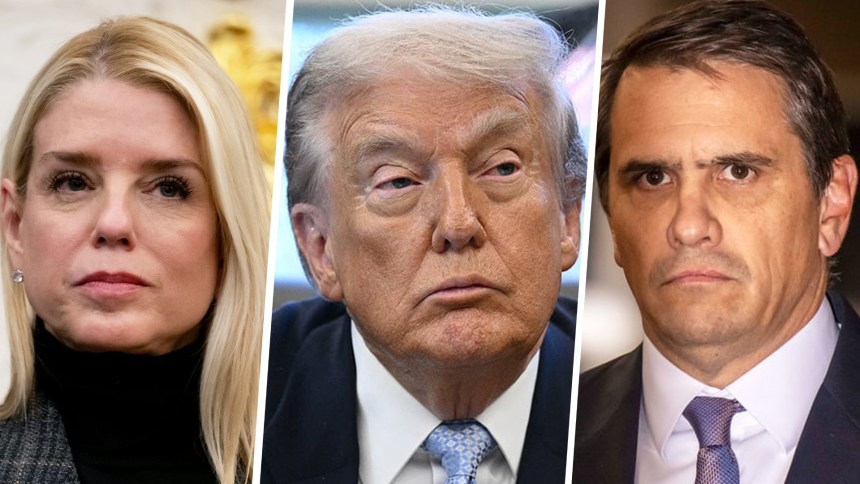
After U.S. District Court Judge Cameron Currie tossed federal criminal cases against former FBI Director James Comey and New York Attorney General Letitia James into the dumpster where they belong, the question now is if the federal government has any moves left in its pursuit of Comey and James. Against all norms, Trump famously publicly leaned on Attorney General Pam Bondi to bring charges against Comey and James.
Against all norms, Trump famously publicly leaned on Attorney General Pam Bondi to bring charges against Comey and James.
Though career prosecutors who looked at the cases apparently concluded there wasn’t enough evidence to charge Comey with lying to Congress or obstructing a congressional proceeding, or to charge James with mortgage fraud, the answer is yes: The government does have moves it can make. It can appeal Currie’s ruling, as Bondi has already vowed to do, or try to find another lawyer to bring the charges.
But whether those moves will result in a successful restart of the two deeply problematic cases, to say nothing in whether they’ll lead to either of the two being convicted of anything, remains to be seen.
To catch you up on why the indictments against Comey and James were dismissed, Judge Currie ruled that the person responsible for persuading a grand jury to indict them, Trump’s former personal attorney Lindsey Halligan, was wrongly appointed as interim U.S. attorney for the Eastern District of Virginia. Halligan was put in the position after interim U.S. Attorney Erik Siebert — who refused to bring charges against James — was forced out, and Currie ruled that her appointment violated not just the Constitution’s Appointments Clause, but also a federal law regarding how to fill vacancies.

The gist of it is that Halligan wasn’t, and isn’t, lawfully in her position as the U.S. attorney for the Eastern District of Virginia, and therefore had no authority to bring indictments. Think of her like an elementary school student who at 10 a.m. announces to her class that it’s lunch time. There’s no authority behind such a declaration. In the same way, Halligan had no authority to bring cases before a grand jury or to declare that Comey and James have been accused of crimes.
As for the government’s options now, the first and most obvious route is to appeal Currie’s ruling to the U.S. Court of Appeals for the Fourth Circuit, which Attorney General Pam Bondi has already said the government will do. If the Circuit disagrees with Currie’s analysis that Halligan was wrongly appointed to the position of, then the government could be free to move forward with its cases.
But the judge’s argument against Halligan’s appointment is strong. It’s rooted in the Constitution and in how much power the executive should and shouldn’t have. Currie found that allowing Halligan’s appointment to stand would amount to an unconstitutional end-run around the Senate and its authority.
Currie found that allowing Halligan’s appointment to stand would amount to an unconstitutional end-run around the Senate and its authority.
The Appointments Clause says “principal officers” must be nominated by the president and confirmed by the Senate but that Congress can give the power to appoint “inferior officers” to the president. Currie found that U.S. attorneys are nominated by the president and confirmed by the Senate. But Halligan, like Siebert, the interim U.S. attorney who preceded her, hasn’t been confirmed.
When there is a vacancy for a U.S. attorney, an interim U.S. attorney can serve for 120 days, and if there’s still no permanent U.S. attorney then, the judges for that district can appoint someone to serve as U.S. attorney until the vacancy is filled. Judges appointed Siebert to the role after his 120 days ran out, but Currie correctly concluded that it would fly in the face of federal law to allow the attorney general to put Halligan in the position and give her 120 days.
If that were permissible, an administration could ditch the Senate confirmation process altogether; the attorney general could just continue appointing different people on an interim basis.

That’s why the government’s appeal should go nowhere.
As for the second option: Finding someone else at the Department of Justice to make a case to a grand jury and lead a prosecution against Comey and James, that’s easier said than done. Remember, Siebert was forced out when he refused to bring charges against James, and in a sign that few, if any, career prosecutors thought there was enough of a “there there” to bring federal charges against Comey and James, Halligan was the only prosecutor to bring the cases and sign the indictments.


In fact, NBC News reported that career prosecutors sent Halligan a memo explaining why they believed there was no criminal case to be made against Comey.
Expect Bondi’s DOJ to keep trying to find someone even though the previous refusal by career prosecutors to touch these cases is indicative of how weak they are.
It is worth mentioning that Comey and James have also alleged that they are the victims of selective and vindictive prosecution, and if they are successful in one or both of those arguments, that would provide an independent ground to dismiss both of their cases.
The previous refusal by career prosecutors to touch these cases is indicative of how weak they are.
Depending on what happens in an appeal, the government needs to address the statute of limitations issue in Comey’s indictment. Halligan brought Comey’s indictment mere days before the statute of limitations ran on the charges against him. Currie specifically noted in her ruling that an invalid indictment does not toll, meaning pause, the statute of limitations. If Currie’s ruling and rationale stands, then the DOJ is time-barred from trying to refile the same charges against Comey. This is true regardless of who the prosecutor bringing the charges is.
The same is not true for the case against James. In that case, even if Currie’s ruling stands, there is still time to refile the same charges against James. Of course, the DOJ would still have the difficulty of finding a prosecutor willing to bring those charges.
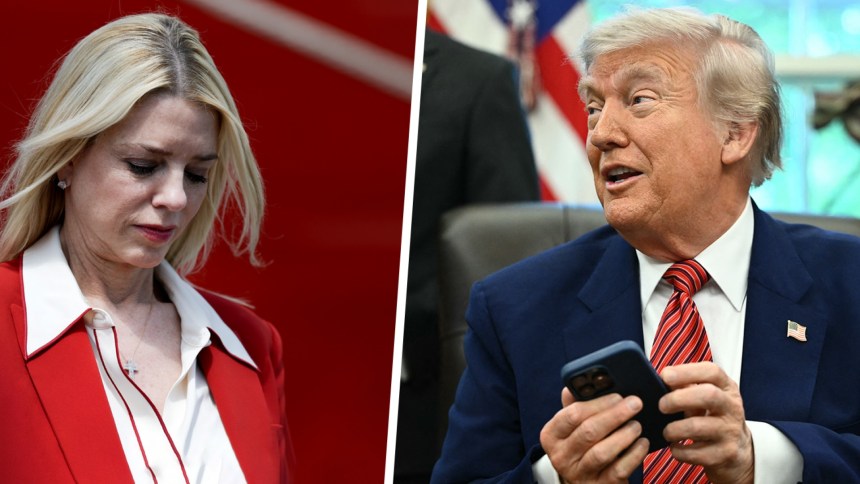
Setting aside the timing issues for a moment, if the government is not able to win on appeal, its best hope of resurrecting these cases is to appoint a new U.S. attorney. The cleanest route would be for the president to nominate someone and for the Senate to confirm that person. Another possible option would be for Bondi to assign a different, properly appointed U.S. attorney, or to appoint a special attorney under a different federal law, to refile the charges.
Of course even if a new prosecutor is appointed, the federal government will still need to answer to claims that federal charges were only brought against Comey and James because Trump, to use a non-legal term, hates them. Again, both Comey and James have plenty of reasons to allege that they are the victims of selective or vindictive prosecution.
Ultimately, it remains to be seen whether Currie’s ruling is the death knell for two of the most politically charged and divisive federal criminal cases to be brought in decades. But it ought to be.

Jessica Levinson is a Loyola Law School professor and MS NOW columnist.