




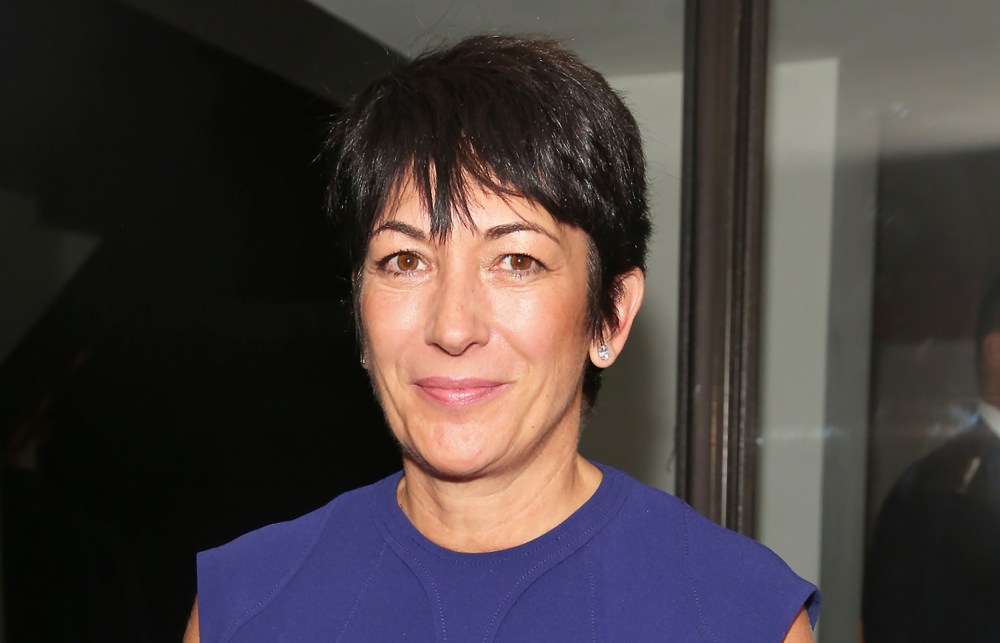
A federal judge in New York granted the Justice Department’s motion to release grand jury material related to the criminal prosecution of Ghislaine Maxwell on Tuesday.
In the order, U.S. District Judge Paul Engelmayer allowed the release of transcripts and other evidence that falls under the scope of the Epstein Files Transparency Act, the bill President Donald Trump signed into law last month ordering the Department of Justice to release all records related to the disgraced financier Jeffrey Epstein.
Maxwell is a convicted sex offender serving a 20-year prison sentence in Texas for her role in Epstein’s sex trafficking enterprise. The Supreme Court rejected Maxwell’s request to overturn her conviction in October.
Engelmayer noted that his order includes “a mechanism to protect the victims from the inadvertent release of materials” that would identify them or “otherwise invade their privacy.” Engelmayer had previously denied the Justice Department’s motion to unseal grand jury evidence related to Maxwell’s case, citing grand jury secrecy rules.
Epstein was indicted in Manhattan federal court in 2019 on charges of sex trafficking minors and conspiracy to commit sex trafficking of minors. But he did not live to face those charges in court, dying by suicide in jail on Aug. 10, 2019, just over a month after he was arrested.
Epstein’s death led to a plethora of conspiracy theories popular among Trump’s far-right base. As a 2024 presidential candidate, Trump often promised that if reelected he would release the “Epstein files” — the popular term for documents related to all civil and criminal investigations involving Epstein — but he staunchly resisted calls to do so from Congress and his supporters early into his second term.
After months of infighting, Congress overwhelmingly voted to pass the Epstein Files Transparency Act last month. Trump signed it into law, a surprising reversal of his stance on releasing the files, which came amid pressure from lawmakers on both sides of the aisle.
The act compels the Justice Department to release “all unclassified records, documents, communications, and investigative materials” related to the Epstein and Maxwell investigations. That includes travel records, flight logs, immunity deals and related internal Justice Department communications.
Baked into Judge Englemayer’s order is a stringent review process that requires U.S. Attorney Jay Clayton of the Southern District of New York to certify that the material for public release is free of information that could identify victims of Epstein and Maxwell’s sex trafficking enterprise or cause them undue harm.
Engelmayer reprimanded the Justice Department on Tuesday despite granting its request, saying the department failed to treat victims with the “solicitude they deserve.”
The department did not notify Epstein and Maxwell’s victims before making the request to unseal Maxwell’s grand jury materials, Engelmayer said. He directed the department to notify the victims and set a deadline for their input on the request. Last summer, the department failed to notify victims before making a similar request, at which time the victims “widely expressed distress at the lack of notice given to them by the DOJ,” in letters sent to the court, Engelmayer said.
A federal judge in Florida last week granted a similar request to unseal grand jury transcripts related to the original criminal investigation of Jeffrey Epstein in 2005 and 2007. U.S. District Judge Rodney Smith said the act overruled the grand jury secrecy protocol that he had cited in denying a previous request to unseal the transcripts.
Tuesday’s order in New York also allows for the release of discovery material in Maxwell’s criminal case, which opens the door for a tranche of case material, such as deposition transcripts and financial records, to be made public.

Sydney Carruth is a breaking news reporter covering national politics and policy for MS NOW. You can send her tips from a non-work device on Signal at SydneyCarruth.46 or follow her work on X and Bluesky.