





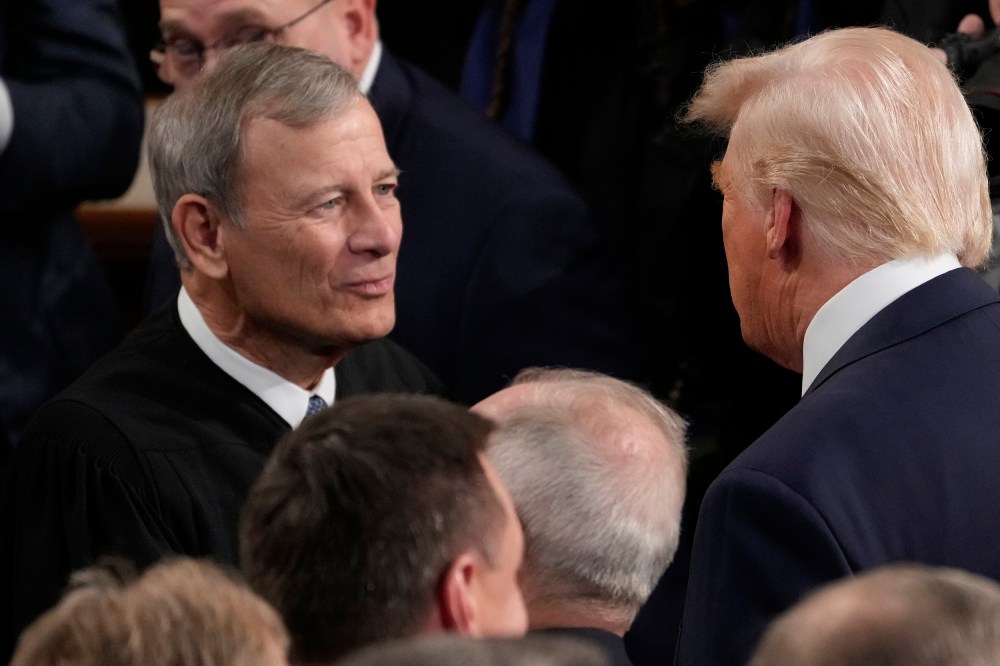

In his second term, President Donald Trump has used the law to reward allies and punish adversaries, while pushing to expand his power at every turn — sometimes breaking the law in doing so, judges have ruled.
As we enter 2026, here are five big legal stories we’re watching.
Gerrymandering wars
Answering the president’s call to try to maintain GOP congressional control ahead of November’s midterm elections, Texas Republicans passed a new voting map. A lower-court panel led by a Trump-appointed judge struck it down, finding that the map likely constituted an illegal racial gerrymander. But the Supreme Court’s Republican-appointed majority intervened to approve the Republican-friendly redistricting effort, on the grounds that the effort was motivated by politics, not race.
Among other states joining the fray is California, which passed its own new map that faces its own litigation. When the high-court majority sided with Texas, the justices hinted that they would also approve California’s map if it were to come before them. That raises a key question for the new year: Would the court approve a Democratic-backed move in California on the same grounds that it approved a Republican-backed move in Texas?
The court is also set to rule on other important election-related cases, including a redistricting appeal from Louisiana that could gut what’s left of the Voting Rights Act.
Trump Justice Department’s retribution campaign
The president ran on a platform of retribution against those who sought to hold him and his allies accountable for their illegal actions — including his failed effort to subvert the 2020 election he lost, which culminated in the insurrection of Jan. 6, 2021. He began his second term by granting blanket clemency to Jan. 6 defendants — including several who assaulted law enforcement officers — and he purged the government of people who investigated and prosecuted him and his adherents.
While his administration has used the law as a shield for his allies, it has also used it as a sword against his critics, most prominently James Comey and Letitia James. The former FBI director and the New York attorney general have succeeded in getting their indictments dismissed pretrial, but the Justice Department is seeking to revive the charges. The fate of Trump’s retribution campaign against them and others should become clearer in 2026.
Presidential power over tariffs and federal agencies
The John Roberts-led Supreme Court, which granted Trump broad criminal immunity before he returned to office, has since expanded his presidential power. That expansion has largely come through technically temporary rulings on the shadow docket. But in 2026, the justices are set to make more definitive pronouncements.
In addition to the pending ruling on the president’s tariffing authority, the court is weighing whether to overturn a 90-year-old precedent that has protected the independence of federal agencies from presidential interference. At a hearing that raised the issue in Trump v. Slaughter, Justice Sonia Sotomayor said that U.S. Solicitor General John Sauer was “asking us to destroy the structure of government and to take away from Congress its ability to protect its idea that the government is better structured with some agencies that are independent.”
The court is also considering the president’s firing power in Trump v. Cook, a separate appeal dealing specifically with the Federal Reserve. That one is set for a Jan. 21 hearing. The GOP-appointed majority has signaled that it wants to save the Fed from executive domination. But it remains to be seen how the court will protect its preferred agency from presidential manipulation while still accomplishing its goal of increasing presidential control over agencies like the Federal Trade Commission and others affected by the forthcoming Slaughter ruling.
Consequences for violating court orders
An enduring question in Trump’s second term is whether there are consequences when the government violates court orders. The answer so far seems to be: not necessarily.
One of the ongoing cases raising the existential question is the contempt inquiry into the Trump administration, pursued by U.S. District Judge James Boasberg. Back in March, the Obama-appointed judge in Washington, D.C., ordered officials not to relinquish physical custody of Venezuelan nationals flown from the U.S. to El Salvador under Trump’s invocation of the Alien Enemies Act. Trump-appointed appellate judges put Boasberg’s proceedings on hold for now, making accountability on this score a very open question heading into the new year.
Birthright citizenship
On top of the coming Supreme Court rulings on tariffs, voting, independent agencies and more, the justices are poised to make one of their most important decisions ever in the birthright citizenship case.
The court agreed to consider the administration’s appeal to halt automatic citizenship for people born in the U.S., notwithstanding the constitutional right to such citizenship established in the 14th Amendment, as well as precedent affirming the right going back more than a century. The Roberts court therefore has a clear choice ahead: It can either reaffirm a basic right, or it can descend further down the Trump path and back the president’s bid to upend what it means to be an American — the Constitution, law and precedent be damned.
Subscribe to the Deadline: Legal Newsletter for expert analysis on the top legal stories of the week, including updates from the Supreme Court and developments in the Trump administration’s legal cases.
