





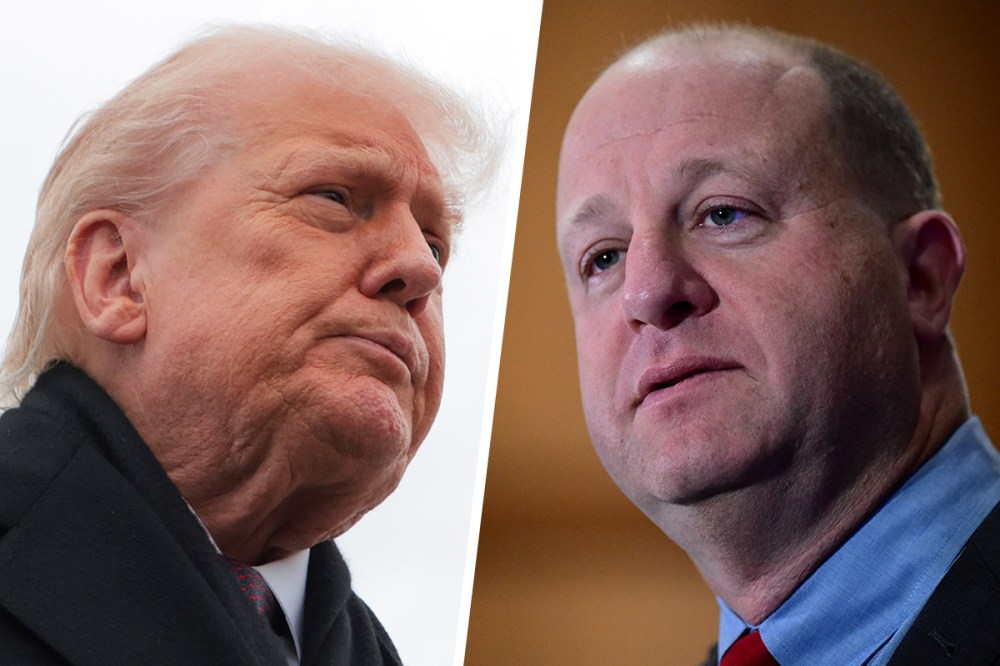

After his first term in the White House, Donald Trump had issued fewer vetoes than any American president since Warren Harding, who served only two years in the White House in the early 1920s. In fact, Trump only used his veto pen 10 times before losing his reelection bid in 2020, and in each instance, the vetoes came in the final two years of the Republican’s term, after Democrats had a majority in the U.S. House.
In other words, when the GOP controlled Congress during the first two years of Trump’s first term, he didn’t find it necessary to veto anything. That pattern changed this week when the Republican incumbent issued the first vetoes of his second term, rejecting legislation intended to expand the territory of the Miccosukee Tribe in Florida, as well as a pipeline project intended to bring clean water to southeastern Colorado.
On the former, there’s no great mystery about what happened: The Miccosukee Tribe fought against the administration’s plans for a detention facility in the Florida Everglades — a project better known as “Alligator Alcatraz” — and so Trump wanted to punish the members of the small Native American tribe. Indeed, the president made no real effort to hide his motivations, declaring in an official statement that he didn’t like the fact that the Miccosukee Tribe “actively sought to obstruct” immigration policies that he considered “reasonable.”
But it was that other veto that generated even more attention.
The pipeline project in Colorado, like the measure for the Miccosukee Tribe, cleared Capitol Hill with overwhelming bipartisan support. And if White House officials had any concerns about the effort, they kept those opinions to themselves.
With this in mind, when Trump vetoed the bill, observers were left with a limited number of possible explanations: (1) Maybe the president was punishing Colorado as part of the Tina Peters case; (2) perhaps he was punishing Republican Rep. Lauren Boebert of Colorado over her support for Epstein files transparency; or (3) both.
Trump helped shed light on his reasoning soon afterward. Politico reported:
President Donald Trump told POLITICO on Wednesday that he vetoed a bipartisan bill to fund a Colorado water project because he views it as a waste of taxpayer money, saying residents are leaving the state under Democratic Colorado Gov. Jared Polis.
‘They’re wasting a lot of money and people are leaving the state. They’re leaving the state in droves. Bad governor,’ Trump said in an exclusive phone interview with POLITICO.
Around the same time, the president published an item to his social media platform in which he called Colorado’s Democratic governor a “scumbag,” before concluding, in reference to Polis and other state officials: “I wish them only the worst. May they rot in Hell.”
In other words, Colorado hasn’t freed a prisoner convicted of a felony whom Trump likes, and so the White House appears to be taking steps to punish the state.
Indeed, the veto of the pipeline bill, known as the Finish the Arkansas Valley Conduit Act, was the latest in a series of anti-Colorado moves from the Republican administration. As The New York Times summarized, “Miffed at Colorado’s votes against him in three successive elections and furious at its refusal to free Tina Peters, a convicted election denier and ardent Trump supporter, Mr. Trump has opened an assault against the Democratic-run state. His administration has cut off transportation money, relocated the military’s Space Command, vowed to dismantle a leading climate and weather research center and rejected disaster relief for rural counties hammered by floods and wildfires.”
On the surface, the circumstances might sound ridiculous: In the United States, presidents aren’t supposed to punish entire states over petty vendettas. And yet, he we are, watching Trump do it anyway.
Indeed, the president isn’t even making much of an effort to hide his thinking on the subject, telling Politico that he considers Colorado’s governor to be “bad,” as if this were a credible explanation.
In August, Trump threatened to impose “harsh measures” on the Rocky Mountain State unless it agreed to release Peters from prison several years before her sentence runs its course. We’re now getting a better sense of what that means in practice.
