the rachel maddow showMondays 9PM etmorning joeWeekdays 6am etdeadline: white house with nicolle wallaceweekdays 4pm etthe beat with ari melberweeknights 6pm etthe weeknightmonday-friday 7pm etCredit Imageall in with chris hayestuesday-friday 8pm et
Record numbers of migrants continue to attempt border crossings
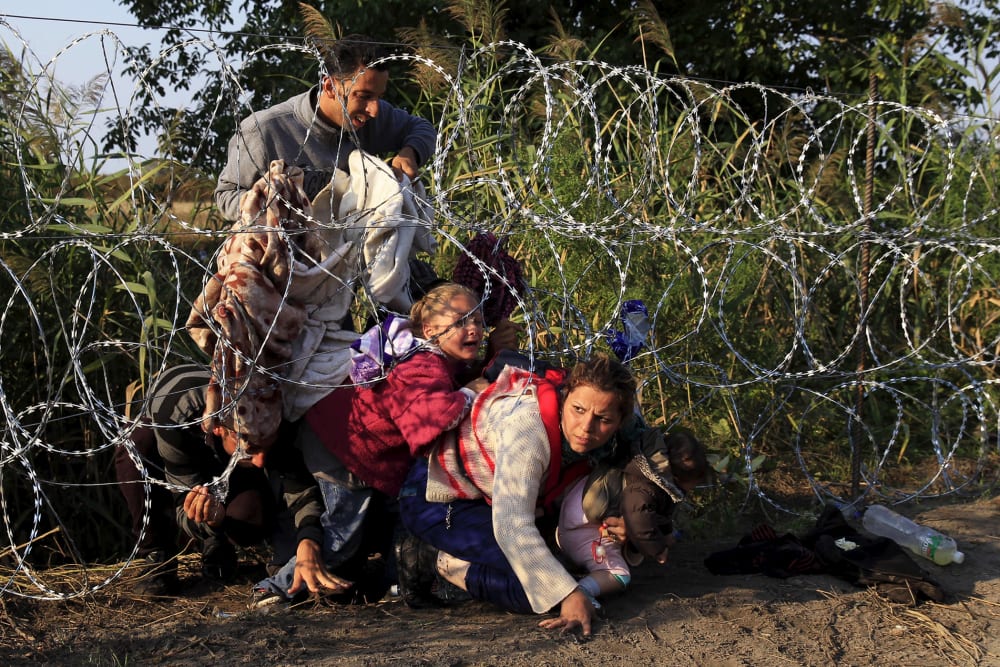
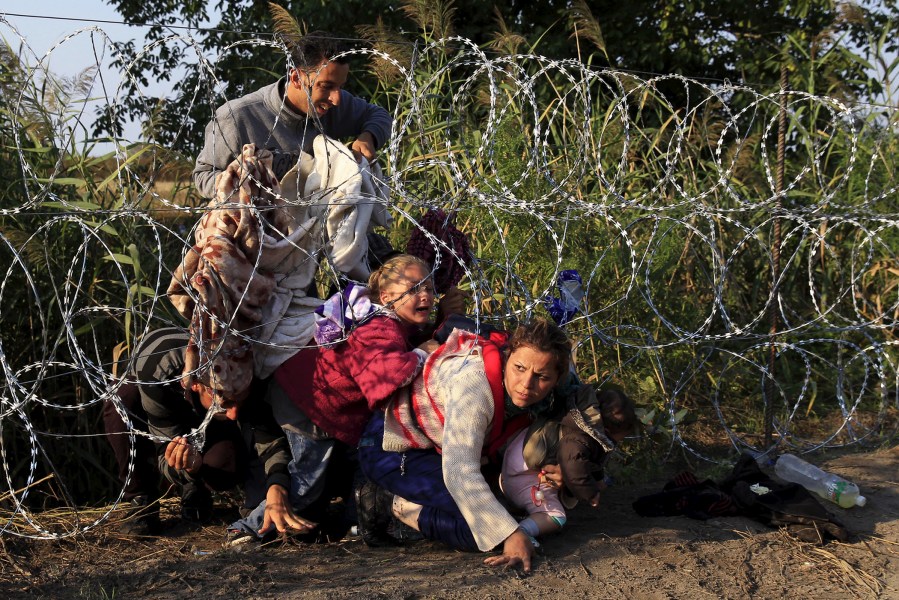
Migrants continue to risk severe injury this week as they clambered over or wriggled under a razor-wire fence placed by Hungary across its border with Serbia.
Syrian migrants cross under a fence as they enter Hungary at the border with Serbia, near Roszke, Aug. 27, 2015.REUTERS
By
Olivia Kestin and
Joy Y. Wang
A gruesome discovery this week of 71 bodies decomposing in a tractor-trailer truck parked near the Austrian border shone a new light on the massive humanitarian crisis facing Europe. Ten of thousands of migrants are fleeing war-torn Syria, Iraq and Afghanistan to embark on dangerous treks to Eastern Europe and EU countries.
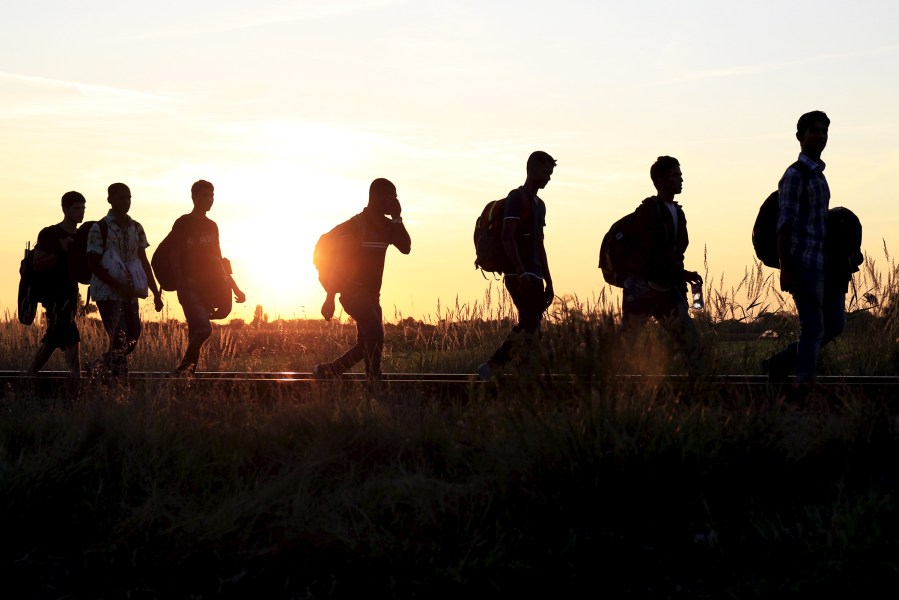
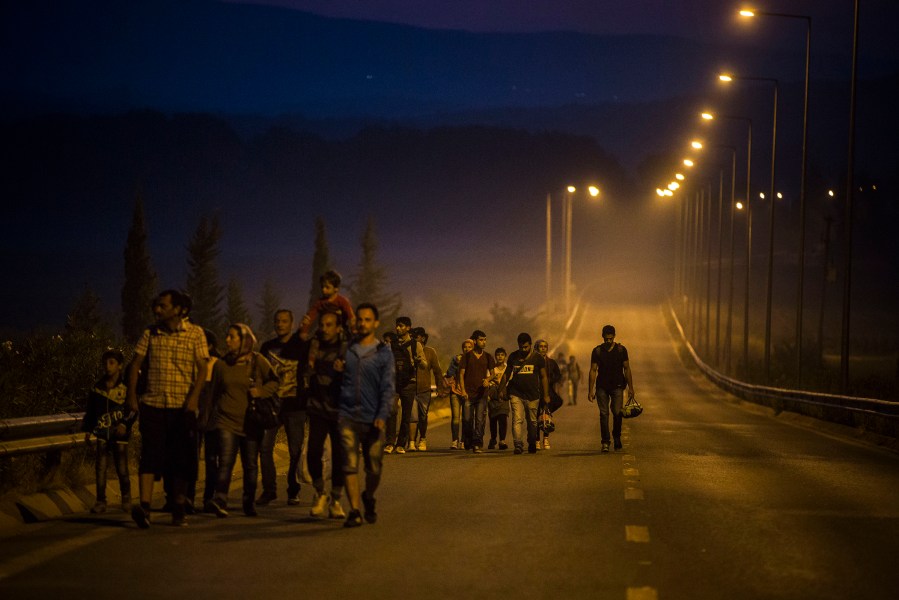
Many are following the Balkans route, in which they journey from Turkey to Greece by sea before walking or taking a bus north to Macedonia, then taking a train or traveling by foot to Serbia and walking the final miles to Hungary, an EU member. They then face three layers of hastily placed razor wire lining the 109-mile border than runs between Hungary and Serbia. Migrants, including families with young children, are using makeshift methods to raise up the dangerous barrier and slip into the country.
The arduous journey is still considered safer than attempting to cross the Mediterranean Sea from North Africa to Italy. Also this week, 50 bodies were found aboard a smuggler’s boat along that route.
“The world’s eyes are upon us,” German Chancellor Angela Merkel told reporters Thursday at a meeting in Vienna of European leaders. “This is a warning for us to tackle the issue of migration quickly. We have more refugees in the world than at any time since World War II.”
NBC News’ Alastair Jamieson contributed to this article. Below, see photos of the ongoing migrant crisis in Europe.
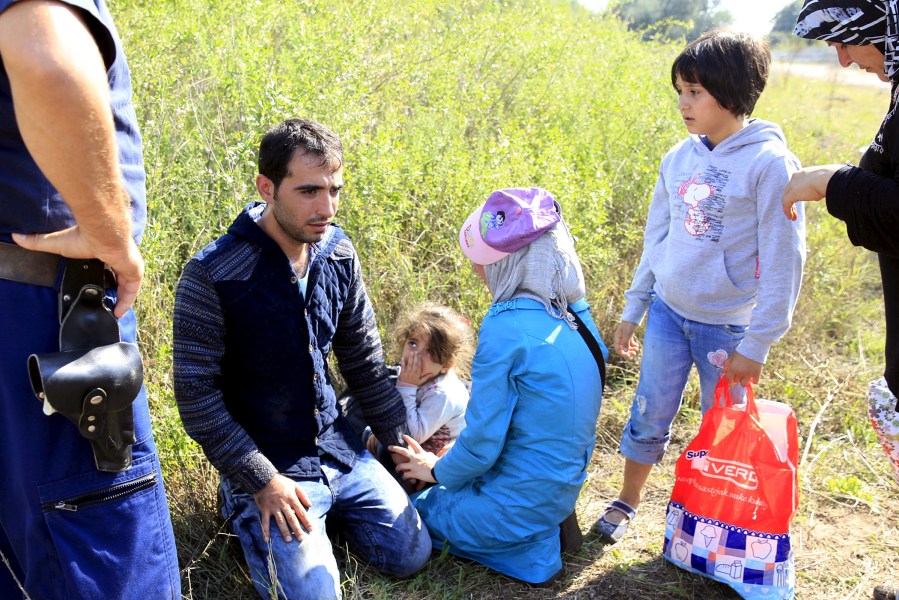
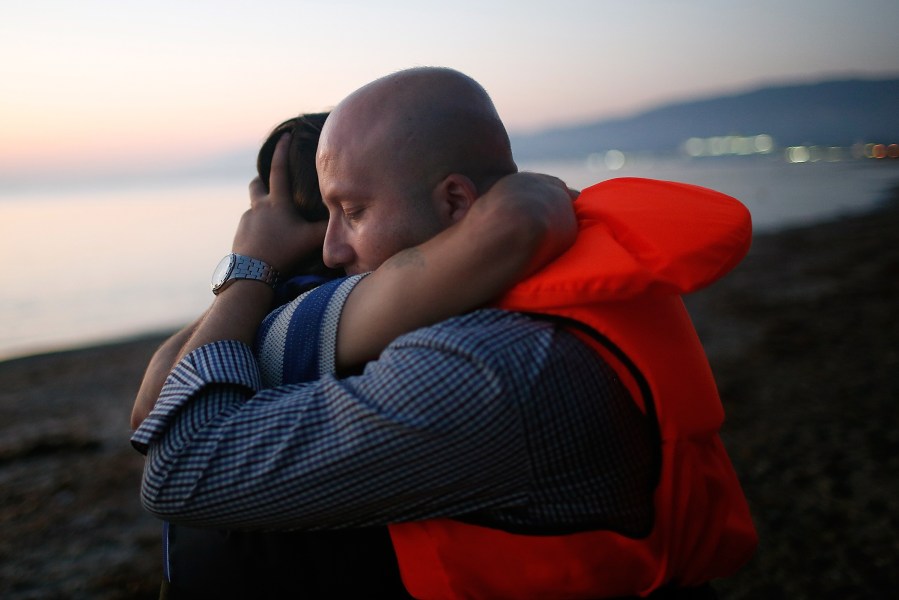
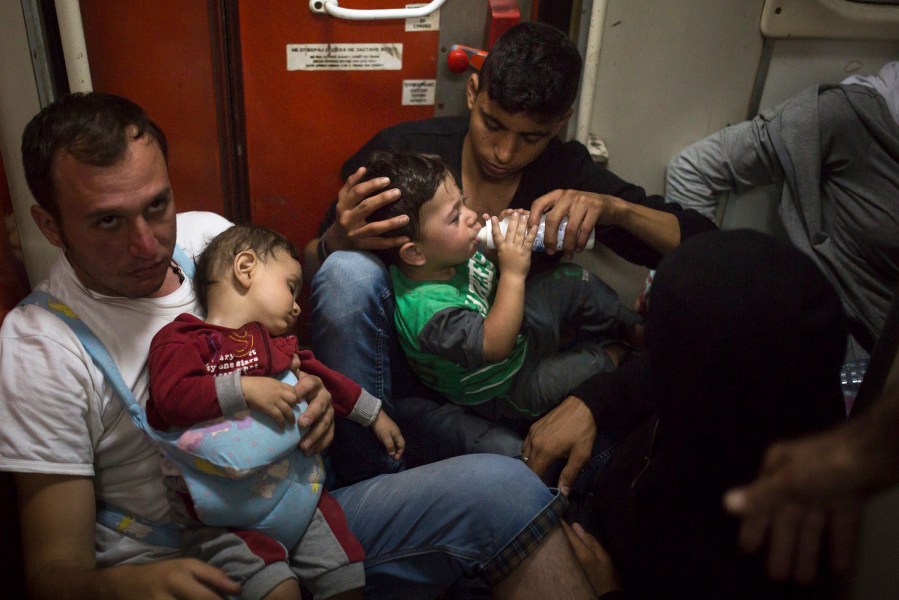
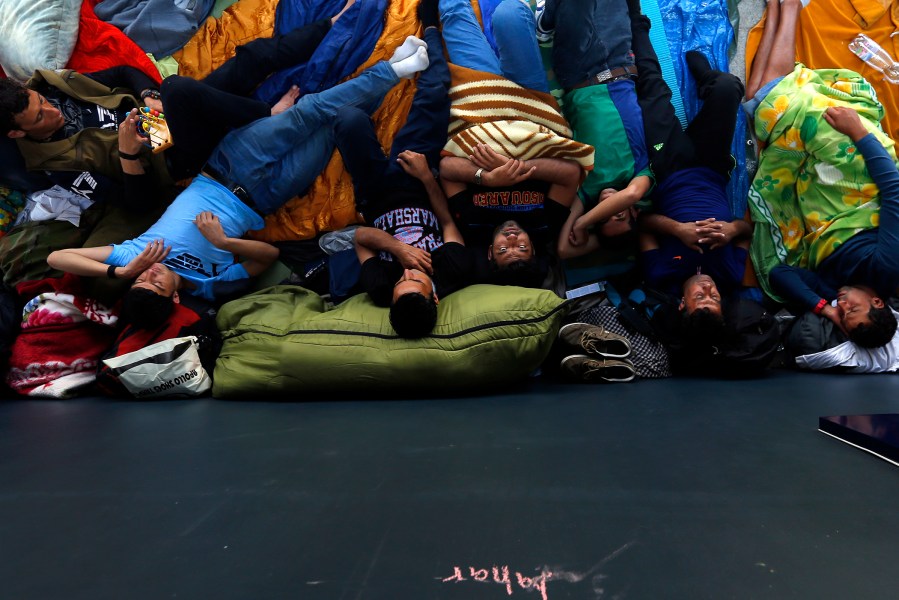
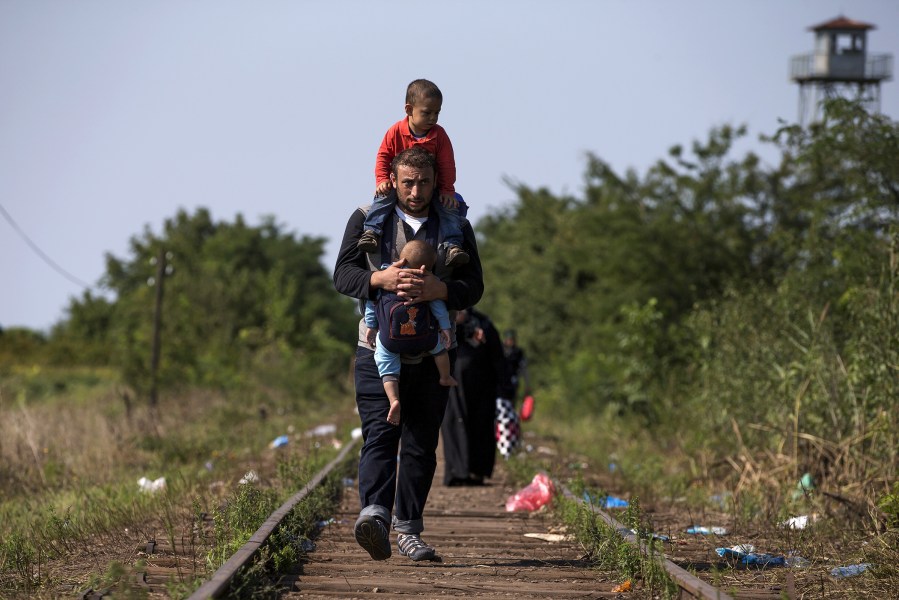
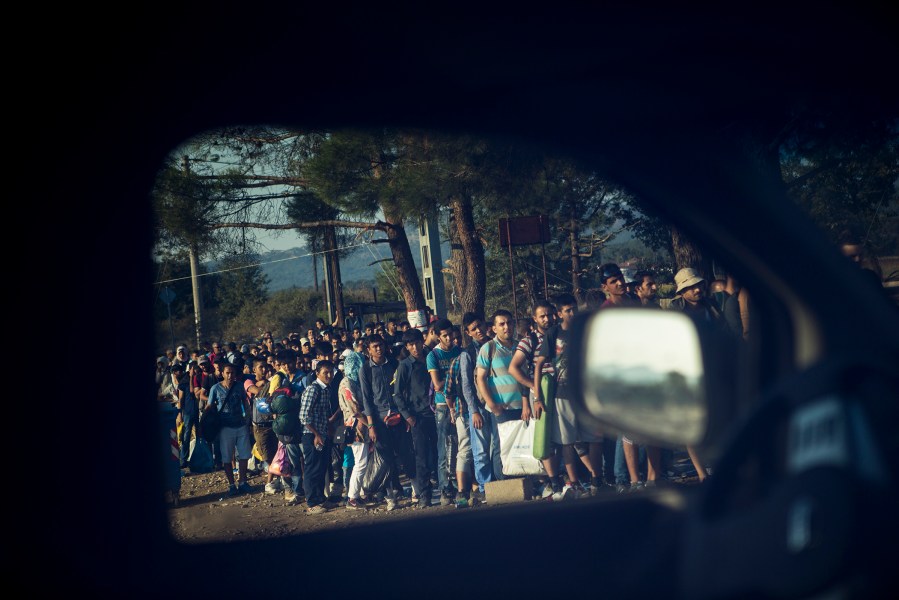
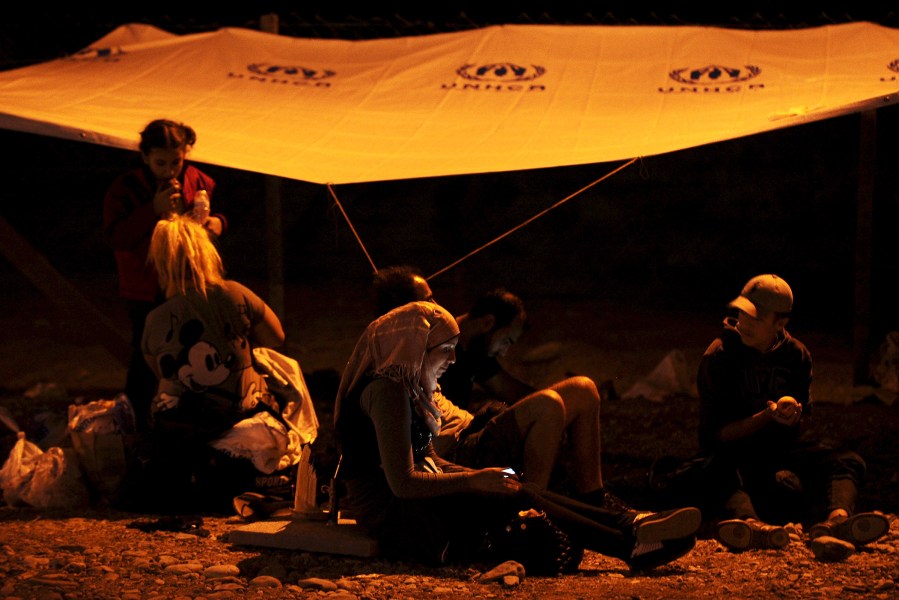
Hungarian policemen detain a Syrian migrant family after they entered Hungary at the border with Serbia, near Roszke, Hungary, Aug. 28, 2015.REUTERSMembers of a migrant family from Syria embrace each other after completing a three mile crossing of the Aegean Sea to the island of Kos from Turkey August 28, 2015 in Kos, Greece. Migrants from the Middle East and North Africa continue to flood into Europe at a rate that marks the largest migration since World War II.Getty ImagesMigrants sleep on a bench at a park in Belgrade, Serbia, Aug. 28, 2015. Over 10,000 migrants, including many women with babies and small children, have crossed into Serbia over the past few days and headed toward Hungary and the EU Schengen Area, a zone with no internal border checks between member countries.APIn this photo taken late, Aug. 27, 2015, migrants travel on an overnight train from the Macedonian town of Gevgelija, to the border with Serbia. Thousands of migrants have poured into Macedonia and boarded trains and busses that are taking them a step closer to the European Union.APAsylum seekers sleep outside a train station in Budapest, Hungary, on Aug. 27, 2015.REUTERSA Syrian migrant carries his children as he walks along a railway track to cross the Serbian border with Hungary near the village of Horgos, Aug. 27, 2015. Hungary made plans on Wednesday to reinforce its southern border with helicopters, mounted police and dogs, and was also considering using the army as record numbers of migrants, many of them Syrian refugees, passed through coils of razor-wire into Europe.REUTERSSyrian migrants cross under a fence as they enter Hungary at the border with Serbia, near Roszke, Aug. 27, 2015.REUTERSMigrants are seen through the window of a police car at the Greek-Macedonian border, as they wait to be allowed by Macedonian police to cross the border, Idomeni, northern Greece, Aug. 27, 2015. APSyrian migrants walk on a railway track after crossing the Hungarian-Serbian border near Roszke, Hungary, Aug. 26, 2015. REUTERSMigrants wait to get on the train from Macedonian south border near Gevgelija on Aug. 26, 2015 to Macedonian north border with Serbia on their way to Western Europe.REUTERSA migrant woman sits in the train at Gevgelija,The Former Yugoslav Republic of Macedonia, on Aug. 25, 2015. The Gevgelija-Presevo journey is just a part of the journey that the refugees, the vast majority of them from Syria, are forced to make along the so-called Balkan corridor, which takes them from Turkey, across Greece, Macedonia and Serbia to Hungary, the gateway to the European Union.EPASyrian refugees walk along the roads of the border town of Idomeni , northern Greece to cross the border and enter Macedonia, on Aug. 25, 2015. AP