




UPDATE (Oct. 24, 2023, 2:20 p.m. ET): The NHL on Tuesday reversed course and announced that it had lifted its ban on Pride Tape and other expressions of support for social causes by players.
Who knew something as simple as rainbow-colored tape could be so controversial?
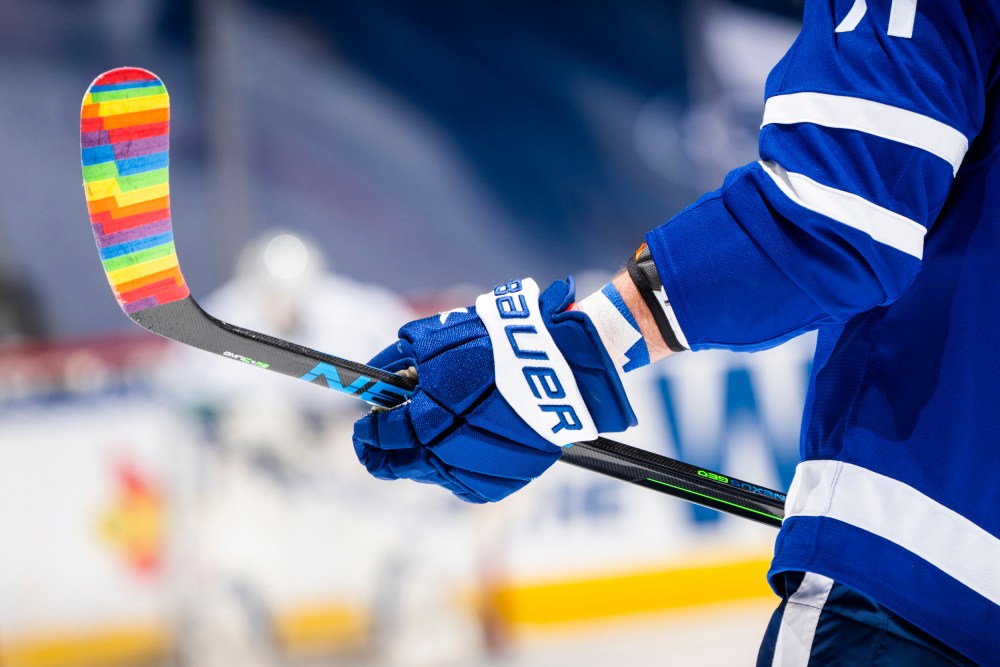
Earlier this week, Outsports reported the NHL has banned its players from using Pride Tape, a rainbow-colored athletic tape that promotes equality and inclusion, on their sticks — even during practices and pre-game warmups.
A line has been drawn carelessly in the sand in a half-hearted attempt to save face after last season, and it’s shameful to see the NHL back down so quickly.
For years, players across the league have used Pride Tape on the blades of their sticks as a simple way to show solidarity with and support of the LGBTQ+ community, typically on their team’s Pride Night. Not every player has used Pride Tape, but those who have are typically lauded by members of the LGBTQ+ community as well as the wider hockey and sports community at large.
This season, however, the NHL has outright banned its players from using Pride Tape, defying its own rulebook, which states “adhesive tape of any color may be wrapped around the stick.”
The NHL’s ban on Pride Tape is the latest disgraceful move in an attempt to placate a small but vocal group of dissenting fans and players. The issue first arose last season, when a few players refused to wear Pride jerseys, often citing their religious or political beliefs as an explanation. Those players faced backlash from media outlets (including The Athletic, The Seattle Times, TSN’s Pierre LeBrun and Flyers Nation) and fans who called them disgraceful, disrespectful and suggested they “sold out.” (One player, Eric Staal, even claimed he’d never worn a Pride jersey before, despite video evidence of him doing just that.) In response to the controversy, some teams decided not to bother wearing Pride jerseys at all.
Then the league stepped in when Commissioner Gary Bettman confirmed in June that the entire concept of themed jerseys was being scrapped. This includes any specialty jerseys, not just Pride but also Hockey Fights Cancer, Black History and even Military Appreciation jerseys. Teams can still hold so-called theme nights, but a line has been drawn carelessly in the sand in a half-hearted attempt to save face after last season, and it’s shameful to see the NHL back down so quickly rather than actually address the issue.

Pride jerseys are connected to, but also distinct from, the Pride Tape ban. Players already had the choice to opt out of wearing the themed jerseys. Pride Tape was never required, but any player who wanted to use it, could. It was an easy way for players to express their support for a marginalized community, and now with this rule, that option has been completely taken away from them.
The NHL has said players are free to support these initiatives away from the rink, but in reality, there’s no difference between the player in street clothes at a public gathering or the grocery store and the player sporting a jersey at the rink. NHL players are largely well-known in their communities, and if they’re using their voices to support a cause off the ice, they’re inherently using their platform to support said cause. A player attending a Pride parade in the summer may or may not be the same one using rainbow tape on the ice, and either scenario he represents his employers (the team and the NHL) whether or not he’s got skates on. Some players may only want to use Pride Tape to express support, while others may want to walk in a Pride parade or film a PSA for a local organization. Players should have the freedom to express their support in whatever way works for them. Either they have the choice to support a cause how they want to, or they don’t.


Using Pride Tape is one way of expressing their support, and it speaks volumes that a player is willing to step out of the box and sport the rainbow tape while playing a traditionally masculine game in modern society. Hockey has always been welcoming to straight white cisgender men; people who fall outside any or multiple of those categories have been seen as “other” for a long time. With the emergence of groups like the Hockey Diversity Alliance and Black Girl Hockey Club, that mindset is finally (albeit slowly) starting to change. Imagine a queer hockey fan or player who sees their favorite NHLer using Pride Tape. It’s a simple affirmation: You belong here. You are welcome here.
The league is clearly trying to avoid bad press and a backlash similar to last season’s Pride jersey refusals, but it’s cowardly to appease the minority of players, fans and sponsors who don’t support the LGBTQ+ community. And it also ignores the bigger picture: It may seem like just rainbow-colored athletic tape, but it’s also much more.
The ban on Pride Tape is a slap in the face to the community of LGBTQ+ fans, players and allies. Between nixing Pride jerseys and banning Pride Tape, the NHL just reiterated to its LGBTQ+ fans that, in an already hostile and unwelcoming world, they are, simply put, an unnecessary distraction to be tossed aside when it’s inconvenient. Putting rainbow tape on your stick blade doesn’t hurt anyone or even impinge on other players’ own freedom of expression, but it certainly can help someone — particularly LGBTQ+ fans who may feel unwelcome in hockey and in the NHL fandom, not to mention hockey players of all ages who could be empowered to be their authentic selves on and off the ice.
The message the NHL sends through its actions can make a big difference.
The NHL and its players have a huge global platform, with millions of followers on X, Instagram and other platforms, not to mention the more than 22 million people who attended games last season. The league is a business at its core, but with such a significant audience, it also has a responsibility to consider how its actions affect others. In this situation, they have left their fans and players (and coaches, referees, etc.) out to dry.
Other professional men’s sports leagues are a mixed bag in these situations. For over seven years, the NFL’s “My Cause My Cleats“ initiative has allowed players to choose a cause to represent on their cleats in a specific week/game — freedom of expression, to some degree. For the last four years, MLS has had a special Pride-themed pre-match kit. Every MLB team had a ‘Pride game’ last season, although not themed jerseys.
Regardless of what other leagues do, it’s incredibly disappointing and disheartening to see the NHL cowed by a vocal minority here. The message the NHL sends through its actions can make a big difference. In removing Pride jerseys and banning Pride Tape, the NHL didn’t just dip its toes into a cesspool of homophobia and right-wing, anti-LGBTQ+ propaganda, it dove in head-first. From here, the league can continue to sink — or it can change course and come up for air.

Melissa Burgess
Melissa Burgess is a freelance sportswriter who has covered men’s and women’s hockey and other sports for over 12 years. Her work has appeared on platforms including The Hockey News, The Buffalo News, CBC Radio, Victory Press and WBFO Radio. She is a member of the first-ever women’s hockey chapter of the Professional Hockey Writers’ Association.