




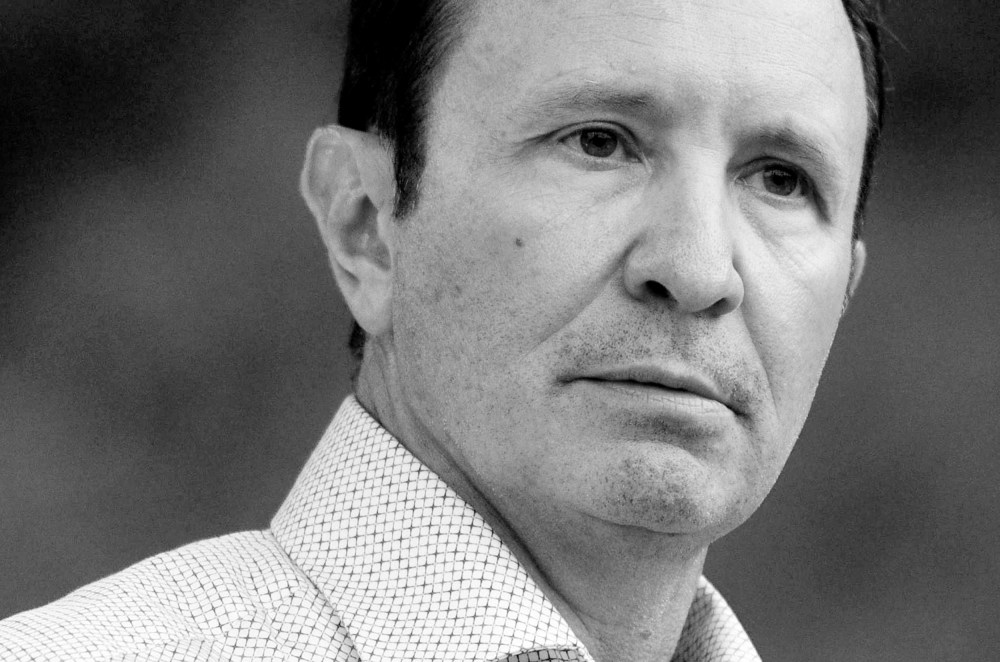
After eight years of being able to boast of having a Democratic governor in the Deep South, Louisiana voted Saturday to promote Republican Attorney General Jeff Landry to the highest office in the state. In 2021, Landry, who stays on the front line of right-wing culture wars, was on the executive committee of The Rule of Law Defense Fund, an affiliate of the Republican Attorneys General Association, that summoned Trump supporters to the Elipse on Jan. 6, 2021.
With his aggressive and dystopian plan for the state, people across the United States are rightly asking how Landry was able to walk untouched into the end zone.
In addition to that, he has run a crusade against Louisiana’s majority Black cities by blocking police reforms, retaliating against city officials who disagree with him on abortion and immigration issues, and supporting bills that would release the records of juvenile offenders, but only in the three parishes with the highest Black populations. He launched his campaign with a video attacking “incompetent mayors and woke district attorneys.” Among the many lawsuits he has filed against the president and the current governor are ones that would roll back protections for minority communities living in Louisiana’s Cancer Alley and deny clemency to death row inmates.
With his aggressive and dystopian plan for the state, people across the United States are rightly asking how Landry was able to walk untouched into the end zone. He had seven Republican opponents and a major Democratic opponent who’d served as state transportation secretary, but in a low turnout election, he won Louisiana’s jungle primary election with 52% of votes cast. Democrats across the country are also panicking and wondering what the low turnout and Landry’s waltz to victory foretell for 2024.
While I hold no belief that Landry’s victory is a harbinger of things to come, I do believe that as the country moves toward the likely matchup between President Joe Biden and former President Donald Trump, what happened in Louisiana should serve as a cautionary tale to Democrats.
There are no off years in the work of democracy. Activists and donors must engage early. Rank-and-file Democrats should learn how to get involved with state parties and demand accountability. The takeaway is that time spent worrying is time wasted. Anxiety should be turned into action.
As for how Landry won so easily, there’s never just one answer to why a candidate won an election, but in addition to a sizable war chest that no other candidate came close to matching, a big reason he won was that there was an air of inevitability to his election. The Louisiana GOP negotiated an early endorsement for the front runner, effectively shutting other Republicans off from receiving major resources. Despite the outcry that move caused, party insiders made the determination that building early momentum for the top polling candidate was the most effective way to avoid losing the seat again.
LOUISIANA SENATE
— John Couvillon (@WinWithJMC) August 10, 2023
Before a single ballot has been cast, the 39 member chamber is guaranteed to have 20 Republicans and 8 Democrats
And Louisianans, even fretting Democrats, seemed almost resigned to Landry winning.
In contrast to the way the state’s GOP locked in on Landry early, Shawn Wilson, the Democrat who came in second with 26% of the vote Saturday, didn’t enter the race until the chair of the Louisiana Democratic Party, who’d hinted at a candidacy, backed away from a run.
Despite his impressive record and extensive experience serving both Democratic and Republican governors, Wilson had little name recognition and faced the additional hurdle that Louisiana hasn’t elected a Black person to a statewide office since Reconstruction. His work ethic can’t be denied, but he struggled to attract significant donors or nationally known staff. If campaigns are about drawing contrasts between candidates, it’s fair to question if the case was ever fully made against the front runner.
Because of his substantial fundraising advantage, Landry was able to blanket television airwaves and Black radio with campaign ads that falsely painted him as a moderate and a uniter. None of his opponents found opportunities to counter that message with evidence of who Landry has proven himself to be.
Landry, who was elected to Congress in 2010 as a tea party Republican, can be counted on to put right-wing grandstanding over everything else.
Here’s what Louisiana voters should have been reminded of and what those outside of Louisiana should know: Landry, who was elected to Congress in 2010 as a tea party Republican, can be counted on to put right-wing grandstanding over everything else. In 2011, he was the only Republican in Louisiana’s congressional delegation who turned down President Barack Obama’s invitation to House Republicans to discuss fiscal issues. “It’s more than a little arrogant,” Norm Ornstein, at the conservative American Enterprise Institute, said of Landry’s stunt. His petulance, Ornstein said, revealed he had “little understanding of the political process, the role of the constitutional institutions, much less basic politeness.”
He fought and eventually helped overturn Gov. Edwards’ executive order that put language prohibiting discrimination against LGBTQ people in state contracts. When an undocumented driver from Honduras caused a fatal crash on an interstate highway 40 minutes from New Orleans, Landry whipped up anti-immigrant sentiment by claiming that New Orleans’ status as a “sanctuary city” was to blame, even though that driver wasn’t living in New Orleans. He fought against sensible Covid mitigation efforts at almost every turn, and at one point emailed employees at the attorney general’s office a form letter he said they could use to resist face mask mandates at their children’s schools. It read in part, “I do not consent to forcing a face covering on my child, who is created in the image of God.” It also claimed, “Masks lead to anti-social behaviors, interfere with religious commands to share God’s love with others, and interfere with relationships in contravention with the Bible.”
The Sunday after Landry was elected, tenured Louisiana State University mass communications professor Bob Mann, who’s been at the school 18 years, announced he’d retire by the end of the school year. Landry, as attorney general, had demanded that LSU fire Mann because Mann had criticized one of Landry’s staffers by calling her a “flunkie.” Mann said he had little confidence that LSU would stand up to a Gov. Landry and defend academic freedom.
If you are disturbed at what Gov. Ron DeSantis is doing in Florida, then you’re really going to have a problem with what Landry does in Louisiana. But now that he’s been elected, Democrats need to begin thinking about what’s next. In addition to starting early and putting money behind their candidates, one message that Democrats across the country can take from Louisiana is to run candidates in every race. The Louisiana Democratic Party failed to field candidates in so many legislative races that Republicans were already guaranteed control of both chambers of the Legislature before the first vote was cast. Additionally, many incumbent Democratic lawmakers were re-elected without opposition. This dearth of down ballot races to help the top of the ticket with voter turnout, combined with the party’s lack of a robust statewide modern field campaign, is why turnout Saturday was the lowest of the last five gubernatorial election cycles, comparable only to 2011 when then Gov. Bobby Jindal faced no real competition for his re-election. If you are disturbed at what Gov. Ron DeSantis is doing in Florida, then you’re really going to have a problem with what Landry does in Louisiana. While professional and armchair pundits have scolded Louisiana voters for not showing up to the polls, years of data confirm that — like it or not — voters simply must be mobilized. There is much work to do, but here’s why I remain hopeful for Louisiana, and why I would advise Democrats across the country to avoid falling into despair. In 2015, the year after Democrat Mary Landrieu lost her Senate seat, John Bel Edwards, who won the governor’s race, proved that a Democrat could still win statewide. Five years ago, the Unanimous Jury Coalition, an alliance of criminal justice reform groups and community organizing groups, convinced Louisiana voters to pass, by a wide margin, a constitutional amendment that ended the racist and unconstitutional practice of letting non-unanimous juries send defendants to prison for life. Those same advocates and activists have impacted judicial and sheriff races and shifted the conversations in city council and mayoral races. And they helped get John Bel Edwards across the finish line in his re-election four years ago. In fact, they were poised to fire up their voter turnout machine, which focuses on Black and minority communities, for this year’s expected gubernatorial runoff. But there was no runoff. In order to start voter engagement efforts earlier in the cycle, these groups need more money to operate at a high capacity for longer stretches of time. Electing more Democrats is an existential issue not just for Louisiana, but also for our country if we are to stop the assault of climate change, mitigate a vanishing insurance market and offer protections for workers, women, the LGBTQ community and our most vulnerable citizens. Democrats have won the popular vote in seven of the last eight presidential elections, but haven’t put enough focus on state and local elections. There is ample evidence that these races are not out of reach for Democratic contenders if the appropriate preparation and effort is put into them. Landry’s romp Saturday is what happens when that ground is ceded to Republicans. Given the number of lives at stake, Democrats must vow to never allow this to happen again.
Lynda Woolard
Lynda Woolard is a veteran campaign organizer, Democratic strategist, and host of the "Louisiana Lefty" podcast. Her political career began in New Orleans with Barack Obama in a campaign and advocacy relationship that lasted six years. She has since been involved in multiple successful statewide campaigns, including both of John Bel Edwards’ runs for governor and the Unanimous Jury Coalition’s constitutional amendment to end the discriminatory practice of accepting non-unanimous jury verdicts. 

