




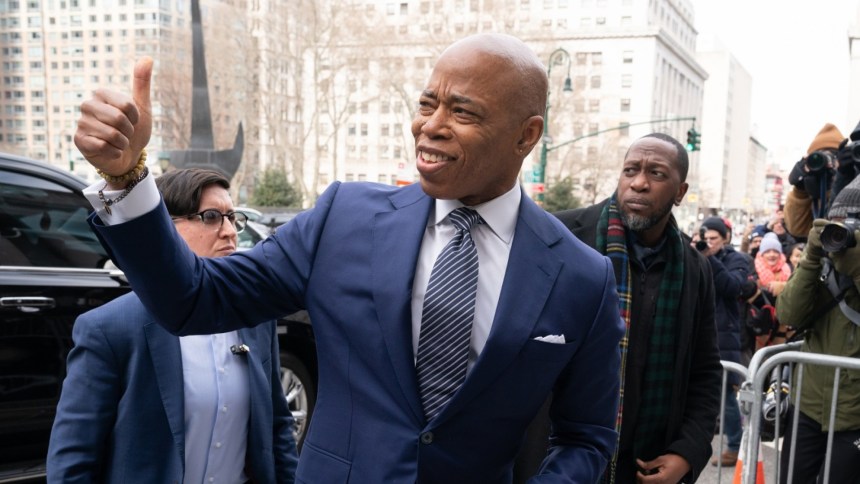

U.S. District Judge Dale Ho has a difficult decision to make in the Eric Adams case, which both the defendant and the Trump Justice Department have said they want dismissed. Ahead of his impending decision, a group of former federal judges wrote to Ho suggesting that, given the “extreme circumstances” in the case, he can appoint a special prosecutor “to advance the public interest in justice if the Justice Department refuses to do so.”
But despite those extreme circumstances, there’s reason to think the Supreme Court could strike down the appointment of a special prosecutor if Ho goes that route. That’s so notwithstanding the ex-judges’ observation that the DOJ’s intended dismissal appears to be “one half of an improper quid pro quo — the other half being Mayor Adams’s agreement to further the administration’s immigration policy objectives, which have nothing to do with the charges against Mayor Adams.”
To understand why at least some of the justices might have concerns with such an appointment — something that other outside parties have suggested to Ho as well — consider the case of Steven Donziger. It was there that another federal judge in New York appointed a prosecutor to pursue a contempt case against Donziger, after federal prosecutors declined to do so. The Supreme Court declined to take up Donziger’s appeal of his conviction in 2023, but Justice Neil Gorsuch wrote a dissent, joined by Justice Brett Kavanaugh, that could reflect broader concerns with any appointment of an Adams prosecutor.
“Who really thinks that the President may choose law clerks for my colleagues, that we can pick White House staff for him, or that either he or we are entitled to select aides for the Speaker of the House?” Gorsuch wrote, cautioning “future courts weighing whether to appoint their own prosecutors.”
But the separation of powers concerns animating Gorsuch’s dissent are broadly shared by a majority of the court.
To be sure, it was only two justices expressing that view. But the separation of powers concerns animating Gorsuch’s dissent are broadly shared by a majority of the court, as we saw, for example, in Chief Justice John Roberts’ decision in the Trump immunity case last year.
Another thing to consider is that judges’ authority to appoint special prosecutors (which at least two justices have publicly questioned) has come about in the contempt context, like in the Donziger case. On that note, the former federal judges wrote in their brief that they weren’t “aware of any binding authority for the proposition that the Court’s inherent authority to appoint a special prosecutor is limited to the contempt context.” But another way to put that is that a court’s authority to do so outside of the contempt context is not necessarily established, either. So, to the extent that appointing a special prosecutor in the Adams case could be seen as an expansion of an already suspect authority, then that could give the justices even more pause.
Of course, it’s possible that the Adams affair will be resolved without Judge Ho grappling one way or the other with whether to appoint a special prosecutor. As it stands now, the latest wrinkle in the case is that Adams asked Ho to dismiss the case with prejudice — meaning permanently — while the DOJ had asked the judge to do so without prejudice (something Adams previously agreed to), which is what raised the quid pro quo concern. Briefs are due Friday from the parties and from a third-party attorney (not a prosecutor) whom Ho appointed to give his views on the subject, due to the lack of an adversarial relationship at the time between Adams and the Justice Department — though, depending on how the DOJ responds to Adams’ latest bid to get rid of his case forever, then it may become adversarial soon.
So we’ll see what the parties and the outside lawyer say in their briefs, along with what the judge does in response (he previously said he may hold oral arguments March 14). But among the steps Ho could take, appointing a special prosecutor could be one of the legally riskier ones, even if it seems warranted by the circumstances.
Subscribe to the Deadline: Legal Newsletter for expert analysis on the top legal stories of the week, including updates from the Supreme Court and developments in Donald Trump’s legal cases.
