





The founder and CEO of a trendy baby clothing brand is the internet’s latest main character — that is, she’s is the latest face of controversy online — after a new mom says she was fired after asking to work remotely from near the neonatal intensive care unit and her premature infant. Kyte Baby CEO Ying Liu’s decision to adhere to company policy and limit the new mother to two weeks of maternity leave is a reminder that even brands that claim to cater to moms and babies often offer up nothing more than empty platitudes and corporate, advertiser-friendly buzzwords.
Even at woman-owned companies such as Kyte Baby, profits often supersede the well-being of new and expectant working moms and their babies.
It’s yet more evidence that in corporate America, even at woman-owned companies such as Kyte Baby, profits often supersede the well-being of new and expectant working moms and their babies.
According to the family’s GoFundMe page, Marissa and her husband spent three years trying to conceive. She underwent painful IVF treatments and survived a surgery that briefly left her clinically dead. After deciding to pursue adoption, the couple were notified in December that their baby had been born in El Paso weighing slightly more than a pound at 22 weeks gestation. Marissa made the reasonable request that she be allowed to work remotely in El Paso, nine hours away from Kyte Baby’s headquarters in the Dallas-Fort Worth area.
Kyte Baby said in a Jan. 19 statement to TODAY.com that Marissa, 26, had been mistakenly denied remote work and “declined” the company’s offer to return to work. Marissa says she was fired.
“It was never my intention to quit — I was willing to work from the NICU!” Marissa told TODAY.com in an interview published Tuesday. “I did tell them, ‘This is a slap in the face … My child is fighting for his life.’” MSNBC.com, as TODAY.com did, is withholding Marissa’s last name to protect her privacy.
A Kyte Baby spokesperson told TODAY.com on Monday that Marissa was told “a job would be there when she was ready to return.” Marissa says she was told only that Kyte Baby would “consider” taking her back. “Why say you’ll ‘consider it?’ I was never told I had a job.”
Kyte Baby told CNN it’s revising its maternity leave policy.
In what was the second of two TikTok apologies she posted, Liu said, “I’m the one who made the decision to veto her request to go remote as she stays in the NICU to take care of her adopted baby. When I think back, that was a terrible decision.” Liu’s first TikTok apology had been criticized by many who’d watched it as scripted, and Liu acknowledged in her do-over that it was indeed scripted.
Regarding Marissa, Lieu said in her second apology: “I was insensitive, selfish and was only focused on the fact that her job had always been done on-site, and I didn’t see the possibility of doing it remotely.”
While there are more moms in the workplace than ever before, moms are paid 74 cents for every dollar a dad makes. Employers routinely consider fatherhood to be a sign of “greater work commitment, stability, and deservingness,” even as they assume moms to be distracted and unreliable. This, despite some studies showing moms are actually more productive than their kid-free counterparts.
As working mothers, the cards are already stacked against us, both in and outside of the home. We’re the only industrial nation without mandatory paid family leave. In the U.S., moms make 83% of all purchasing decisions in their households but only 12% of moms in the private sector have access to paid maternity leave. Given those numbers, it matters which companies back up their family-friendly values with action and which companies are paying new and soon-to-be working moms shameless lip service.
I once worked for a brand geared toward millennial moms. Internally and externally, the company was touted as a safe haven for working parents who were trying to “do it all,” from growing their careers and their families to keeping up with politics and the latest babywearing method. It wasn’t uncommon to hear phrases like “we’re a family” and “mom-friendly” and “family comes first,” both in the office and at public events.
I was shocked, then, when I was denied a request to work remotely part-time after giving birth and despite a note from my psychologist attesting to my deep postpartum depression. Like Marissa, I wasn’t asking for time off, paid or unpaid. I wanted to work, just work near my son, who spent more than a week in the pediatric ICU at 4 weeks old. That hospital stay destroyed my mental health multiple times over.
After I was told that my working remotely would ruin the “office vibe,” I quit. To eventually watch all of my previous co-workers and managers work remotely full time after the onset of the COVID-19 pandemic, “office vibe” be damned, was telling.


Unfortunately, I’m not alone. Whether a working mom is employed by a “family-friendly” brand or not, countless companies that seemingly “uplift” moms and babies are also known to penalize, threaten and even terminate us postpartum, oftentimes when we’re at our most vulnerable mentally, emotionally and physically.
In 2019, Nike released a Mother’s Day ad promoting gender equality, despite criticisms from some women athletes it sponsored that the company didn’t practice that equality. Some Olympic athletes reported that after becoming a new mom, they were denied time off from Nike — and were pressured to spend less time with their newborns and more time training.
“Getting pregnant is the kiss of death for a female athlete,” Phoebe Wright, a runner sponsored by Nike for six years, said in an op-ed in The New York Times. “There’s no way I’d tell Nike if I were pregnant.”
In 2019, Nike released a Mother’s Day ad promoting gender equality, despite criticisms from some women athletes it sponsored that the company didn’t practice that equality.
As CNBC reported in May 2019, after The New York Times op-ed, Nike announced that it was changing its policy to better support the pregnant athletes it sponsored and specifically adding “written terms” to new contracts. “We want to make it clear today that we support women as they decide how to be both great mothers and great athletes,” Nike said its statement. “We recognize we can do more and that there is an important opportunity for the sports industry to evolve to support female athletes.”
In 2019, Ivy Ennals, a manager at Gabe’s, a retail store in Vineland, New Jersey, gave birth via an emergency C-section. When she returned from her 12 weeks of leave, provided by the federal Family and Medical Leave Act, she learned she had been terminated for “failing to communicate.” Four years later, her former employer settled with her for $113,500.
In 2023, after giving birth to a stillborn baby, Elena Andres was denied maternity leave by her employer, the Austin Public Health Department. Andres was told she didn’t qualify for leave because the death of a child is not covered under the FMLA.
The stories go on, and on, and on.

The economic impact of working moms cannot be overstated. Between 1970-2013, women’s labor force participation injected $2 trillion into the nation’s economy. Yet we are made to feel fearful and alone in the workplace the moment we decide to start or expand our families, even when we’re employed by brands that market themselves to new families. One 2014 study found that nearly 3 in 10 working parents fear they’ll be fired because of family responsibilities.
In 2020, a survey conducted by Catalyst-CNBC found that half of working parents fear “being a parent is a strike against them in the workplace during COVID-19.”
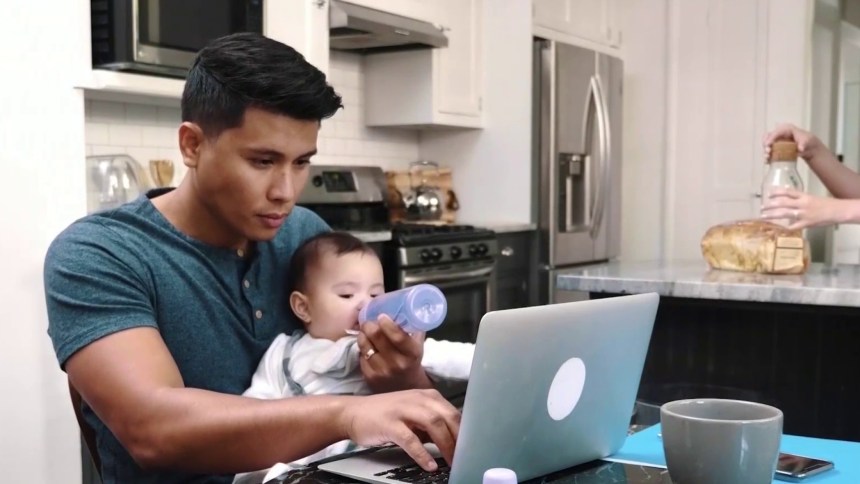
Without federally mandated policies that hold all companies, especially those issuing the faux “family values,” accountable, nothing is likely to change in the future, either. When companies prioritize their profit margins and bottom lines, us working moms are left fending for ourselves and desperately bargaining — offering even to sit in the NICU with our laptops so we can afford to help our babies continue to grow.

Danielle Campoamor
Danielle Campoamor is a freelance journalist who has been published in Teen Vogue, Harper's Bazaar, CNN Opinion, Playboy, Newsweek, BuzzFeed and Marie Claire, among others.