




In the span of just one week, the topic of presidential pardons has gone from comical to confounding. On Nov. 24, after the White House ran a Twitter poll asking for the public’s opinion on which of two turkeys should receive the annual Thanksgiving presidential pardon, President Donald Trump issued his reprieve to a relieved and rotund bird named Corn.
Which turkey should President Trump pardon at this year’s National Thanksgiving Turkey Pardoning Ceremony—Corn or Cob?
— The White House (@WhiteHouse) November 23, 2020
Poultry pardons aside, things got serious when we learned on Monday that the president had issued a “full and unconditional” pardon to his former national security adviser, Michael Flynn, who had pled guilty to lying to the FBI about his dealings with Russia.
“Full and unconditional”: DOJ Files Trump’s Pardon of Michael Flynn in Judge Sullivan’s Court — Here’s What It Says https://t.co/YUdLG6gwb8 via @lawcrimenews #FlynnPardon #FlynnLied
— Frank Figliuzzi (@FrankFigliuzzi1) November 30, 2020
On Tuesday, we learned that Trump had discussed potentially pardoning his personal counsel-cum-court-jester Rudy Giuliani, as well as some of his own family members.
Before the Tuesday news cycle could give way to Wednesday, there was another pardon-related revelation — the Department of Justice is investigating the attempted sale of presidential clemency for cash. And the week isn’t over.
The possibility of criminal charges against the president and his family is neither hypothetical nor far-fetched.
News of an active investigation of at least two individuals who are lobbying White House officials on behalf of a convicted criminal raises the specter of a corrupt pardon process. In fact, all the pardon-related news so far this week, except perhaps for the turkey’s, should have us screaming “foul.”
It’s no surprise that the chronically corrupt orbit around the president would generate a bribery scheme that reportedly would exchange a pardon for a payment in the form of a political contribution. We learned of the pending inquiry because a federal judge issued a heavily redacted opinion on whether prosecutors could look at terabytes of data on 50 electronic devices seized during a search warrant in the bribery case. The defense argued that the data was attorney-client privileged and should not be disclosed to investigators – but the judge disagreed and released that decision over objections.
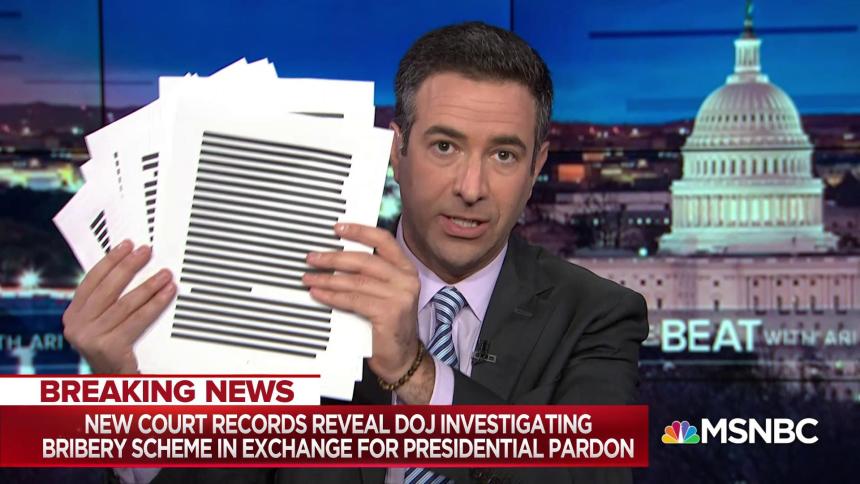
Social media exploded with long threads of discussion about who the subjects of the investigation might be, and the possible identity of the convicted pardon purchaser.
And it appears the 3rd party that “spoiled” attorney-client privilege & appears to be acting as the bagman has a name that doesn’t end in S. I think I know who it is. Listen to @dailybeanspod tomorrow for an in-the-weeds breakdown of the memo with @patorrezlaw of @openargs and me https://t.co/X09unlPGow
— Mueller, She Wrote Podcast (@MuellerSheWrote) December 2, 2020
Although we don’t yet know to what extent Trump was aware of the scheme, don’t be surprised if we indirectly learn the identity of the purported purveyors should Trump decide to pardon them to protect himself. That could lead to a head-spinning scenario where a presidential pardon is given to individuals who are under active investigation for trying to sell a presidential pardon.
This week’s news raises pardon concerns that extend beyond the traditional definition of pay-to-play corruption to more broad, even untested, questions about what constitutes abuse of the presidential pardon powers. The Constitution gives the president clemency powers “to grant reprieves and pardons for offenses against the United States, except in cases of impeachment.” This could be either a commutation, which reduces or eliminates a sentence imposed after a conviction for a crime, or a pardon — a broader nullification of all legal consequences for an offense.
The cloudiest question of all is whether the president can pardon himself.
Presidents can, and have, pardoned family members — as President Bill Clinton did for his half-brother, Roger. They can also issue a pardon to a person prior to any charge or conviction. But the combination of the Flynn pardon, the earlier commutation of Roger Stone’s sentence, and the reports that Trump is considering pardons of his own family, Giuliani and even himself, submerge us in dangerous and uncharted legal waters.


That’s because such pardons aren’t about righting injustices or showing mercy — they’re about obstructing justice by protecting the pardoner. Who, in this case, is Trump.
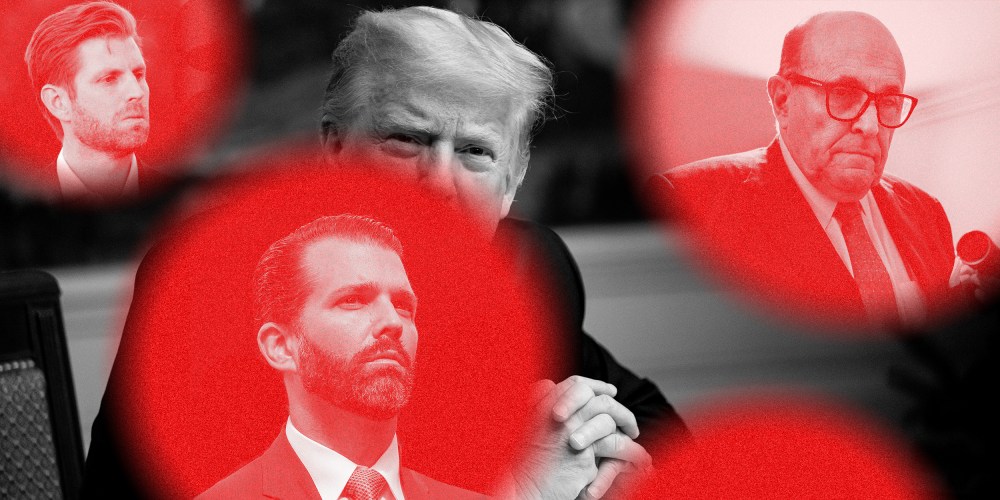
Trump’s family members – including sons Donald Jr. and Eric, daughter Ivanka and her husband, Jared Kushner – are not independent actors isolated and distinct from the man who might pardon them. Rather, because of the senior roles they played in the Trump Foundation, the Trump Organization and/or as White House advisers, they have knowledge that could prove valuable to prosecutors who might currently, or in the future, investigate wrongdoing by the president.
The possibility of criminal charges against the president and his family is neither hypothetical nor far-fetched. In just one recent example, analysis of Trump’s tax returns revealed that he claimed a business deduction for over $700,000 paid to Ivanka as a consultant to the Trump Organization while she was simultaneously an employee of that company. If Ivanka knowingly accepted this money and did it with any understanding that it was to evade taxes, and then her father signed the tax returns knowingly, both could face criminal liability.

As with Flynn and Stone, both of whom could potentially testify against Trump, pardoning Giuliani could similarly act as a safeguard to ensure his silence. Giuliani knows precisely how much Trump was or was not aware of efforts to dig up dirt on President-elect Joe Biden, disseminate foreign disinformation and how those efforts were funded.
But the cloudiest question of all is whether the president can pardon himself. Legal scholars hold differing opinions on this. As Charlie Savage explained in his Dec. 2 New York Times article, “There is no definitive answer because no president has ever tried to pardon himself and then faced prosecution anyway.”
The only clarity we do have in this regard is that presidential pardons do not extend to state or local crimes – and Trump remains in legal jeopardy at both of those jurisdictional levels in New York.
That’s why all this talk of pardons and potential pardons, while confusing and confounding, also serves as a clarion call to federal prosecutors and agents. Those frustrated feds should upload their remaining investigative work, update their local and state contacts list, and prepare to hit “send.”
