






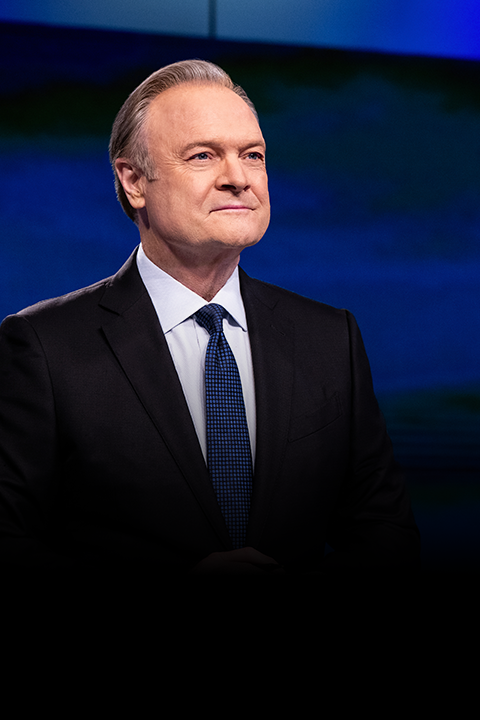
What is the nature of existence? Why is there something rather than nothing? And what are our limits of knowledge? These are questions that have captured the imaginations of pretty much every culture that has ever existed. Our guest this week, Marcelo Gleiser, co-authored a fascinating New York Times op-ed titled, “The Story of Our Universe May Be Starting to Unravel.” Gleiser is the Appleton Professor of Natural Philosophy and a professor of physics and astronomy at Dartmouth College. He’s also author of numerous books, including his most recent one, “The Dawn of a Mindful Universe: A Manifesto for Humanity’s Future.” Gleiser joins WITHpod to discuss why different scientific methods of measuring the age of the universe continually yield different results, contemporary departures from longstanding theories about the origins of the universe, the importance of us cultivating time to think about life’s big questions and more. Note that this episode was recorded on September 28th, 2023 and we held it for release.
This is a rough transcript — please excuse any typos.
Marcelo Gleiser: You can say love, but how do you capture that, you know, in an objective way? You can’t, because love is mostly a subjective feeling. And that’s to me, perhaps the way questions like the origin of everything go, right? In order to answer such a question, you need to believe in something. And if your belief is a God, that’s fine for you. If your belief is a theory or model, which is scientific, that’s fine for you. But have the humility to accept that this is not the final truth of everything, but it’s something based on our belief system.
Chris Hayes: Hello, and welcome to “Why Is This Happening?” with me, your host, Chris Hayes.
You know, one of the things that I loved about being a philosophy student when I was an undergraduate was that you would be wrenched from the mundane banal occupations of normal life. You know, I have my to-do list, I have my homework, I have this party I want to go to, but I also have this paper due. And sometimes you think one circle out from that, like in my daily life now, I think a lot about bigger issues, you know, the fate of American democracy and the way that our politics functions and things like that. But the amazing thing about studying philosophy was that it would force you to think about the biggest issues, right?
And to take something that seemed like you knew basically what it was and then start going at it until you realized that you didn’t really understand it. It could be everything from what it means to know something to the nature of the category of time to, you know, love, what’s the nature of love. And there’s always something kind of, because we all go through daily life, particularly as we get older and we’re not in school and we’re kind of just, you know, knocking through our to-do list and hanging out with the people that we love, you know, particularly if you don’t have a particular spiritual tradition, if you’re not, you know, attending mass or a temple or a mosque or meditating regularly, it could be easy to not be forced to think about like the biggest issues.
Like what is the nature of existence for instance? Why is there something rather than nothing? And it’s thrilling and kind of terrifying, but also thrilling to think about those issues. And I just encountered a “New York Times” op-ed the other day that just made me think about it. “The Times” op-ed is called “The Story of Our Universe May Be Starting to Unravel.” And I’m going to talk a little bit about what the basic thesis is, but I don’t kind of want to give it away because I want to bring in the person that I sought out to talk about this with because it has been stuck in my head ever since.
And it was co-authored by two astrophysicists and theoretical physicists, Dr. Frank, Adam Frank, who’s an astrophysicist at the University of Rochester. and Marcelo Gleiser, who’s a theoretical physicist at Dartmouth College. And it’s my great pleasure to welcome Dr. Gleiser to “Why Is This Happening?” He’s the Appleton Professor of Natural Philosophy and a professor of physics and astronomy at Dartmouth College. He’s the author of numerous books, including his most recent one, “The Dawn Of A Mindful Universe: A Manifesto For Humanity’s Future.” Dr. Gleiser, it’s great to have you in the program.
Marcelo Gleiser: Thank you so much, Chris. Super happy to be here.
Chris Hayes: I see that you sort of divide your time a bit between philosophy and physics. You’re sort of straddling the two because the work that you do in physics is so at the boundaries of even what science can kind of describe.
Marcelo Gleiser: Yes, that’s absolutely true. I mean, you know, I could not, although I deeply respect my colleagues that are working like high intensity lasers or how to build a faster microchip, which are incredibly important, otherwise we wouldn’t be having this conversation. Since I was really young, you know, I was just like your philosophy questions. You know, I wanted to understand the meaning of life or why we are here or how come there is a universe.
And in my teenage years, I realized that, hey, wait a second, you don’t have to go to religion to figure out these things. You can actually be a scientist and think about these big questions. And I’ve never looked back ever since, you know. There are parts of physics, in particular cosmology, which is the topic of the op-ed you’re mentioning, that deal exactly with this question, why is there something rather than nothing? And it’s a question that has baffled us forever.
Chris Hayes: Yes, it’s the question, right? I mean it’s —
Marcelo Gleiser: It’s the question.
Chris Hayes: — literally the question, right? It’s the fundamental question, why is there something rather than nothing? Because we have the minds we have to ask the question only because there is something. Were there nothing, there would be no questions being asked.
Marcelo Gleiser: Exactly. And to me, if you start to think about this and look at pretty much every culture that has ever existed has come up with a story of creation. You know, with some sort of narrative that describes, okay, we’re here, the world is here, how come, right? And you go to the Maori natives of New Zealand, you go to Yanomami in the Amazon forest, you go to Genesis, right, chapter one of the Bible. There is always a story of origins.
And in a sense, cosmology, the modern branch of physics and astronomy that deals with this is falling on the same kind of tradition, trying to bring science or some ideas from science to kind of give us a guidance to this very deep and apparently far away from everyday life kind of question, that is the meaning of us being in this world.
Chris Hayes: So I wanted to start, before we got to the op-ed. So, basically my understanding of the basics of the op-ed are we have a theory in cosmology that describes the origins of the universe and its sort of dynamic nature. We are getting better at going out into the universe and looking for data that we didn’t have access to before because we’re sending these telescopes out and we’re seeing more and more things. We’re observing more and more data points.
And when you take the data, you compare it to the theory, the theory is making certain predictions and the data is coming back and it’s not quite working with what the theory tells us we should expect. So, what we end up doing is kind of patching the theory in certain ways, but maybe it’s time that we get to a point where enough data comes back that we got to start asking more fundamental questions about the theory. Is that a fair characterization of the op-ed?
Marcelo Gleiser: It’s an excellent characterization of the op-ed. And in fact, you know, I wanted to say that science works this way. So when people say oh crisis —
Chris Hayes: In everything, exactly, yes.
Marcelo Gleiser: Right? I mean, oh crisis in cosmology, crisis in physics, that means we don’t know what we’re talking about, and that is not exactly right. What we don’t know is the border, you know, sort of like the cutting edge ideas, they’re shaping things that we ask. We’re kind of like flirting with the unknown in a sense, you know. And crisis is good because crisis is how we grow. It’s how we learn more. And you’re right, I mean, many, many times in the history of science, a crisis or a change of worldview, because let me just give a little bit of history because I think —
Chris Hayes: Please.
Marcelo Gleiser: — it’s super important, you know. So early 1600s, you know, the astronomy was not made with a telescope. It was all naked eye, right? And then Galileo didn’t invent, but he pointed his very good telescope, good compared to the others that existed, up to the skies for the first time. And he saw things no one had seen before. And with that amplified vision of reality, you know, I call these instruments reality amplifiers because they let you see beyond what our eyes can see, he discovered that, the story that we’ve been telling about what is the universe was just wrong. So, this new instrument connected with an open mind that were asking the right questions at the right time changed the way we looked at the universe. So, data does that, right?
Another revolution, quantum physics, early in the 20th century, nobody could figure out exactly what was going on with the nature of light or the atom. And again, experiments in laboratory were forcing people to think outside the box. And lo and behold, there came quantum physics, which is the deepest, most profound revolution in scientific thinking, perhaps ever, that completely dominates the way we live our lives now, right? So, every chip, every GPS watch, whatever you use, that has the name or the word digital attached comes because of that. So, the point is that, that is okay, you know. So, this data that comes and pushes us into a corner and makes us rethink how we are looking at the world is how science is advancing.
Chris Hayes: Yes. And, in fact, what you just said is a gloss of the 1962 book by Thomas Kuhn, “The Structure of Scientific Revolutions”, —
Marcelo Gleiser: Yes.
Chris Hayes: — in which this is a canonical work in the sort of philosophy of science in which he talks about precisely this, right? That the way that these kind of, you have theories dominant paradigms, what he calls them. And then enough data comes back or observation happens that the paradigm falls apart and you have to construct a new paradigm. We see that time and time again. And what your op-ed calls to question is like, the paradigm we used for cosmology is maybe not so secure right now.
So, what I thought we would do, and this is, you know, none of us who are hearing this except for maybe two or three astrophysicists have our arms around this. So, I want to just start super basic with like, walk me through the current basic cosmology theory of the origins of the universe, why there is something rather than nothing. I could tell you like the big bang, the universe is expanding. I could repeat these little talking points.
But if I scratch them a little bit, I don’t actually know what I’m talking about. So, walk me through the theory that as it stands now.
Marcelo Gleiser: Okay, so very important, first thing, it’s okay not to know what you’re talking about because we do not know anything about the origin of the universe itself, right. So, it’s sort of like what we can tell you about the universe is a little bit like watching a movie but missing the first few minutes.
You got stuck in a traffic jam, you know, and missed the beginning of the movie, we sat down and damn, you know, those five first minutes were super important.
Chris Hayes: Why is he bleeding? What’s going on?
Marcelo Gleiser: Exactly, you know.
Chris Hayes: Right.
Marcelo Gleiser: The smoking gun —
Chris Hayes: Yes.
Marcelo Gleiser: — happened.
Chris Hayes: Yes.
Marcelo Gleiser: And the point is we really don’t know, and we can go deeper if you want into why we don’t know about the origin of the universe, really interesting question. But what do we know? Let’s go there first, right. So 1929, American astronomer, Edwin Hubble, was looking at what they thought were just like spots of light called nebula, and they realized there were galaxies and these galaxies were moving away from one another. And the interpretation of that is that there’s an expansion of space itself. That space, according to modern science, modern physics, is not this kind of rigid stage where things happen. It’s actually a dynamic stage. It’s actually moving and carrying stuff around sort of like corks are carried, you know, floating down the river.
The galaxies are being carried around by this stretching of space itself. So if you play this movie backwards, going back in time, going closer to the beginning, what you see then is that all those galaxies were closer to one another, right? And so the interpretation that we have of this is what you just said, that the universe is expanding, right? So, the expansion here is the expansion of space itself. Now, what happens when you squeeze stuff together, meaning backwards in time, is that when you squeeze matter together, sort of like when you get into a very crowded subway, well, it’s unpleasant and it gets really hot. And so if you squeeze people more and more, like it’s kind of a gruesome kind of idea but —
Chris Hayes: Yes, exactly. Where are you going with this?
Marcelo Gleiser: — you know, basically, at some point, there’ll be no more people. There’ll just be a bunch of molecules. And then eventually these molecules are going to break down, if it keeps getting hotter and hotter. You’re going to get atoms. Eventually, even atoms break down into the most fundamental constituents of matter, you know, the electrons and the protons and the neutrons. And you can even go further back and even the protons and the neutrons break down into things called quarks.
Chris Hayes: Right.
Marcelo Gleiser: So, the story that we can tell with kind of like confidence is a story that starts roughly about 100th of a second after the so-called big bang. So, let’s qualify this. Let’s call the big bang not like a big explosion because it isn’t but the time when time, as we know it, started to tick. Okay, so there is a clock, some cosmic clock out there.
Chris Hayes: Okay.
Marcelo Gleiser: And it started to tick and about 100th of a second after it started to tick, you start to see those protons and neutrons getting together into very light atomic nuclei. This is the story we can tell. And then from then on, eventually when the universe is like 400,000-years-old, you get atoms forming, hydrogen, protons and electrons. It’s kind of like a love triangle. You have protons, you have electrons, and you have a lot of light, of energy.
Every time a proton and an electron attracted, wanted to go kiss, the photon comes, the light comes and kicks the electron away. But eventually as the universe expands and cools down, that’s the thing, the energy goes down for the photons and eventually protons and electrons get together. Those photons that were so aggressive before during the love triangle era —
Chris Hayes: Okay.
Marcelo Gleiser: — become what we called the cosmic microwave background radiation.
Chris Hayes: Of course.
Marcelo Gleiser: So, this thing, you know, beautiful name, right? It’s this thing that was conjectured in the ’50s was actually discovered in 1965.
Chris Hayes: And that’s just to say, that’s an example of one of those places where the theory was at ahead of the data, right? So, the theory said —
Marcelo Gleiser: Yes.
Chris Hayes: — there should be this background radiation based on how we’ve constructed the big bang. We can see the matter, but there should be this other thing there because that’s what we think based on the theory. And then the tools for measuring caught up like 15 years later, and it was like one of those great moments, right, in science where it’s like, oh, the thing that we predicted from our theory should be there is there.
Marcelo Gleiser: Yes, it’s a beautiful thing. You said, hey, if the universe was really hot and dense in the beginning, then this should have happened. And if this has happened, we would find this radiation and people found it. And the guys that found it got the Nobel Prize, you know —
Chris Hayes: Yes.
Marcelo Gleiser: — for the discovery, which is fair enough.
Chris Hayes: Yes.
Marcelo Gleiser: So, we do know that the universe has a history, which is kind of an amazing story, right? Think about this, the universe could just be. You know, it didn’t have to change in time as a whole.
Chris Hayes: That’s interesting idea.
Marcelo Gleiser: But it does, right? And there were people when the big bang, in fact, the very word, the name big bang was a joke. It was supposed to be a joke. So, there was a group in England led by this guy called Fred Hoyle, who was a great astrophysicist and sci-fi writer who hated the notion of the big bang because he said, this is way too biblical, you know.
And people are going to latch onto this notion, oh, there was the big explosion, let there be light and this is just too biblical. Maybe the universe never had a beginning. The universe is eternal. It has existed forever. And then, so he said, you know, in an interview for the BBC, he said, I don’t like this big bang idea and boom, it caught up.
Chris Hayes: Oh, he was saying big bang as a derogatory term, a pejorative term —
Marcelo Gleiser: Totally.
Chris Hayes: — about how like ludicrous and cartoonish the moment of like universe ignition was, like it’s a big bang.
Marcelo Gleiser: Right.
Chris Hayes: And then that became the actual name for the theory in common parlance.
Marcelo Gleiser: Exactly and –
Chris Hayes: I didn’t know that.
Marcelo Gleiser: Yes, but you can see why he was concerned because once you say the universe had a beginning, you need to know. how did that happen. Just like, okay, Chris, you had a beginning, you had parents and then came —
Chris Hayes: Where do babies come from? Yeah, right.
Marcelo Gleiser: Where babies come from. And so the question, okay, where did the universe then come from? So, a universe to the beginning is begging the question, how the heck did that happen?
Chris Hayes: Yes, let me stop you there, because I’m mostly tracking, but there’s two things that I kind of call to mind here. So first of all, I want to make almost sort of philosophy of language point, which is like, if you don’t actually know the math and you can’t describe all this through the math and the equations, all of us who are lay people are forced to use metaphor. Like it’s the only way that we can do it. So, it’s like cork floating on water. It’s like this on that. It’s the only way we could communicate, right? That’s the tools that we have if you don’t have the equations. And so what you end up with is, if you’re trying really hard like I am right now to sort of conceptualize this, you keep bumping up against the edges of the metaphor itself.
So, it’s like when you talk about expanding, it’s like, well, I know how things expand in space, right? I can watch, you know, smoke fill a room, okay. And so that’s the metaphor I’m using. But then the question I’m like, well, what’s out past the frontier of expansion?
Marcelo Gleiser: Right.
Chris Hayes: And the answer is like, well, nothing, nothingness. That the being itself is expanding. And then I end up in a place where I’m like, well, what the hell am I talking about?
Marcelo Gleiser: Right, I know.
Chris Hayes: I’m back to that place where it’s like, if I push on the metaphor, if I stay within the confines of the metaphor, cork floating on water, smoke expanding in a room, the universe is dynamic and it expands, then I can feel like, okay, I’m modeling something that I have my arms around. But the second that I try to push at the edges of the metaphor, if it’s expanding what’s outside it, if it started what’s before it, it feels like I’ve just fallen off the ledge of understanding.
Marcelo Gleiser: Yes, no, totally, and I don’t blame you. So, here’s another image to help a little bit —
Chris Hayes: Okay.
Marcelo Gleiser: — with the expansion of the universe, because it turns out that the question that everybody asked is, okay, if it’s expanding, what’s it expanding into?
Chris Hayes: Right, yes. What’s on the other side? Yes.
Marcelo Gleiser: And that is the problem of we human beings looking at things and not really figuring out how could that happen in three dimensions. So, I’m going to give you an example in two dimensions.
Chris Hayes: Please.
Marcelo Gleiser: Okay, and maybe that will make life easier. It’s a very common example people use all the time which is this, imagine the surface of a balloon.
Just the surface of balloon. Okay, I can do that because I can see the balloon right in front of me. Here is the balloon, but here’s the twist. Imagine that instead of seeing the balloon in front of you, you are a little flat amoeba that lives on the surface of this balloon. Okay, so this amoeba can only move around on the surface of the balloon, right? But the amoeba is also very smart and can build radio, telescopes and it can send signals and it can communicate and see other amoebas living in other galaxies on the surface of this balloon. And what this amoeba sees, now look at that, I have another galaxy out there and that galaxy —
Chris Hayes: Right.
Marcelo Gleiser: — is moving away from me because I must be the center of everything because I look around and everybody is moving away from me. But then, the other amoeba says, hey, wait a second. I’m also seeing everybody moving away from me.
Chris Hayes: Right.
Marcelo Gleiser: Because when the balloon is expanding, imagine a painting that’s —
Chris Hayes: We’re all moving away from each other, yes.
Marcelo Gleiser: Right, right, because there is no center. So, you have to picture the expansion of the universe as the stretching of the surface of that balloon. And we are sort of like those amoebas that can see stuff moving away from us in the surface of that balloon, but not away from it. That’s the idea and that’s why it’s so hard. There’s no outside in a sense.
Chris Hayes: That is the problem, yes. And you —
Marcelo Gleiser: That is the problem.
Chris Hayes: — have a great line in the op-ed about that. And obviously this is where, again, you’re sort of up against the edge of philosophy because the entire, you know, and people know this about Heisenberg and quantum theory, that observation and sort of the objective, subjective barrier, right? The ability to observe from outside the system is a key part of science. And of course, you can’t do that with the universe, right —
Marcelo Gleiser: Exactly.
Chris Hayes: — as a definitional matter. So —
Marcelo Gleiser: Yes.
Chris Hayes: — I interrupted you when you were about to talk about the other thing, which everyone calls to mind, which is, okay, well, what does that mean, the big bang is, you know, what’s before the big bang? What is that? You know, that’s the sort of obvious next question.
Marcelo Gleiser: Yes, it is. And here things get very complicated because first of all, we don’t know, okay. Because remember how I said that we can tell the story at about 100th of a second after the bang because we can measure these things in the laboratory. We have signals. We can essentially measure the so-called microwave background radiation. We can study it but this only goes so far into the past. To go beyond that, you have to start using a kind of physics that is beyond what we can test in the laboratory. We have to extrapolate and we have to speculate.
And that’s where things get a little murky, right, because the problem is the following. As you go deeper and deeper into the past, the universe becomes smaller and smaller. I said, matter gets broken down into these little bits of stuff, right? And eventually the language that we use to describe the universe, which is a language based on the beautiful theory of general relativity of Einstein, which is just a theory that tells you how matter and geometry interact with one another, breaks down because it’s what we call a classical theory.
It’s a theory that works at large distances. But when the universe itself becomes of atomic dimensions, you have to use another language, which is the language of quantum mechanics, the language of the world of atoms and small things. And we don’t know how to do that. We don’t know how to marry the theory of the very big, which is the theory of relativity that tells you about gravity, with the theory of the very small.
Chris Hayes: More of our conversation after this quick break.
(ADVERTISEMENT)
Chris Hayes: So, there are two sort of standard models in physics. There’s theory of relativity, which is Einstein’s, you know, and after him, which is about how space-time works and bodies moving through space, relate to each other. Then there’s quantum mechanics, which is a theory about the rules of motion and movement and interaction at the subatomic level. And it’s been the case that no one can stitch those two together.
And the place where the rubber hits the road on the inability to stitch them together, is the point at which the universe is shrinking from one theory to the other, when it’s going from the macro to the micro. And it’s at that moment where the inability to bridge the two theories means there’s just a hole in what we could even kind of conceptualize for far enough back in the universe.
Marcelo Gleiser: Exactly, you hit it right on. And so the question then becomes, what do you do? Well, maybe you can treat the universe as an atom and use quantum mechanics to describe the whole universe. And that’s very beautiful, but we don’t know how to do that very well.
You know, Stephen Hawking was one that tried very hard and a bunch of other people tried very hard their ideas with fancy names like string theory, which we can go to if you want to, and others that are very nice, but have zero empirical evidence. And so we really are sort of stuck. And then there is something else, which is perhaps more profound and more interesting philosophically which is this, even if you come up with a model that describes how the universe came out of nothing, and there are certain models that do that. And nothing here is not the nothing that you want to say in philosophy, which is like the absence of everything. It’s a very qualified nothing. It’s so-called the vacuum, right, in physics. And the vacuum in physics, which is the nothing we are talking about here, is not complete emptiness. It’s something that has stuff in, and that comes from quantum mechanics. So, there is no true nothing, first of all. And second of all, everything that we do in theoretical physics, when we’re talking about the universe, we talk about the big bang model, right, which is a model that we construct.
We can think of the model as kind of like a map, you know. And a map is very useful, but a map is not the territory, right? If you are driving through Idaho and you have a map, that’s great because you know what roads to take. But you won’t know where, well, unless you use Google Maps, but you won’t know where the coffee shop is because the map is telling you, you know. And so the point is that a map is an abbreviation, is a simplification —
Chris Hayes: Yes.
Marcelo Gleiser: — of reality and all our models are maps of reality. And because of that, they are an incomplete description of what’s going on. You make assumptions, right? And as you go down the rabbit hole into the beginning of everything, we have models but these models rely on something. They rely on certain laws of nature. They rely on the fact that we think energy is conserved. They rely on the principles of quantum physics, of general relativity. And so the question then becomes, okay, you build a model, awesome. It works, kind of. But the question then becomes, where does that come from? Where does quantum physics come from? Why does this universe —
Chris Hayes: Right.
Marcelo Gleiser: — conserve energy? And then you are sort of like in the turtles (ph) all the way down kind of metaphor, right?
Chris Hayes: Right.
Marcelo Gleiser: That you do not know –
Chris Hayes: Right.
Marcelo Gleiser: — where to stop.
Chris Hayes: So, that’s the sort of deepest, most profound question, right, which is what’s kind of underneath the model and its assumptions and why is, right? But what I took from your op-ed, and correct me if I’m wrong, is that there’s even a more kind of pointed issue with the big bang model, which is like to go back to the map metaphor, if you’re driving and the map says, oh, you are going to cross a river here and there’s no river, you have a moment where you are like, wait a second, something is wrong here, right, or vice versa? If it says, oh, you will be able to drive on that road and the road dead ends, right?
My understanding is that one of the things that’s happened is that our observational and measuring abilities have expanded quite considerably, partly because of the Hubble Telescope, that the Hubble Telescope is able to measure things and show us things that we hadn’t been able to measure and see before, and that when that data is coming back, there’s a little bit of the map not matching problem. That we’re expecting certain things or our theory and model is predicting certain things that’s coming back not quite right. Is that right? Am I understanding that correctly?
Marcelo Gleiser: Yes. So if you think of the models and theories as our maps, what’s going on is that now that we can really explore the mountains in detail, realize that our map is not working very well.
Chris Hayes: Right, right.
Marcelo Gleiser: That it needs to be edited. And it has to do with the expansion of the universe, how fast the universe is expanding. So, one of the controversies that is going on right now is that there are two ways you can do that. One is by looking at galaxies which are not very far away from ours using telescopes and finding how fast they’re moving away from one another.
And Adam Riess, who is a guy who got the Nobel Prize a few years ago for discovering something called dark energy, which is one of the problems with the big bang model, he has found a number that tells you this is how fast the universe is expanding. However, if you now use the data from other satellites, not just the Hubble, but something called the Planck satellite, which is from the European Space Agency that measures properties of the so-called, remember the microwave background radiation?
Chris Hayes: Yes.
Marcelo Gleiser: That thing is a photograph of the universe when it was kind of like a teenager, like 400,000-years-old. And you can infer the expansion rate of the universe looking at that picture. And then, you can compare to what the astronomers are finding closer to us. And those two numbers should be the same, but they’re not. So, there’s a discrepancy.
Chris Hayes: Okay, wait, let me just take a pause. I need it. So, there’s a way to use the background radiation energy to —
Marcelo Gleiser: Yes.
Chris Hayes: — infer the rate at which the universe is expanding at 400,000-years-old. Then there are observations you can make today of galaxies that are near us where you can compute the rate that it’s expanding now. And those two numbers under the big bang theory model should match because I guess the model predicts a constant rate of expansion, but the two numbers don’t match.
Marcelo Gleiser: Yes, and that is a problem because they should, right? I mean you’re measuring with very high precision the properties of galaxies not too far away, and you’re measuring, you know, with very high precision the properties of this. The details of this photograph, they are telling you something about the universe, and those two measurements should be similar. And they are off by quite a lot, at least scientifically speaking, you know, a few percent points, which is a lot for us.
And the question then becomes, okay, who is wrong? Is it the astronomers looking at the recent universe? You know, it’s hard to make those measurements. They’re very difficult. Or is there something, and it could be a systematic error there, or it could be that our models of the early universe where the microwave background radiation and before came from are not right.
Chris Hayes: Right. That’s really interesting, right? Because this stuff is not trivial making these measurements, right? So the —
Marcelo Gleiser: No.
Chris Hayes: — number comes back after you’ve done all this unbelievable work and literally billions of dollars probably have been spent, right? And the number comes back after you’ve done in very complex mathematics with very, very precise engineered tools.
And the number comes back and it’s not the number it, quote unquote, should be or doesn’t match the other number. And then the question you have to confront is like, are the tools a little off? Is the math a little off? Is there an error somewhere in the measurement that we are missing? Or is the theory off? Or is it some combination —
Marcelo Gleiser: Exactly.
Chris Hayes: — of the two? Or is there something we’re just missing all entirely, right? Like is the whole model just wrong, right? The same way that like, you know, the blind men and the elephants, right?
Marcelo Gleiser: Right.
Chris Hayes: That we’re just like completely missing what’s going on in some deeper sense. Like those are sort of the different ways to deal with this empirical mismatch.
Marcelo Gleiser: Yes. Essentially the model works up to a point, but data from not just this one. So, this is called the age zero. Age is just a age for Hubble because he was a guy who discovered expansion rates. So, the expansion rate is, you know, the constant that describes these things is called the Hubble constant age. But there are other issues, right? Because 1998, people discovered, Riess and other groups discovered that there is not just an expansion of the universe, but that this expansion is accelerating in time. This acceleration started about 5 billion years ago and we don’t know what is causing that.
Chris Hayes: Well, that seems weird.
Marcelo Gleiser: Yes, it’s the age of the solar system, roughly. And we don’t know what it is, and it’s called dark energy. So, apparently the universe is permeated by some sort of invisible, almost immeasurable fluid that pushes space apart even more efficiently than the initial pressure that started the whole thing. Now, what is this stuff? We have no idea.
Chris Hayes: Now we’re really up against the limits of language. And this is where I can sort of start to understand this more basic point, which is a kind of like metaphilosophical point about the, well, a sort of philosophy of science point about the sort of beauty or simplicity of theories, right?
Because it’s like, if you have this theory and it’s like the universe is expanding and there’s a Hubble constant, like that’s in some sort of both aesthetic and intellectual sense, it’s an elegant theory. It’s simple and it’s direct, right? And it can make some predictions. And now it’s like, well, that’s true but then around 5 billion years ago, it started accelerating faster. And that’s due to this thing that we didn’t have in the theory before, which we’re going to call dark energy, which this is invisible force that’s pushing things along.
Now the theory has just gotten like considerably less elegant, even if it’s a better explainer and could make some better predictions. But it doesn’t have that sort of like theoretical simplicity that say Einstein’s relativity has, right? It’s got this added complexity. And the more things you keep adding to the theory, you’d be like, okay, now that we’re going to add dark matter, and now these two things don’t match, so like there was some other thing in the Hubble constant. You’re just making the theory, like with each patch you give to it, to get better at incorporating empirical results, the further you’re moving from something that feels like an actual —
Marcelo Gleiser: Understanding.
Chris Hayes: — working model. Yes, exactly.
Marcelo Gleiser: Yes.
Chris Hayes: Understanding, right?
Marcelo Gleiser: Right.
Chris Hayes: Because at some level it’s like, what are you doing when you come up with the term dark energy, right? You’re backing out ad hoc, post facto, a theoretical device to explain the data you found as opposed —
Marcelo Gleiser: Yes.
Chris Hayes: — to the other way around.
Marcelo Gleiser: Yes. And you know, it’s not for lack of trying, Chris.
Chris Hayes: No, obviously everyone is bringing up this are brilliant —
Marcelo Gleiser: Oh big time.
Chris Hayes: — and working very hard. Yes, I’m not trying to say that. I just I can understand a little bit at this level some of the issues, why there’s some controversy or crisis.
Marcelo Gleiser: Yes, exactly. And you mentioned very quickly dark matter, but that’s another one, right? So, dark matter has been around since 1933. So 90 years ago, this guy said, look at the galaxies around, you know, they’re moving way too fast. There must be some kind of invisible matter that has mass that is pushing things around, but we don’t see it. And now we have extremely compelling evidence that there is such a thing out there. And again, we’ve been trying to find it for like 40 years. It’s a particle. No, maybe it’s a small little black hole or maybe it’s a planet that is made of stuff that we don’t see or cannot interact with electrons, et cetera. And the point is that we just can’t find it.
Chris Hayes: Wait. What does that mean we can’t find it? Why do we think it’s there —
Marcelo Gleiser: We are trying.
Chris Hayes: — but can’t find it? Just spend a little time on that for me.
Marcelo Gleiser: I can, yes. So, basically we see what it does to big things. For example, a galaxy rotating, right? So, a galaxy rotates like pretty much everything around in the universe likes to rotate. A galaxy also rotates and you can map the speed at which the stars in the galaxy rotate with the galaxy. And the normal theory, there is a theory without this thing called dark matter, will tell you that, you know, the stars in the center don’t rotate much, then they rotate with higher velocity. As you approach, the edge, you get less and less velocity, so it drops out. Beautiful. And then it was discovered, that’s not how the stars rotate at all, that they seem to have a constant velocity as you move to the border of the galaxy.
The interpretation for that is, if the galaxy is surrounded by this cloud of dark stuff, of stuff that has gravity but doesn’t shine in any way electromagnetically, then that would explain that. And then you also explain it in different ways. For example, the beauty of general relativity that tells you that space is bent by matter, well, if there is matter out there that doesn’t shine, but bends space, as light travels through that space, you’re going to kind of see deviations from straight lines and see those things. And they’re called —
Chris Hayes: Oh.
Marcelo Gleiser: — gravitational lenses, just like the lenses of your glass bend light, so that you can see better. And we see that, too. And so, okay, so where is this dark matter? And this dark matter is about, you know, round number, is about 25 percent of what makes up the universe. And we don’t know what it is. Dark energy is about 68 percent of what makes up the universe. We don’t know what 70. Let’s put it the round numbers. We don’t know what it is. So, the stuff that we know, you know, the atoms, et cetera, the radiation, it’s only 5 percent of it is out there. So, the model works. Yes, I know, it’s sad, but funny, but brilliant.
Chris Hayes: I mean, it’s amazing.
Marcelo Gleiser: It’s all of those things.
Chris Hayes: I mean it’s sort of beautiful —
Marcelo Gleiser: Yes.
Chris Hayes: — in its own way, right?
Marcelo Gleiser: Yes.
Chris Hayes: And there’s also something a little bit, like again, when we push to the edge of our understanding, like the line between physics and theology does start to wear thin, because it’s a little like the cliché of like, you know, one set of footprints on the beach that’s where I carried you. You know, the line about God carrying you. It’s like when you say, well, there’s a force out there. We can’t see it with our instruments. We know it has to be there. We suspect it has to be there and it’s roughly this. You know, that feels, you know, mystical or spiritual, whatever you want to call it. I mean it’s not because, you know, there’s physics involved.
Marcelo Gleiser: There’s an effect, yes.
Chris Hayes: There’s an effect. There’s actual —
Marcelo Gleiser: Yes.
Chris Hayes: — observation. This is actual science. It’s not just like —
Marcelo Gleiser: Right.
Chris Hayes: — a fully conjecture. There’s something kind of stirring about the idea that like, we can see that there should be a thing, we know there’s a thing there, but we can’t measure it. We can’t see it but it’s there.
Marcelo Gleiser: Yes.
Chris Hayes: Is a profound result to get. I mean that’s an established thing as far as we know, right? Like —
Marcelo Gleiser: Yes, very much.
Chris Hayes: — dark matter, dark energy, yes.
Marcelo Gleiser: Yes, it’s sort of like you’re walking on the street and you feel this tugging on your shirt. You know, your shirt is being tugged and like I can see the tug. I can feel it but I don’t see anything that is doing it.
Chris Hayes: Right.
Marcelo Gleiser: And so the tug is not supernatural, it’s natural. I mean, it’s happening.
Chris Hayes: Right.
Marcelo Gleiser: But you have no idea exactly what’s causing it and that’s the problem. Now, is it a crisis? Maybe, in a sense that all these things are happening and we don’t know what’s causing them. Maybe all we can do with the universe is patch things up and keep on getting more data. And there is no deeper theory that we can get to. But that’s kind of sad, right? We would like to imagine that we will be able to create something spectacular and as revolutionary as maybe quantum physics or relativity to explain those things that we are measuring right now that are baffling us, right? And that’s the hope.
Chris Hayes: Yes, I mean it’s hard to sort of describe. I mean, at some level, right, like when you talk about quantum physics or you talk about relativity, right, these sort of elegant mathematical models where a bunch of disparate measurements and bits of knowledge all fit together sort of seamlessly into an integrated whole that then spit back predictions that could then go be physically measured and found, right? Like that’s the thing you want.
Marcelo Gleiser: Right.
Chris Hayes: And the question, I guess, when you talk about a controversy, come back to this sort of how science works and the Thomas Kuhn paradigm shift idea, is that like, right, maybe it’s just the case that like, this is the best we can do and we’ll keep measuring stuff and we’ll keep patching the theory. Or maybe like we’re just barking up the wrong tree, theoretically.
Marcelo Gleiser: Right.
Chris Hayes: That there’s something, that if we just cast it aside and we just find some other model, some other paradigm, all this stuff would fit together, right. That’s kind of the —
Marcelo Gleiser: Right.
Chris Hayes: — thought.
Marcelo Gleiser: And there’s something kind of beautiful about this because if you think of relativity and quantum physics, right, which are sort of like the fundamentals of our understanding of reality right now. Relativity, when it came through, forced people to abandon something that everybody believed in before, which was the idea of the so-called ether, which was this imaginary medium, you know, like wink, wink here.
Chris Hayes: Yeah, that sounds familiar to me, right.
Marcelo Gleiser: That was there to support the propagation of light waves. People said —
Chris Hayes: Ah.
Marcelo Gleiser: — how could a wave propagate on nothing? You know, look at a water wave or a sound wave, light is a wave. Okay, so it needs to propagate on something. What’s that something?
Well, let’s propose the ether.
Chris Hayes: Oh wow.
Marcelo Gleiser: It was called the luminiferous ether. And everyone in the 19th century believed in the ether.
Chris Hayes: Right. Yes and it was theoretically necessary because you had to put that little pack, that little load bearing beam, right, into the structure for the thing to work.
Marcelo Gleiser: Exactly. And so here comes Einstein in 1905 and says, you know what? If you believe the speed of light is constant and is the fastest speed, you can construct a theory, which is the theory of relativity where this ether is not necessary. So you had to abandon —
Chris Hayes: Yes, right.
Marcelo Gleiser: — a certainty. Quantum physics, the same thing. Nineteenth century science was all classical, was all deterministic, cause, determines effect in a very precise and unique way. And then experiments were measuring things that were like, wait, this is not working, we need something else. They needed to abandon determinism and create a theory which is based on probabilities, which is what quantum physics is. So great revolutions in thought, in science in particular. Actually not just in science, in politics, too, always comes with abandoning ideas that were mostly accepted by everyone.
And that’s the so-called paradigm shift that you mentioned before. And so the question for us is, are we on the verge of perhaps a new paradigm shift when it comes to our understanding of the universe as a whole, right? And that’s the question that is opening for us right now. And should we perhaps abandon this sort of notion, which is to me, even politically and culturally, a very dangerous notion of scientism, which is the idea that science can solve all our problems.
That will answer all questions, you know. I wrote books about this saying that there are some questions which I would call unknowables. You can formulate them, but you cannot answer them with the way science currently works. And possibly the origin of the universe is one of those unknowables. You know, it’s not something that the way we think of science now can actually address it. All you can get are models which are only partially describing what reality is like, right?
That the depths of what’s going on for real are not reachable by us. And that’s okay, you know. I mean people are, oh, that’s so depressing. Does that mean that we’ll live in mystery? I said, yes, do live in mystery because that way we always have something new to discover, right. And that’s to me much more exciting than believing that we have all the answers to our questions.
Chris Hayes: You know, I’m struck as you’re saying this about a famous German mathematician, Kurt Gödel —
Marcelo Gleiser: Yes.
Chris Hayes: — whose famous piece of work in logic and math is called the incompleteness theorem. And it’s probably up there in some ways with relativity in terms of brilliant intellectual insights. And the incompleteness theorem, for people who don’t know, is that he basically says for any formal logic system, right, or any mathematical set of truths, that there’s going to be some truths you can’t prove basically.
Marcelo Gleiser: Exactly.
Chris Hayes: It’s a little more complicated than that in terms of you could choose three of two different sort of characteristics of that formal set. But the key thing is that there are going to be true statements in this formal language that cannot be proven.
Marcelo Gleiser: Exactly.
Chris Hayes: Which is, as a logical matter, what Gödel says is, true things you can’t prove. And in a metaphorical sense, it’s like you’re talking about something sort of similar, parallel in the physical world. That there just may be things about the world that are true, but we can’t prove them. We can’t measure them scientifically.
Marcelo Gleiser: Yes, because it’s, again, it’s in a sense almost the problem of language. Mathematics is also a language and a language has —
Chris Hayes: Right.
Marcelo Gleiser: — a logical structure in order to function. And some things you just don’t capture very well through language. You can call them names. You mentioned love before. You can say love. But how do you capture that in an objective way? You can’t, because love is mostly a subjective feeling. And that’s, to me, perhaps the way questions like the origin of everything go, right. In order to answer such a question, you need to believe in something. And if your belief is a God, that’s fine for you. If your belief is a theory or model, which is scientific, that’s fine for you. But have the humility to accept that this is not. the final truth of everything, but it’s something based on our belief system.
Chris Hayes: We’ll be right back after we take this quick break.
(ADVERTISEMENT)
Chris Hayes: Your latest book is called “The Dawn Of A Mindful Universe: A Manifesto For Humanity’s Future.” What do you mean by a mindful universe?
Marcelo Gleiser: Yes, so this book is a completely different story. It’s really about how do we get here? How come humanity is basically self-cannibalizing, self-destructing in a planet that has finite resources? So, it’s a book that has as a question, is there something we can do apart from predicting a dystopian future, which is very easy to do. There are lots of people doing that. Can we actually think about what is the root for this problem, right? And I go through this whole analysis that the way what’s happening right now is happening is that we have basically come to believe due to the agrarian civilization, the power of economics and industrial revolution, that we actually own the planet and that we are above it.
That we can actually can do whatever we want to it. And which is obviously a fallacy. We absolutely not. And that couples with the Copernican Revolution, which says that the planet is just another world out there and not very important, that we are nothing in the big scheme of things. And I try to turn this story upside down to say that actually we are very important because we, our human voice, is the way the universe tells its own story.
And if we weren’t here, with the narrative of creation or trying to figure out what the big bang is or what an atom is or what is democracy, the universe would not have a voice. And so one of the fundamental things that the only reason we have a voice is that we exist in this planet that allow us to be here. And so it’s really about changing how humans behave towards the planet and towards one another, beyond tribalism. You know, that the big tribe is really the human tribe.
And we are all codependent. And so the mindfulness is that with the emergence of humans in this planet that started to ask fundamental questions about existence, the universe gained a mind, too. So in a sense, the universe is thinking about itself through us.
Chris Hayes: Through us. That’s a very beautiful notion.
Marcelo Gleiser: Yes.
Chris Hayes: Do you think we’re the only mindful creatures in the universe?
Marcelo Gleiser: Okay, so we don’t know, right? I mean, in terms of evidence, we have zero.
Chris Hayes: Zero, yes.
Marcelo Gleiser: Right? And in terms of what science can say about it, we have very little because we have only one data point of life, which is us. So, I go through great lengths in the book to explain why Earth is a very rare planet. It’s not a very common planet. So, the whole beautiful revolution of exoplanets, the James Webb Space Telescope, which we should say connecting to before, does a better job than Hubble did to make things worse in the crisis for cosmology.
So the question is, what do we do with all this information, right? And I think we are reaching a point that if we do not rethink our role in the planet and towards each other, the future is not very bright indeed. And so I try to recreate a different story for humanity.
Chris Hayes: How much time do you get to think about these big questions? I mean, I was saying in the beginning when I was talking about like, you know, we’re all in our to-do list and I’m sort of making my show every day. And there are big questions that I do wrestle with in the course of my work about the nature of what democracy is and why it’s worth preserving. And that’s sort of the big through line right now. What is democracy? Why does it matter? Why is it worth preserving? Why is it worth fighting for? You know, how do you convince other people that it is? And those are big questions, they’re important questions, and it gives me a real sense of purpose in my work. But I’m curious for you, like how much you feel like you get a chance to work on the big questions and how much you feel like you’re in the granular details of whatever it is —
Marcelo Gleiser: Yes.
Chris Hayes: — you’re doing in your academic day-to-day life?
Marcelo Gleiser: Right, so yes, we are professors, we teach, right, so there’s that. But teaching is also an exercise in self-knowledge, right? I mean, you teach but the students help you grow as well. So, you’re always learning. There’s no question about that. And I have a lot of time to think about these big questions because I basically constructed my life around being able to think about these big questions, which is a real privilege, right? And —
Chris Hayes: Yes.
Marcelo Gleiser: — I love it and I couldn’t do it otherwise. And the big shift that has happened to me, at least in the last few years, is that just like you think about democracy, I’m thinking about the future of our project of civilization and how can we actually reframe the story. And that’s what this new book is about. So moving away a little bit about from big bang, black holes, quantum physics, the limits of knowledge to, okay folks, what is it going to take for us to figure things out and become a different kind of human?
It’s a big, big task, but I think it’s so essential. And, of course, democracy is absolutely part of this because without it, we can’t talk to one another or listen to one another. And that is where the conversation goes, right? I mean how do you talk to someone you don’t agree with? That’s the big one.
Chris Hayes: Yes and also the question of like time to think is something I think about a lot, particularly when you’re talking about big breakthroughs. Like paradigm breakthroughs, like you’re talking about. Like they come when they come and it’s not that people just sit in their bed and they come to them, the product of work, but they also require a lot of time thinking. I mean, you know, the play by Michael Frayn, Copenhagen of Niels Bohr and Heisenberg where, you know, they’re just walking a lot, right? Like in order to have these breakthroughs, it’s like you need time to think. And this is one of the things the academy can do, although it doesn’t always do, but for all of us, I think, we need time to think. And it’s very hard to get —
Marcelo Gleiser: Yes.
Chris Hayes: — time to think. That is really difficult imperative in the sort of modern attentional vortex that we live in.
Marcelo Gleiser: But you need to cultivate that time. You have to give —
Chris Hayes: Yes.
Marcelo Gleiser: — that gift to yourself. You have to create a new meaning (ph) in your life.
Chris Hayes: I’m trying, Marcelo. I’m trying, buddy.
Marcelo Gleiser: You know, I mean, wake up half an hour earlier if you can.
Chris Hayes: Oh, my God.
Marcelo Gleiser: That’s what I do. I mean —
Chris Hayes: Yes.
Marcelo Gleiser: — I am much better in the early mornings. So, I wake up at 5:00, 5:30 —
Chris Hayes: Yes.
Marcelo Gleiser: — and do it that way. And I also do a lot of running and hiking —
Chris Hayes: Yes, that’s key.
Marcelo Gleiser: — in the mountains. So, you talked about Heisenberg and Bohr walking around. Well, I do the running and the hiking around, and that’s where I do my big thinking as well, you know. But if you don’t give that to yourself, then you’re going to look back after a few years and say, damn, you know, what have I done? You know, I could have gone this way or that way, but I didn’t take any risks and I didn’t cultivate all this other side of who I could be, because it’s a monorail, right? You go on that and that’s kind of almost self-destructive. So, it’s time to give that time to yourself. I don’t know about you, I’m talking about you in a row you here that I’m talking (ph).
Chris Hayes: Well, right now I’m a little overbooked, so I think you’re pinning me pretty well. But I’m hoping to get through this next period and get back to —
Marcelo Gleiser: But wait a second, because through these conversations, you are giving yourself the space to grow and to learn and to ask them.
Chris Hayes: This is part of why I love doing this podcast so much because —
Marcelo Gleiser: Exactly.
Chris Hayes: — I found this hour profoundly fulfilling and provocative. Dr. Marcelo Gleiser, is the Appleton Professor of Natural Philosophy and a professor of physics and astronomy at Dartmouth College. He’s the author of numerous books, including the one that we were just discussing, his most recent, “The Dawn Of A Mindful Universe: A Manifesto For Humanity’s Future.” He’s also the author of a recent op-ed in “The New York Times” that you should look up called The Story of Our Universe May Be Starting to Unravel, which he co-authored with Dr. Adam Frank, who’s an astrophysicist at the University of Rochester. Dr. Gleiser, that was so wonderful. Thank you very much.
Marcelo Gleiser: My pleasure. Thanks, Chris.
Chris Hayes: Once again, great thanks to Dr. Gleiser. I really, really enjoyed that conversation. I may have to go back and listen again to make sure I was tracking all of it. We’d love to hear from you and you can always get in touch with us on X, a site formerly known as Twitter. You can use the hashtag there of #WITHpod. You can follow us on TikTok by searching for WITHpod. You can follow me on thread @chrislhayes and on Bluesky @chrislhayes as well.
“Why is This Happening?” is presented by MSNBC and NBC News, produced by Doni Holloway and Brendan O’Melia, engineered by Bob Mallory, and featuring music by Eddie Cooper. Aisha Turner is the executive producer of MSNBC Audio. You can see more of our work, including links to things we mentioned here, by going to nbcnews.com/whyisthishappening.
“Why Is This Happening?” is presented by MSNBC and NBC News, produced by Doni Holloway and Brendan O’Melia, engineered by Bob Mallory and featuring music by Eddie Cooper. Aisha Turner is the executive producer of MSNBC Audio. You can see more of our work, including links to things we mentioned here by going to NBCNews.com/whyisthishappening?