



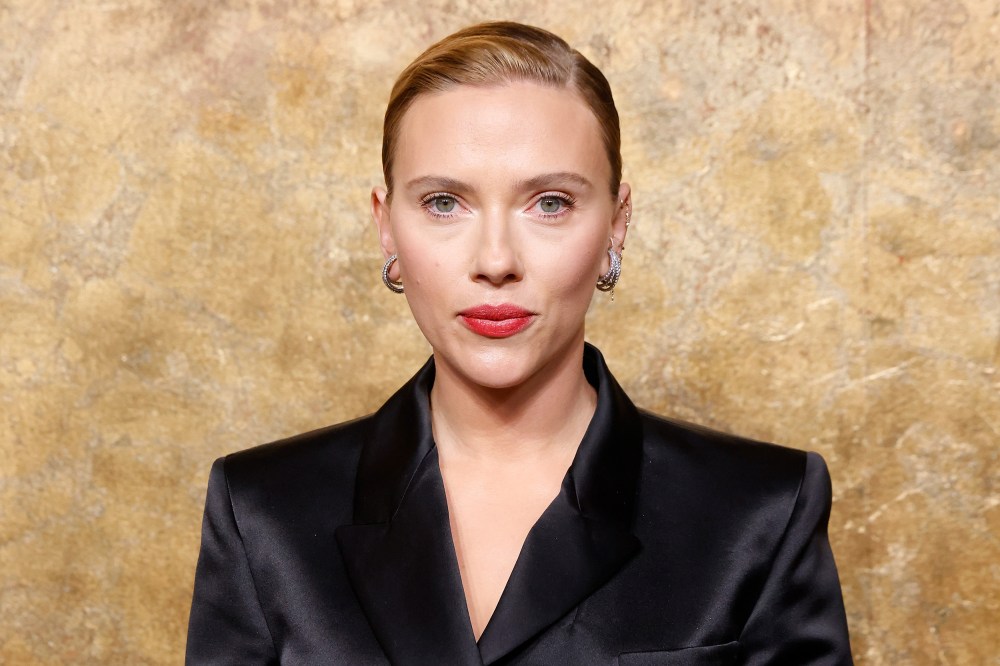
About a week after Open AI released its new chat bot, GPT-4o, with a voice that sounded suspiciously like actor Scarlett Johansson’s, she said in a statement Monday that OpenAI CEO Sam Altman had asked her in September to voice the new ChatGPT voice assistant named “Sky.” She said she declined. Even so, nine months later, OpenAI released the chat bot with a voice that, as she put it in her statement, “sounded so eerily similar to mine that my closest friends and news outlets could not tell the difference.” She said OpenAI “reluctantly agreed to take down” the voice after she was “forced to hire legal counsel.”
This is no minor story. And it is not just about Scarlett Johansson.
Altman told NBC News in a written statement sent by a spokesperson that the voice of “Sky” was not meant to sound liked Johansson’s and that it was chosen before he reached out to her.
“The voice of Sky is not Scarlett Johansson’s, and it was never intended to resemble hers,” Altman said in that statement. “We cast the voice actor behind Sky’s voice before any outreach to Ms. Johansson. Out of respect for Ms. Johansson, we have paused using Sky’s voice in our products. We are sorry to Ms. Johansson that we didn’t communicate better.”
As MSNBC columnist Zeeshan Aleem noted last week, ahead of the unveiling of the new chat bot, Altman posted the word “her” on X, an apparent reference to the 2013 film “Her,” in which Johansson voices an artificial intelligence personal assistant. Johansson made the same connection. She said in her statement, “Mr. Altman even insinuated that the similarity was intentional, tweeting a single word ‘her’ — a reference to the film in which I voiced a chat system, Samantha, who forms an intimate relationship with a human.”
This is no minor story. And it is not about just Johansson. In the context of what we know these companies can do to our society, it should be earth-shattering. It is, along with everything else we know about OpenAI and its CEO, a smaller version of its larger plans.
By now, the process should be obvious. A tech “upstart kid,” looking fresh-eyed and innocent, tells us he has created a company that will usher humanity into a new era: an era in which we will be more connected, better off and transformed. As a sign of the company’s benevolence, the product is offered for free, with maybe a paid version for those of us especially grateful to be part of this exciting new age.
Luckily, this kid and his company are being supported by the altruistic venture capitalist who, coincidentally, will become fabulously wealthy if this company becomes the leader in this lucrative new vertical.
In this moment, the promise of the technology seems to truly have been realized: It is democratic, available to all, decentralized and improving everyone’s lives (except for the people losing their jobs, but surely they will now have new opportunities).
Soon (and sooner and sooner these days), things start to change when the company dominates the field after having put its competitors out of business or having bought them out. By now, the technology, controlled almost exclusively by this company, has embedded itself in our lives. Companies depend on it, employees are expected to be proficient in it, and its convenience is impossible to ignore, especially after the eradication of the companies selling older technologies.
The company now has its hands in government lobbying, ensuring no competitors arise. Society itself, so deeply intertwined with this company, is beginning to fray with people losing livelihoods, small businesses’ being destroyed and inequality rising. But now the company is too large and the government too corrupt to change anything meaningfully.


This is the story of virtually every dominant tech company today, including: Meta. Uber. Amazon. Google. Airbnb.
But even though we’ve seen this story repeated so often for decades now, it keeps working. After OpenAI’s meteoric rise due to its ChatGPT product and the undeniable power of artificial intelligence, we are being sold the same exact story about Altman.
No matter what, the OpenAI wunderkind, do-good narrative should have been dismissed in favor of our being clear-eyed about the way most AI companies or their products operate: stealing the work of others (and even the voices of others), using near-slave-wage contractors to do their dirty work and not paying a cent to those suffering.
It is for all these reasons that Johansson’s statement matters so much. We are only at the very early stages of what AI can accomplish. One day, companies like OpenAI could dominate multiple industries, including illustration, marketing, voice assistance, music, customer service, education, accounting, journalism, transportation, legal services, content creation, security and surveillance and on and on (I asked ChatGPT to give me this information).
What OpenAI appears to have tried to get away with Johansson is the small-picture version of what it plans to do to the rest of us.
Let us not only be opposed to Open AI’s using a voice that sounds like Johansson’s and instead stand opposed to something much larger: the plans of ChatGPT to monopolize not just the AI industry but possibly many more industries, and unethically at that. What OpenAI appears to have tried to get away with with Johansson is the small-picture version of what it plans to do to the rest of us: sell us on its benevolence, exploit us and entrench its power so much that we cannot do anything about it.
This should not and cannot be seen as hyperbole. We have already seen this happen with the dominant companies I mentioned above. Ultimately, they have largely made these services more convenient but far worse in quality, all while devastating entire industries, the people who work in them and society itself.
AI is a scaled version of those technologies. We cannot let this moment pass, and we must put pressure on the government to do more to protect us.

Elad Nehorai
Elad Nehorai is a writer and marketer who specializes in antisemitism, extremism and their intersection. His writing can be found in the Daily Beast, The Forward and his newsletter. He is the organizer of XOutHate, a campaign of Jewish leaders calling for major advertisers to drop ads on X.