





Imagine a mother on the brink of a fatal hemorrhage after childbirth. The medicine that could save her life is delayed — not because it isn’t available but because of new bureaucratic hurdles that make that medicine more difficult to quickly obtain. Beginning Tuesday, Oct. 1, doctors and nurses in Louisiana will be expected to navigate those unnecessary hurdles, and as an OB-GYN whose patients expect me to give the best care to them (and their babies), I’m convinced that this new law endangers them.
As an OB-GYN whose patients expect me to give the best care to them (and their babies), I’m convinced that this new law endangers them.
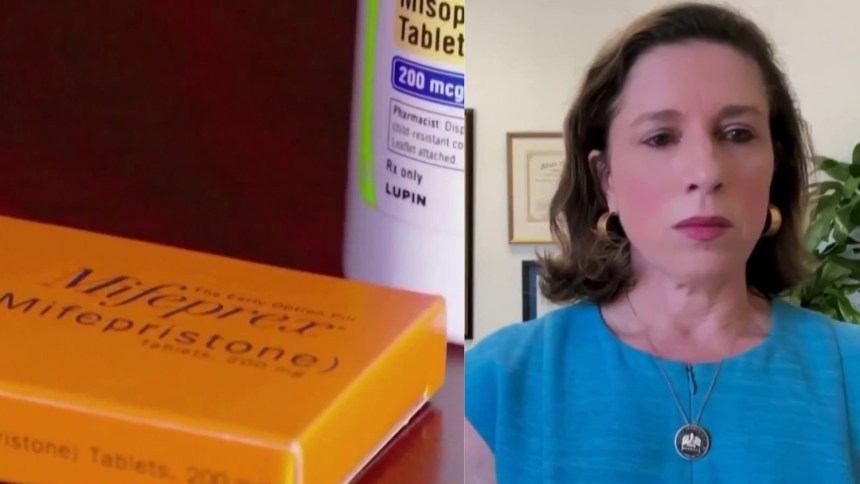
Starting Tuesday, misoprostol and mifepristone will be categorized in Louisiana as Schedule IV medications, that is, categorized as drugs with a potential for abuse and risk of dependence. The new law was drafted by a lawmaker whose brother-in-law was convicted and sentenced to jail after secretly putting misoprostol in his wife’s (the lawmaker’s sister’s) water in a failed attempt to induce an abortion. As horrible as that crime was, it doesn’t warrant a law that will make it more likely that women in Louisiana will bleed out after childbirth.
But that’s what this new law will do. Health care providers and hospitals will be required to secure misoprostol and mifepristone the same way we secure opioids. On the surface, it might seem like a good idea to put such restrictions on medications used to induce abortions. However, misoprostol plays a crucial role in treating complications during childbirth, when every second counts. Though it’s not the first-line treatment, misoprostol is used to treat postpartum hemorrhage, one of the leading causes of maternal mortality.
The U.S. has the highest maternal mortality rate of all high-income countries, and those maternal mortality rates are highest in the Gulf South, a region that includes Louisiana. And, according to data on maternal deaths in the U.S. in 2020, hemorrhage was a leading cause of such deaths. Through state perinatal quality collaboratives, we have made strides in improving severe maternal outcomes, including maternal hemorrhage. We’ve achieved this by implementing Alliance for Innovation on Maternal Health (AIM) Patient Safety Bundles that ensure readiness, recognition, response and prevention for every patient, every unit, every time.
The law that goes into effect Tuesday threatens to derail that progress. I’m one of nearly 300 doctors and medical students in Louisiana who expressed this concern to lawmakers during the legislative process and asked them not to pass this bill.
Because misoprostol will now be classified as a Schedule IV medication requiring multiple layers of security to access, the state health department, hospital administrators, attorneys and physicians are left to figure out how to comply with regulations for controlled substances and still keep their patients safe.
I’m one of about 300 doctors in Louisiana who expressed this concern to lawmakers and asked them not to pass this bill.
This new law is another example of a dangerous trend affecting the medical community — the creation of laws that impede physicians’ and other providers’ ability to provide medical care based on their own expertise, using evidence-based guidelines. Across the country, such laws are interrupting the provider-patient relationship — in ways that are potentially deadly. For example, 15 states have laws that require physicians to tell their patients they can reverse their induced abortion. Not only is there no science to support this claim, a clinical trial to determine the chances of reversal had to be stopped prematurely because so many patients were hemorrhaging.
Not only do laws like the one about to go into effect in Louisiana make childbirth more dangerous, they also accelerate doctor shortages. Public policies that affect physicians’ ability to practice medicine are leading to moral distress, fear of imprisonment and plans to stop practicing in specific states. Laws that make criminals of physicians who provide health care consistent with evidence-based practices further contribute to the stressors we physicians already feel. According to the Association of American Medical Colleges, since Roe v. Wade was overturned in 2022, the number of medical students applying for residency programs of any specialty has decreased in the states with the strictest abortion laws. Fewer doctors, particularly fewer OB-GYNS, will further worsen the dismal maternal outcomes in states — and create more maternity care deserts.
In improving maternal and infant outcomes, there is a role for lawmakers to play. Specifically, we need legislative support for the processes and programs we know are reducing maternal mortality and infant mortality. We need lawmakers to expand perinatal quality collaboratives and encourage more hospitals to implement AIM Patient Safety Bundles. We need lawmakers to address the social factors — access to education, economic stability, child care and transportation — that are responsible for 80% of poor maternal outcomes for our patients. The U.S. is the only high-income country that does not guarantee paid parental leave and the only one that does not provide home visits during the postpartum phase. We need legislative support for the programs we know are reducing maternal mortality and infant mortality I believe that all of us — including physicians and lawmakers — want to improve the health of women and children. We will only get there if we work together. But if laws that undermine medical practice aren’t changed, and urgently, then the progress we’ve made reducing maternal mortality will be reversed. Lawmakers must engage with physicians to craft evidence-based policies that protect our patients, not increase their risk of death. I have spent my career ensuring women have options for their care — obstetric and gynecologic — and guiding the implementation of evidence-based best practices. I care about the women of Louisiana and beyond who need doctors to treat them, care for them and speak up for them. I urge our legislators to listen to our expertise.
Dr. Veronica Gillispie-Bell
Dr. Veronica Gillispie-Bell, a board-certified obstetrician and gynecologist, practicing in the New Orleans area. She has testified before Congress on improving maternal outcomes was a featured speaker at the inaugural White House Maternal Health Day of Action. 


