




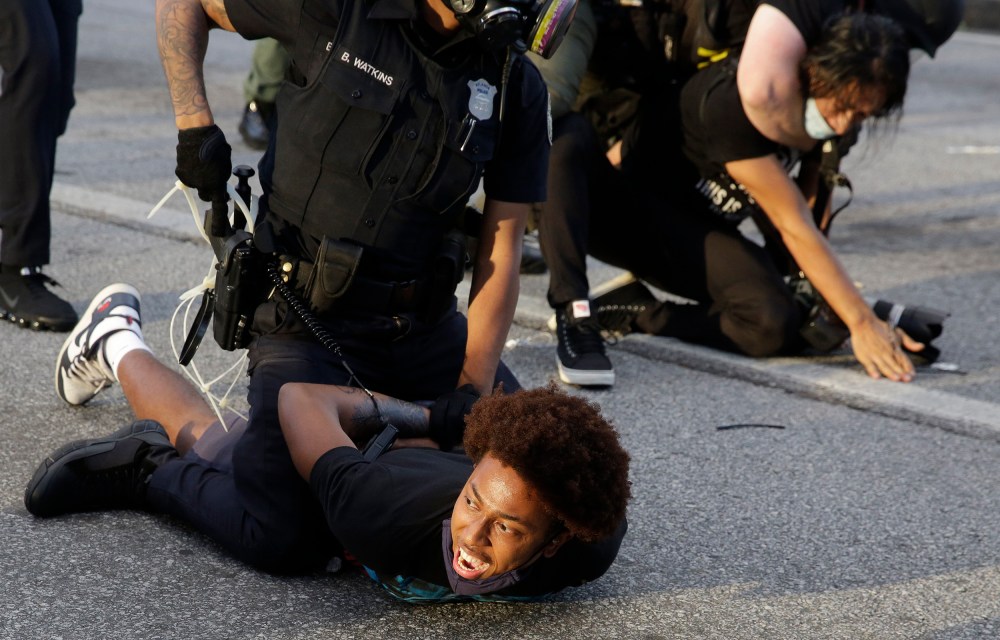
It shouldn’t surprise anyone that minutes before Derek Chauvin was found guilty on all counts, a 16-year-old Black girl in Columbus, Ohio, died after being shot by a police officer. This is still America.
If high-profile trials are not curbing the daily shootings of people in this country, maybe high liability insurance premiums will.
Every day three people die as a result of police involvement. That death rate hasn’t even winked at changing, even as our country begins to reckon with the brutal reality of police violence.
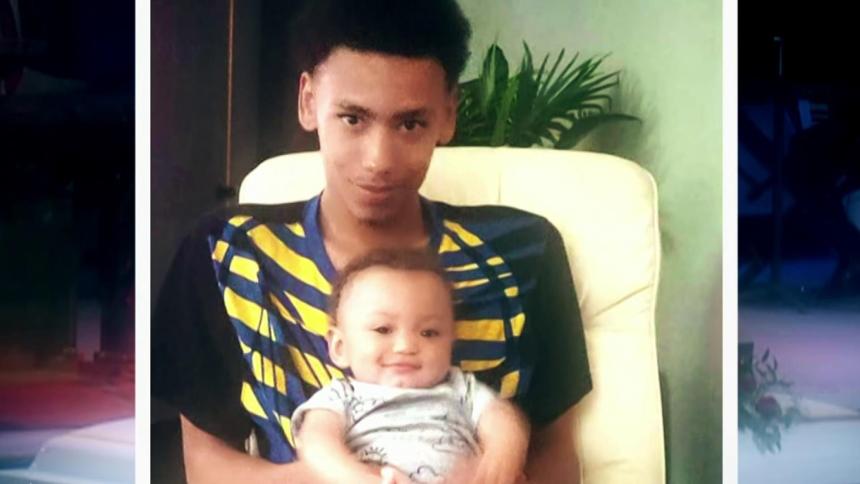
It appears that not even a year of protests in the wake of George Floyd’s murder will curb officers’ killing more young men like Daunte Wright or prevent officers from unloading their guns into teenagers like Ma’Khia Bryant. We need to identify and implement true reform of policing if defunding isn’t in the immediate future (and we know it isn’t).
And we should immediately start with requiring malpractice or liability insurance for all police officers.
It’s common for most medical professionals to carry malpractice insurance, which they personally pay for, to provide coverage for disputed claims about services they provide. It’s one way hospitals reroute risk to individual doctors for most malpractice claims. When malpractice claims are filed, physicians’ insurance rates go up.
Eventually, if doctors have enough claims against them that require insurance to be used, they will be priced out. And if they work in states that require insurance at all times, they could potentially no longer be allowed to practice, which makes sense.
Most Americans pay for a version of this every day already, in the form of car insurance. “If you were a reckless driver, if you engaged in multiple instances of drunk driving or hitting civilians or motor vehicle homicides, your premiums would go sky high,” Deborah Ramirez, a law professor at Northeastern University, told NPR last summer in an interview about her proposal to require officers to have this type of insurance. “And you would be priced out of driving.”
Ramirez is part of a growing group of people publicly pushing for this type of legislative change. Last year, New York state Sen. Alessandra Biaggi introduced a bill that would require all New York officers to obtain liability insurance throughout their career. California lawmakers signaled a similar move during the same time frame, although no official bill was presented in the Legislature.
“Similarly, officers who engage in reckless or dangerous behavior can be priced out of policing by high premiums that reflect the actual risk that they pose to us,” Ramirez said.
This use of policy to curb harm to people at large is pretty much accepted by most in society — which is why we should begin to apply it to every police officer working in the country. If high-profile murder trials don’t discourage the daily shootings of civilians by police, maybe high liability insurance premiums will.
Historically, police unions have fought to limit the accountability officers face on the job.
The major barrier to enacting a change like this is, as always, the police unions. Historically, police unions have fought to limit the accountability officers face on the job. According to Campaign Zero, a watchdog group, over 85 percent of all police departments in the U.S. have fought to ensure that police contracts include language that limits discipline and oversight. This is why guilty verdicts like Chauvin’s are so incredibly rare — even when officers are killing three people a day.


The unions have fought to ensure that officers are given generous leeway in how they conduct themselves as long as they can say they “feared” for their lives. But as the country sees over and over again, this fear is typically based in racism. It’s time to loosen the unions’ hold on protecting officers. It’s time officers are made to face more accountability both in the courts and in their own wallets.

The formulas that insurance companies would need to enforce these malpractice claims can actually be drawn from real data we already have — data that will be lifesaving for Black people like me. A 2016 study that Ramirez recently cited in her work says the most dangerous officers now working have already been identified. We can predict that it’s just a matter of time before they are in positions to harm civilians.
“The worst 1 percent of officers, as measured by civilian allegations, generate almost five times the number of payouts and over four times the total damage payouts in civil rights litigation,” the report says.
Chauvin had 18 complaints when he knelt on Floyd’s neck.
Many high-profile killings by police prove this. Officer Daniel Pantaleo had 98 complaints filed against him when he choked Eric Garner to death in New York City. Officer Jason Van Dyke had 20 complaints when he fired 16 shots into Laquan McDonald in Chicago. And Chauvin had 18 complaints when he knelt on Floyd’s neck.
Imagine a world where officers’ premiums go up every time a legitimate complaint is filed and substantiated. It’s not hard to imagine they’d reconsider some of their actions in the moment if they were reminded daily that the city won’t pay out millions of dollars, as they continually do now, if a person dies. Instead, the officer will. Not taxpayers.
What happened to Chauvin this week wasn’t justice, no matter how much House Speaker Nancy Pelosi tried to spin it after the verdict was announced when she thanked Floyd for sacrificing his life for so-called justice. Black bodies are not consolation prizes to let white people trust police more.
When it comes down to it, money makes the world go round, and that applies to cops, too. If we can find a way to pressure our lawmakers to ensure that officers understand and assume accountability for their actions, hopefully we can make more of them think twice before mistaking their guns for their Tasers in the streets of America.

Zach Stafford
Zach Stafford is an award-winning journalist who recently served as editor-at-large of BuzzFeed, was the first Black editor-in-chief of The Advocate, and worked as an investigative journalist at The Guardian.