




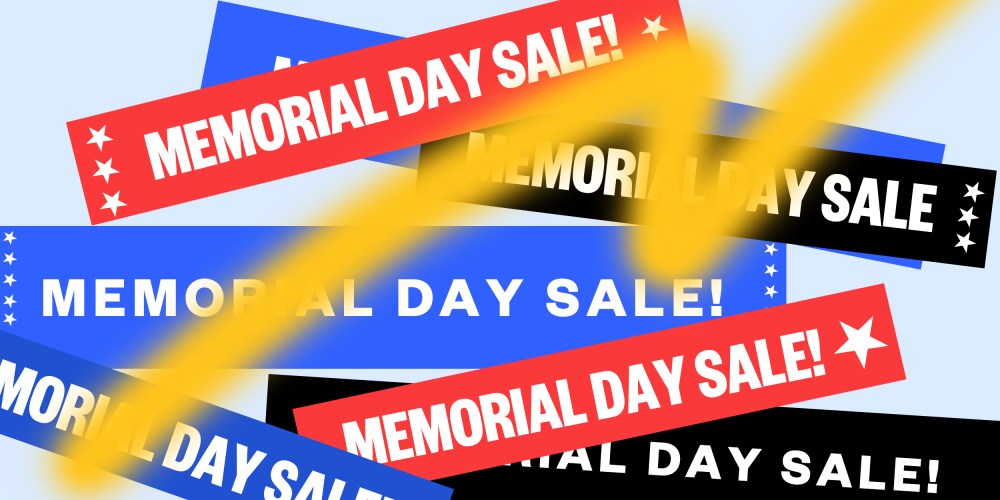
Americans are weird about holidays. I’m not about to go all Charlie Brown on you and lament commercialization or the contradiction of secular holy days, but can I just say one thing? Memorial Day sales make absolutely no sense in 2021.
To be clear, I have no objection to people saving money on a nice couch or mattress or what have you. But why must we tack sales onto what could be one of our country’s most reflective days? There are just so many other days of the year for that, including the ever-expanding vortex of capitalism that is Black Friday. Amazon is out here making up new holidays altogether just to encourage shopping.
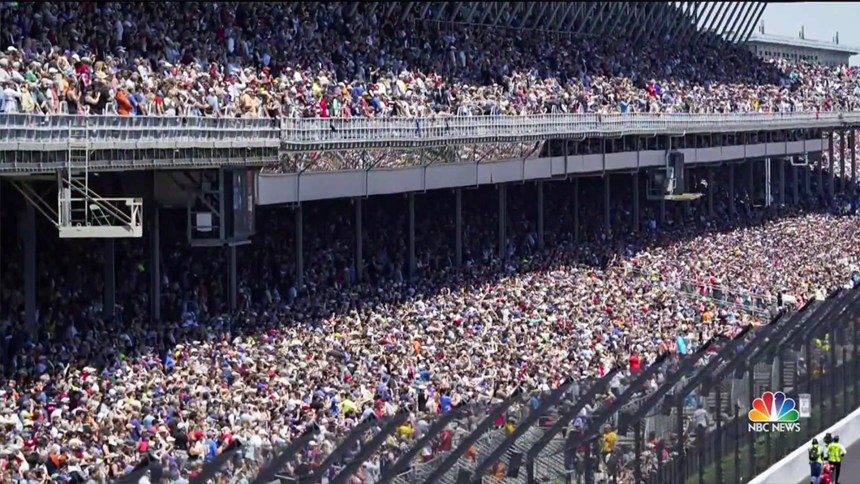
Like many of America’s best traditions, Memorial Day has Black roots. Historian David Blight wrote in The New York Times in 2011 about the day’s long-forgotten origins in South Carolina. After white Confederate soldiers had abandoned the city of Charleston, formerly enslaved Black residents took over a racetrack that had served as an open-air prison:
After the Confederate evacuation of Charleston black workmen went to the site, reburied the Union dead properly, and built a high fence around the cemetery. They whitewashed the fence and built an archway over an entrance on which they inscribed the words, “Martyrs of the Race Course.” The symbolic power of this Low Country planter aristocracy’s bastion was not lost on the freedpeople, who then, in cooperation with white missionaries and teachers, staged a parade of 10,000 on the track. A New York Tribune correspondent witnessed the event, describing “a procession of friends and mourners as South Carolina and the United States never saw before.”
In the years after, this first Memorial Day was forgotten. In its place, communities throughout the North and South alike paid tribute to the war-dead in what was known as “Decoration Day,” for the act of laying flowers on the graves of the fallen. As often happens, eventually the day lost some of its macabre overtones, giving way to more celebratory holiday traditions like picnics and baseball games.
For decades, Memorial Day was traditionally commemorated on May 30 each year. That changed in 1968 when Congress passed the Uniform Monday Holiday Act. The new law, which also pegged Labor Day and Presidents Day to Mondays, was explicitly designed to give Americans three-day weekends. But it wasn’t Big Mattress or any other retail group’s lobbying that pressured Congress to make this change: It was the travel industry, as The American Presidency Project at the University of California, Santa Barbara laid out:


In 1951, a trade association called the National Association of Travel Organizations (NATO) introduced draft legislation they called Model Uniform Monday Holiday Legislation. NATO promoted this in both the state and the national legislatures. By one account the drive to switch “non-religious” holidays to Monday can be traced as far back as 1937. NATO advocated placing most national holidays on Mondays so as to generate three-day-weekends. They, and their allies, saw a vast array of benefits to individual travelers, business, and government in reducing the number of disruptive mid-week holidays.
The rise of the Memorial Day sale seems to be an unintended consequence of this shift; with many people having a day off and stores open for business, luring shoppers is a marketing no-brainer. But these days, the brick-and-mortar store isn’t drawing as much traffic as it used to, making a day off less vital to the shopping experience. (Even pre-pandemic, when’s the last time someone you know schlepped to the furniture store instead of buying online?)
Some organizations, like the American Legion, have long lobbied against making Memorial Day a default three-day weekend because they feel it distracts from the patriotism and sacrifice we’re meant to be saluting. That’s a bit much for me, but I can see why they are particularly invested in remembering the origins of the holiday.
If I had my druthers, Memorial Day would be a societal reminder of the need to bridge the civilian-military gap that’s grown in the last 20 years, as our forever wars are normalized and fade into the background of our lives. It is a day to recognize the lives lost in war but also a day where we remember those civilians who died at American hands and with American weapons, the unsung casualties that we’ve sought to delete from our national consciousness.
This year, it’s hard to begrudge vaccinated Americans taking full advantage of a workweek respite, solemn origins be damned. But let’s not forget what those origins are. And it’d be great if companies laid off the sales — it’s a bit much.

Hayes Brown is a writer and editor for MS NOW. He focuses on politics and policymaking at the federal level, including Congress and the White House.