




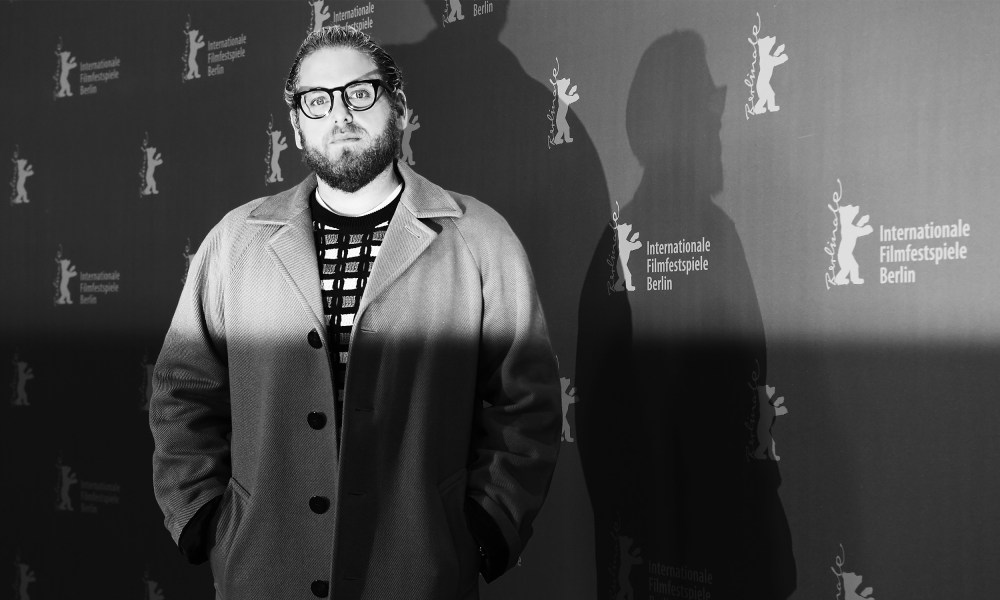
In a rare statement from a male celebrity concerning body image, Jonah Hill has gently asked his fans to cease commenting about his body. “I know you mean well, but I kindly ask that you not comment on my body,” the 37-year-old actor wrote on Instagram. “Good or bad, I want to politely let you know it’s not helpful and doesn’t feel good. Much respect.”
It’s worth asking if it’s amoral for the press to demand explanations for changes about any person’s body.
We’ve seen women make similar pleas to the public — from Jameela Jamil to Adele — but it’s unusual to hear this request from a man. Hill’s request prompted some thinking: Women have faced scrutiny and commentary on their bodies since celebrities were invented. So what does it mean when a male celebrity like Hill objects to comments regarding his own body?
While Hill has been open about his struggles with body image (at one point he celebrated his newfound radical self-acceptance by posting a screenshot of a Daily Mail article, indicating that he didn’t mind being photographed shirtless), like most of us, he’s not interested in having his body evaluated by strangers on the internet.
The reason it seems perfectly acceptable to comment on men’s bodies, of course, is because we’ve been perfectly happy to let it happen to women.
We are so accustomed to female celebrities answering invasively elaborate questions about their bodies, their diets, their workout routines, that we don’t even blink when these questions take precedence over their work. When Adele dropped her first single in six years and it became the most streamed album in a day in Spotify’s history, most of the headlines I came across were focused on her body and weight loss, not her music.

As I read headline after headline about how much she shed and how, I wondered how much a woman has to lose to actually win in a patriarchal society, where even one of the most talented singers of all time is still reduced to her looks.
While Adele chose to respond and offer details about her exercise and diet regimen, it’s worth asking if it’s amoral for the press to demand explanations for changes about any person’s body. Weight fluctuations aren’t always deliberate, nor are they always wanted. They can often be a result of illness, grief or mental health. We’ve seen award show interviewers move away from centering women’s looks more than their work, so isn’t it time we should shift our approach off the red carpet, too?
As writer Rebecca Solnit responded to the question of whether Virginia Woolf should have had kids, “just because the question can be answered doesn’t mean that I ought to answer it, or that it ought to be asked.”
Body dysmorphia now impacts just as many men as women.
Men overall have enjoyed less scrutiny about their bodies than women due to us living in a society that’s unreasonably invested in the evaluation of female bodies. Curvy women get penalized more than overweight men in the workplace, and face greater wage disparities because of their weight. Even the largest corporate threat to our democracy exists because of our obsession with assessing female bodies because Facebook at its inception was created to more efficiently rate and distribute opinions about female students’ looks. It exists because a bunch of men follow the marching orders of a society that rewards men for focusing on women’s appearance and gives them more power when they associate with women who have bodies that fit amorphous and arbitrary characteristics of said society.
But this male immunity to public scrutiny is eroding because the unexamined surveillance of women has encouraged corporate interests to create entire digital spaces whose job it is to make you feel more insecure about whatever you’re insecure about.


We care so little about female well-being that we’ve let companies like Facebook and Instagram push teenagers into eating disorder rabbit holes and distribute wrinkle-reducing, nose-altering, botox-inspired filters to children on social media apps. These platforms and apps are messing with young people’s own self-image before their brain has even developed the ability to define it. And when we let the patriarchy run amok, it’s only a matter of time before the dysregulation spills over to men and boys, too.
Regressive ideals of masculinity are the reason we started surveilling women’s bodies. Now it’s responsible for increasingly surveilling men’s bodies, which should give men one more reason to join feminists in destroying the vigorous ideas about gender that endanger our lives.
This lack of care and regulation in our online spaces is inarguably negatively affecting men; we have seen the number of males developing eating disorders skyrocket, with 40 percent of people who have eating disorders now being men. Body dysmorphia now affects just as many men as women, and queer men have always been more vulnerable than heterosexual men.
Eating disorders were created by a patriarchal society that controls women.
While men tend to have more issues related to muscles, rather than thinness as it tends to be with women, the symptoms are the same. Eating disorders were created by a patriarchal society that controls women, and because we’ve let corporate entities capitalize rather than heal insecurities, men are suffering, too.
So when we talk about men and body image, it doesn’t take away the spotlight from the body insecurities that women face; it expands its dimensions to include more people’s pain and sends a signal to follow the leadership of women, particularly those of color, who have been warning us all along about the violence of policing our bodies.
The more brave men — including Jonah Hill — who connect their issues with body image as adjacent with women’s, the stronger the chorus of voices become in demanding change.

Liz Plank
Liz Plank is an award-winning journalist and author, was the host of "Positive Spin." Her book, "For the Love of Men: A New Vision for Mindful Masculinity," was published in 2019.