




The message Americans have been getting about inflation from in recent months can be summed up in four words: Be afraid. Very afraid.
Inflation hawks have been telling scary stories about impending inflation ever since the Federal Reserve slashed interest rates to near-zero during the financial crisis of 2008-2009.
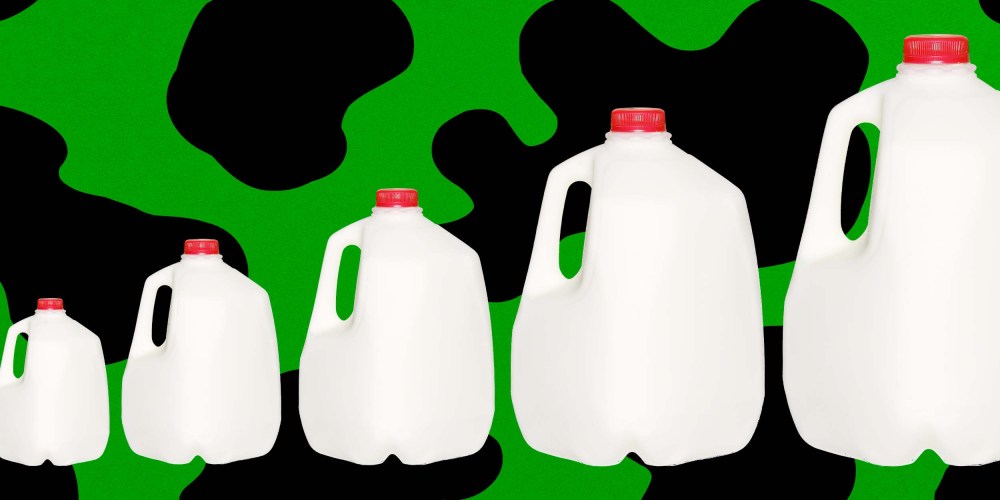
It’s a message that much of the media has been happy to spread, epitomized by an odd segment about rising food prices that CNN ran last week. The segment was supposed to show, in the words of a much-mocked tweet promoting it, “how badly inflation is hitting the middle class.” But instead of looking at a typical-size middle-class American family, it focused on a Texas family with nine kids, one that buys 12 gallons of milk a week. In the process, the segment succumbed to one of the media’s worst tendencies: taking a real issue and overhyping it beyond recognition.
The increase in food and gas prices that we’ve seen over the past eight months is real and meaningful. Inflation hawks have been telling scary stories about impending inflation ever since the Federal Reserve slashed interest rates to near-zero during the financial crisis of 2008-09. For once, they’re not making things up. Inflation is now running at a little more than 5 percent, driven largely by energy prices and food prices (which in September were up roughly 4.6 percent year-over-year). And the price of some food items, most notably beef, have risen even more sharply than that.
So looking at the way inflation is crimping household budgets makes perfect sense. Unfortunately, doing it the way CNN did is likely to confuse and frighten viewers rather than enlighten them. To begin with, even if you set aside the oddity of focusing on a household that’s three times the size of the average Texas household, meaning that it’s going to be unusually sensitive to the impact of inflation on the price of something like milk, the picture of inflation it offers seems dramatically overstated.
According to the family in the segment, the price of milk where they shop has risen a full 50 percent since June, while their overall grocery bill has risen 50-100 percent since March. Obviously, food prices vary quite a bit by region (and milk prices in particular are weirdly variable across the country). But according to the USDA, the price of milk in the Dallas area is up about 10 percent, not 50 percent, since June. And if the average grocery bill had, in fact, risen by as much as 100 percent in the past seven months, inflation would be a lot higher than 5 percent.


Of course, having the price of something you buy a ton of rise 10-20 percent in a matter of months hurts. But that’s the point: It’s enough to talk about the inflation we actually do have (inflation we haven’t really had to deal with for more than a decade). You don’t need to, as it were, over-egg the pudding.
Americans ended 2020 $13.5 trillion richer than they were at the beginning of the year.
At the same time, any discussion of inflation needs to include the context in which it’s happening. Historically, recessions have left Americans poorer, not better off. But the Covid recession was different. As people shifting their habits drastically in response to the pandemic, they spent much less and saved more. Even though millions of Americans lost their jobs, enhanced unemployment benefits and stimulus payments left many of them better off, not worse. And the stock market, after initially falling, boomed.
The result of all this was that Americans ended 2020 $13.5 trillion richer than they were at the beginning of the year. Most of that wealth increase went, of course, to the already wealthy. But lower-income households benefited, too. The JP MorganChase Institute found, for instance, that the bottom 25 percent of income earners had 50 percent more in their checking accounts in October 2020 than they did a year earlier. So lots of Americans came into 2021 with money in their pockets. And since then, we’ve seen the sharpest recovery from a recession since World War II, one that’s driven the unemployment rate down to 4.6 percent, and wages up almost 5 percent year-over-year.
What all this means is that American consumers are, relatively speaking, flush, and it’s that strong demand for goods and services that is sending prices higher. But it’s taking manufacturers and food producers time to increase supply after cutting back production during the pandemic. When you have high demand, and relatively low supply, prices go up. The inflation we’re seeing is not, then, some mysterious affliction that’s descended on the economy. It’s the predictable product of the economy’s rapid recovery, and its costs have been offset, to a large degree, by robust wage growth and government policies.
Providing that context, rather than just telling scary stories, is important not just because it’s accurate. It’s also important because when people see inflation as a force that’s disconnected from the underlying economy, their inflation expectations are likely to rise. And when inflation expectations rise, actual inflation tends to follow — if a business owner thinks prices are going to jump 5 percent next year, they’re going to hike prices 5 percent in anticipation. That kind of thinking sets off the kind of the vicious cycle we want to avoid. So instead of telling people to be afraid, maybe tell them to be concerned. Sort of concerned. Even if they’re buying 12 gallons of milk a week.

James Surowiecki
James Surowiecki is the author of "The Wisdom of Crowds." His work has appeared in The New Yorker, The New York Times, Wired and Fortune, among others.