






This week was supposed to kick off with testimony from a whistleblower in a Washington judge’s contempt inquiry into Trump administration officials. But a federal appellate panel with Donald Trump appointees in the majority prevented that from happening.
“The administrative stay should not be construed in any way as a ruling on the merits of that petition or motion,” Friday’s appellate order said, referring to the government’s emergency appeal to halt U.S. District Judge James Boasberg’s proceedings. The order said the purpose of the pause was to give the court time to consider the matter. It noted that Judge J. Michelle Childs, a Biden appointee, voted to deny the stay, which Trump-appointed Judges Neomi Rao and Justin Walker granted.
Whatever the order’s reasoning, it has the effect of at least further prolonging Boasberg’s long-running bid to get to the bottom of Trump officials’ violation of his March order to halt flights to El Salvador under the Alien Enemies Act — and what to do about it.
This isn’t the first time that Trump-appointed judges in D.C. have intervened in the matter, having previously cast doubt on the validity of Boasberg’s efforts and prolonged his ability to conduct his inquiry earlier this year. A fuller slate of D.C. Circuit judges in November permitted the trial judge to move forward, which he quickly sought to do.

It was back in April that Boasberg found probable cause that the conduct of government defendants constituted contempt. He wrote that the Constitution “does not tolerate willful disobedience of judicial orders — especially by officials of a coordinate branch who have sworn an oath to uphold it.”
Yet, so long as appellate judges tasked with interpreting the Constitution prevent any consequences for such disobedience — or even finding out the extent to which such disobedience occurred — it appears that the Constitution does tolerate that.
On Monday, the appellate panel issued an order directing the parties to file briefs regarding their views of Boasberg’s authority. Per the order, that briefing is due to conclude Jan. 5, so this phase of the litigation isn’t set to wrap up until into next year. And that’s just to sort out whatever this panel will do, saying nothing of what the fuller slate of D.C. appellate judges or the Supreme Court would say if the litigation keeps moving up the appellate ladder.
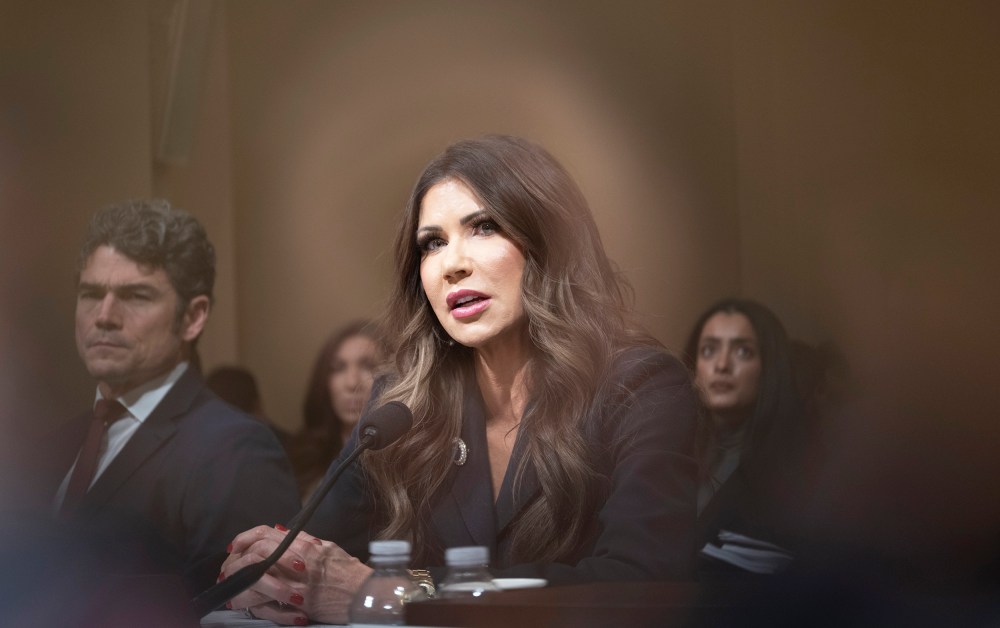
Last week, Boasberg noted that “cursory” court filings from Department of Homeland Security Secretary Kristi Noem and DOJ lawyers who advised her on the flights didn’t provide enough information to determine that her actions constituted criminal contempt. The Obama-appointed judge said he needed to take witness testimony “to better understand the bases of the decision to transfer the deportees out of United States custody.” He ordered testimony from the whistleblower, former DOJ lawyer Erez Reuveni, for Monday, and current DOJ lawyer Drew Ensign for Tuesday. The appellate stay halted those proceedings, and Boasberg officially canceled them on Monday.
Among his stunning allegations, Reuveni has claimed that Emil Bove, who was a top DOJ lawyer at the time of the flights in March, said in a meeting “that DOJ would need to consider telling the courts ‘f––– you’ and ignore any such court order.” Trump subsequently nominated Bove to sit on the Philadelphia-based federal appeals court and the Republican-controlled Senate confirmed him to that lifetime judicial appointment. He attended a Trump rally last week.
Before the appellate panel stepped in on Friday, Boasberg rejected a DOJ request to reconsider his decision to conduct the proceedings this week. He wrote that the inquiry “is not some academic exercise,” noting that “approximately 137 men were spirited out of this country without a hearing and placed in a high-security prison in El Salvador, where many suffered abuse and possible torture, despite this Court’s order that they should not be disembarked.”
Subscribe to the Deadline: Legal Newsletter for expert analysis on the top legal stories of the week, including updates from the Supreme Court and developments in the Trump administration’s legal cases.
