




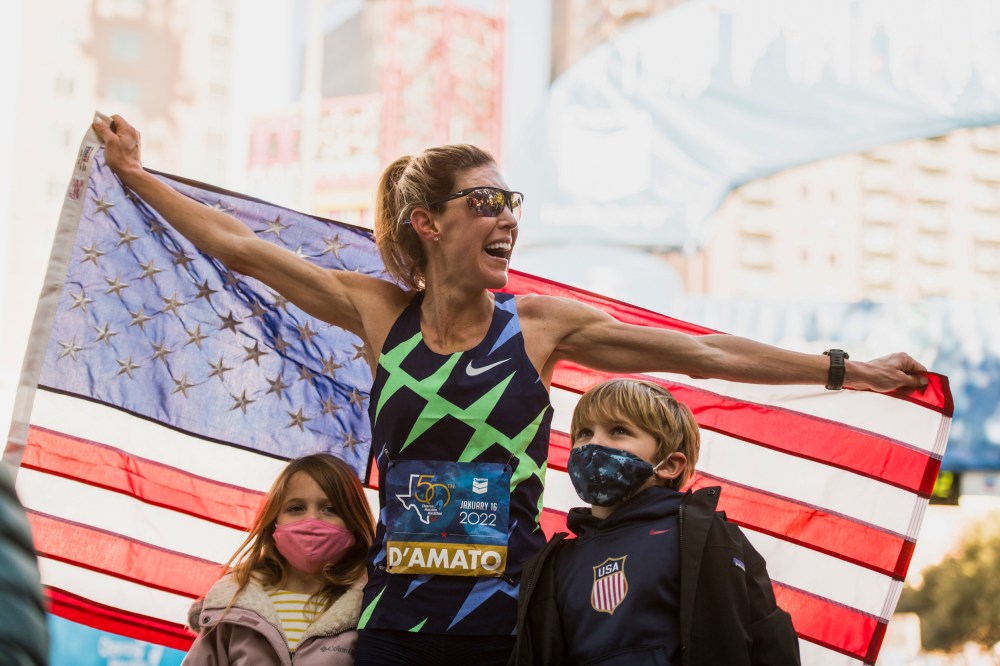
When Keira D’Amato crossed the finish line of the Houston Marathon in 2022, she had done something extraordinary. At age 37, she broke the American record in the women’s marathon with a time of two hours, 19 minutes and 12 seconds. It was a stunning performance from a runner most of the sport had all but forgotten—one who had once walked away from competitive running altogether.
Keira D’Amato broke the American marathon record at 37 — See how she did it.
But if you ask D’Amato, that race wasn’t a comeback.

Her new book, “Don’t Call It a Comeback: What Happened When I Stopped Chasing PRs, and Started Chasing Happiness” tells the story of how D’Amato, a onetime All-American who quit running in her 20s, found her way back to the sport in her 30s —this time as a military spouse, mom of two, realtor, and ultimately one of the fastest marathoners in American history.
Originally, she was going to call the book “Chasing Happiness,” but eventually decided “Don’t Call It a Comeback” was more apt.
“[That’s because] this was about me growing and learning and becoming a totally new version of myself, an evolved version,” D’Amato, now 40, told Know Your Value “ … This wasn’t a comeback.”
Starting from 90 seconds
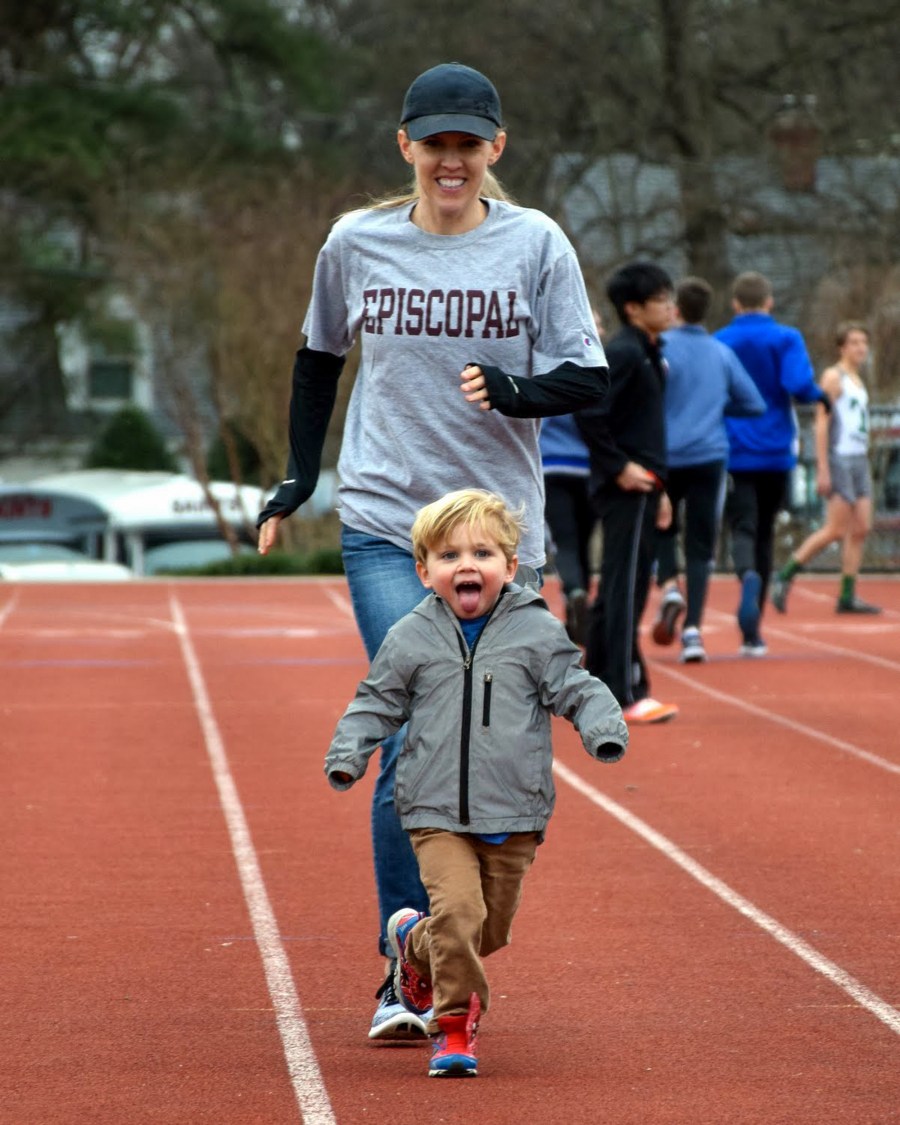
For D’Amato, that new version started humbly: with a 90-second jog down her street. She was eight months post partum with her second child, and simply wanted to get out of the house to do something for herself.
Determined to set the bar low, she told herself she would run just three minutes. But things did not go according to plan.
“I got out the door …It was hot, but I wasn’t confident enough in my body to wear shorts. So, I wore full-length black leggings… recounted D’Amato. “And pretty soon I hit the pain cave. My legs were heavy, my lungs were like caving in, and I looked down and it had [only] been 90 seconds. And I stopped, I cried, I walked home. But I decided then I wasn’t gonna compare myself to the Keira I once was in my 20s… [I thought] ‘Right now, this is where I am. And right now, Keira is a 90-second runner.’”

Two days later, she tried again. Three minutes eventually turned into four, five, and then much more. It was that tiny act of self-compassion that set her on a trajectory that would take her to the pinnacle of American distance running.
Taking the “scenic route”
Her route back to elite racing wasn’t linear. “I think the fact that I took the scenic route to pro athleticism … has really shaped me, and I think if you look at the normal trajectory for a female athlete — They crushed in college, then they go pro … They hit all their goals, and then they retire and start a family. And I did that totally backwards, upside down.”
But D’Amato believes that detour became her strength.
“I came back into running as mother, first and foremost … and a military spouse, and also a full-time realtor, so I had all these other pieces of me that made running the little sliver of my day that felt like a gift. And I was finding a lot of joy in it… I identified as so much other than just a runner, and I think that really became my superhero power,” she said.
“…I could go, and I could run, and I could risk big and go for it, and then come home, and my kids are like, ‘What’s for dinner?’ They don’t care about the results. I think that really freed me from any sort of expectation, and being labeled as just a runner.”
Breaking the record
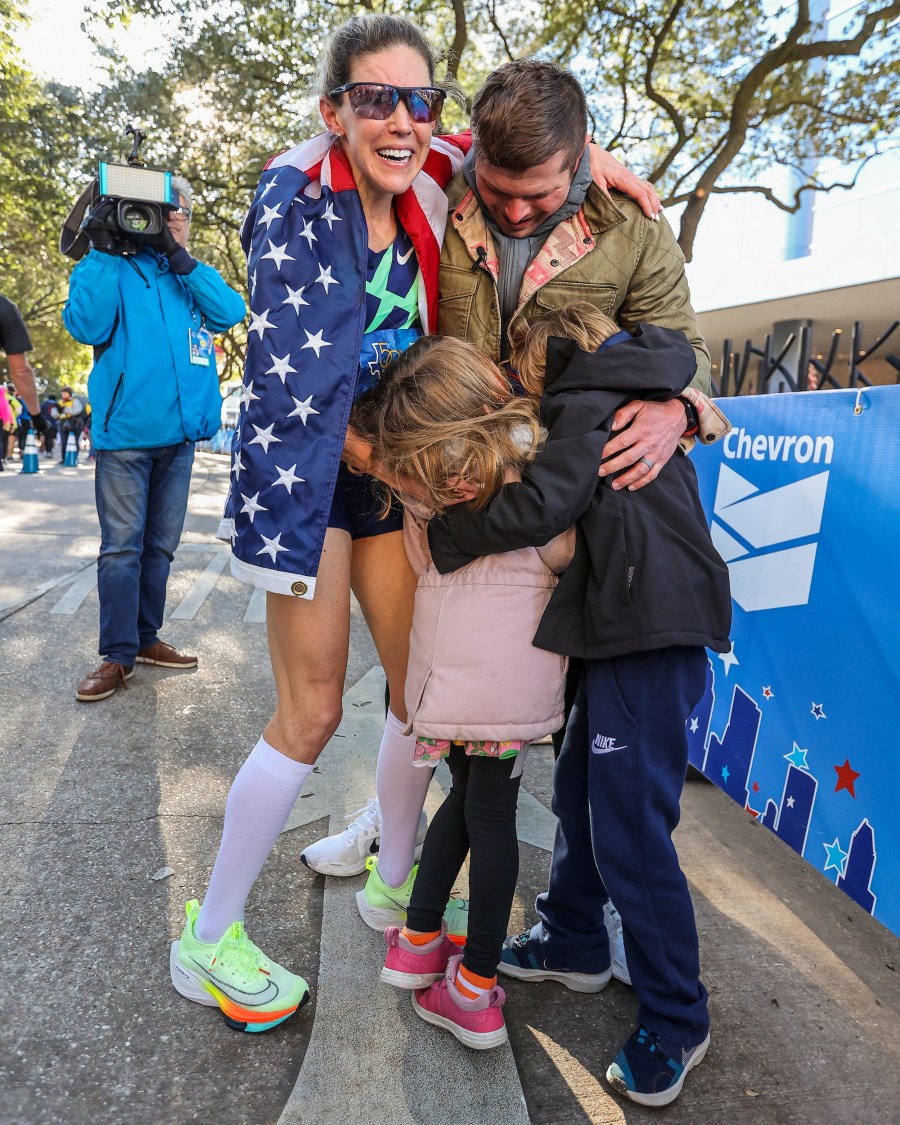
When she finally did break the American marathon record, D’Amato admitted the significance didn’t immediately sink in.
“When I first crossed the finish line … I was confused … I knew what I was capable of running time-wise, but I couldn’t connect the dots that that meant that I would be the American record holder. That felt too big of a goal to even imagine.”
And at first, she thought she was done running for good. “I told everyone that would listen, ‘I’m never running again.’ I was like, ‘That is the last time. I’m retired. That’s how I’m going out.’ …. I went to some deep, dark places, both physically and mentally in that race.”
But soon, her perspective shifted. “Once the muscles stop aching, and you get your breath back … you’re really proud that you pushed through … But at first, when you finish, you’re like, ‘I’m never doing that again,’ And then you’re like, ‘Yeah, I’ll do that again. That was actually kind of awesome.’”
The power of fun
D’Amato credits her joy and humor as keys to her success.
“When I was competing in college and a little bit afterwards, I thought that to be fast, or to hit your goals, you had to be strict, disciplined, straight edge, and serious,” she said. “… Now I’m a mom. And, like, this was the fun part of my day… So I found that I could have fun and succeed. And I also found the more fun I was having, and the more joy it was bringing me, the more I wanted to do it. And the more I wanted to do it, the faster I ended up getting.”
The takeaway? “You can have fun while working hard, and you can find your best ever [self] with a smile on your face, which was a really cool discovery to make,” said D’Amato.
Chasing big, scary dreams
Now in her 40s, D’Amato is still dreaming big. “My big next scary dream, I think, is pushing the bar forward. I’m now officially a master’s runner, I’m in my 40s, so my next big scary dream is to see how far and how fast I can go into my 40s. And I want to move that bar forward for all of us thinking the best is yet to come.”
That means setting her sights not only on master’s records, but on her own personal bests. “I want to show myself, most importantly, but also the world, that 40-something Keira can kick 30-something and 20-something-year-olds Keira’s butt.”
