





Throughout the shutdown, Republicans insisted they’d be willing to discuss expiring subsidies under the Affordable Care Act, also known as Obamacare, just as soon as Democrats reopened government.
Republicans return to the Capitol on Monday with their first real chance to prove they’re serious.
With open enrollment already underway and new rates taking effect in 45 days, Republicans and Democrats have little time to find a solution to the problem of premiums doubling or even tripling for some Obamacare enrollees.
But Republicans are also in a bind on health care: Do nothing about the rising costs, and you’ve handed Democrats a potent attack for the midterms. Do too much — like in 2017, when Republicans attempted to repeal and replace the Affordable Care Act — then Republicans risk creating an even bigger political mess.

Rep. Suzan DelBene, D-Wash., the chair of the Democratic Congressional Campaign Committee, told MSNBC that Republicans representing competitive House districts “should be scared” about spiking premiums heading into next year’s midterms.
“We absolutely are going to hold them accountable for that,” she said, previewing the “affordability” campaign message that Democrats plan to use against Republicans.
“Health care costs that we see now. Tariffs have raised costs on housing and food — people are feeling that,” DelBene said.
While the DCCC knows it will have political opportunities no matter what the GOP does on health care, Democrats insisted that they genuinely hope Republicans address the rising premiums.
As Rep. Jim McGovern, D-Mass., said last week, “You refuse to act, you own this.”
“It’s a cruel thing to do to the American people,” McGovern said of not extending the subsidies.
There are, of course, some Republicans who recognize the problem of skyrocketing premiums, both on a political and practical level.
Republican Rep. Jeff Van Drew, who represents a moderate district in southern New Jersey, told MSNBC he sees the rising premiums as “a problem.”
“Some people may feel it’s not a problem. I absolutely do,” Van Drew said. “That doesn’t mean that we’re going to be in trouble. It depends how we react to the current situation we’re in now.”
“We have to use flexibility, put on our thinking caps,” he added.
But there’s not a lot of time to think. And so far, Republicans — who have long promised but never delivered an alternative health care proposal — have yet to coalesce around a plan.
Some Republicans in competitive congressional districts have sought to get out in front of the issue, calling for extending the enhanced subsidies for a year to allow more time to negotiate an alternative.
“Forget the politics. It’s not good for people” if prices skyrocket, Rep. Brian Fitzpatrick, R-Pa., told MSNBC. In September, he introduced a bill to extend the subsidies.
Vulnerable Republicans have signaled support for a solution like a temporary extension, knowing that coming up with a broader response could take months — or even years — and still leave Obamacare enrollees with higher prices. It’s why, during the shutdown, when Van Drew talked to President Donald Trump about the subsidies, the New Jersey Republican reportedly pushed back against the president’s suggestion that the GOP could “do something better.”
“Mr. President, we don’t have the time,” Van Drew responded, according to Politico.
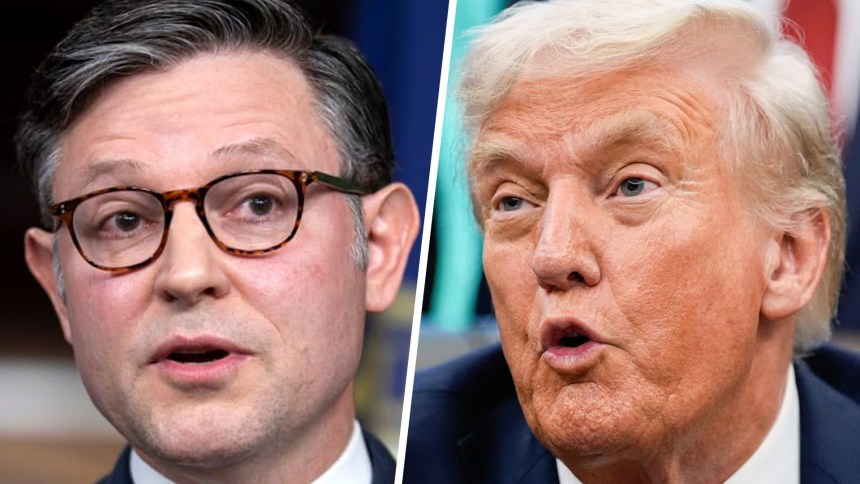
But Republican leaders — including Speaker Mike Johnson, R-La., and House Majority Leader Steve Scalise, R-La. — have shown little interest in maintaining the enhanced tax credits, which would serve to prop up Obamacare, a law Republicans have voted to repeal time and again.
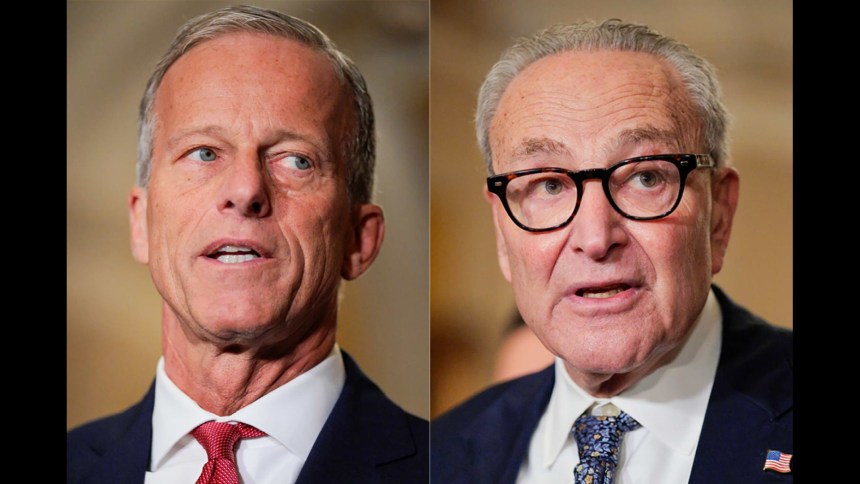
During a recent floor speech, Senate Majority Leader John Thune, R-S.D., dismissed the enhanced subsidies as “padding insurance companies’ profits with more taxpayer dollars.”
They knew it was coming. We wanted to fix it. Republicans said ‘no.’ And now it’s on them.”
Senate Minority Leader Chuck Schumer, D-N.y.
Senate Minority Leader Chuck Schumer, D-N.Y., for his part, has said Republicans “now own this health care crisis.”
“They knew it was coming. We wanted to fix it. Republicans said ‘no.’ And now it’s on them,” Schumer said recently on the Senate floor.
Trump and other Republicans have floated several proposals, from smaller changes like adding income caps to the Affordable Care Act subsidies to more extensive overhauls like reintroducing high-risk pools or sending money directly to Americans.
The high-risk pools would effectively end one of the more popular principles of Obamacare — that people with preexisting conditions shouldn’t pay more for insurance — but making sick people pay more is one of the few ways to lower prices for healthier Americans. The idea of sending money directly to Americans — perhaps in the form of health savings accounts (HSAs) or flexible spending accounts (FSAs) — is one of Trump’s favorites. And, depending on how the program is set up, some health policy experts have noted that Americans could find ways to spend that money on things other than health insurance.
Still, plenty of Republicans like the idea of sending funding to Americans, arguing that the current enhanced tax credits aren’t working.
Sen. Bill Cassidy, R-La., a doctor who is up for reelection in 2026, is among those talking through potential health care alternatives in the Senate — including the idea of FSAs.
“Next year, if we extend the enhanced premium tax credits, $26 billion go to insurance companies. Twenty percent of that will go for their overhead and profit,” Cassidy recently told reporters. “If we put it in a flexible spending account, 100% is going to the person who’s making a decision where to spend her dollars.”
“My plea to Democrats: Don’t reject it just because a Republican proposed it,” he added.
But as Republicans sort through the different proposals, it’s clear an extension of the subsidies would be the easiest way to address the rising insurance costs.
For one, it would keep the focus on the weaknesses of Obamacare, not some GOP health care alternative. For another, it would clarify for voters that not all of the rising premiums are due to the subsidies disappearing.
At the moment, Democrats can point the finger at Republicans for the premium increases and argue that it’s all a result of the GOP unwillingness to extend the subsidies.
Take Rep. Laura Gillen, D-N.Y., who is running for a second term in a highly competitive Long Island district. She told MSNBC it’s “just a slap in the face to American families” to not extend the subsidies, saying “the majority of Americans want the tax credit extended.”
“It’s crazy … This is not the way to govern,” she said, previewing what will undoubtedly be a line of attack next year.
It’s one of the reasons why so many frontline Republicans support an extension — at least on paper.
Rep. David Valadao, R-Calif., who currently represents one of the most vulnerable GOP districts, has taken the unique stance that he supports a one-year extension of the subsidies, but he told NBC he wouldn’t “do anything discharge-related” — referring to a discharge petition to force a vote on a bill to keep the subsidies in place.
Democrats have already introduced a discharge petition to extend the subsidies — but it proposes doing so for three years, which is unlikely to generate GOP support.
Meanwhile, the clock is ticking.
One of the endangered Republicans, Rep. Mariannette Miller-Meeks, R-Iowa — who won in 2024 by just a few hundred votes — threw cold water on the idea that there could be a solution in the near term.
“Work needs to be done to make health care affordable for people,” she said. “That’s going to take longer than a couple weeks.” — Mychael Schnell contributed reporting.

Kevin Frey is a congressional reporter for MS NOW.