The Rachel Maddow Show WEEKNIGHTS 9PM ETMorning Joe WEEKDAYS 6AM ETDeadline: White House with Nicolle Wallace Weekdays 4PM ETThe Beat with Ari Melber Weeknights 6PM ETThe Weeknight Weeknights 7PM ETAll in with Chris Hayes TUESDAY-FRIDAY 8PM ETThe Briefing with Jen Psaki TUESDAYS – FRIDAYS 9PM ETThe Last Word with Lawrence O’Donnel Weeknights 10PM ETThe 11th Hour with Stephanie Ruhle Weeknights 11PM ET
As in the case of other natural disasters — floods, freezes, fires — those remanded to the care of the state have received the least of its protection.
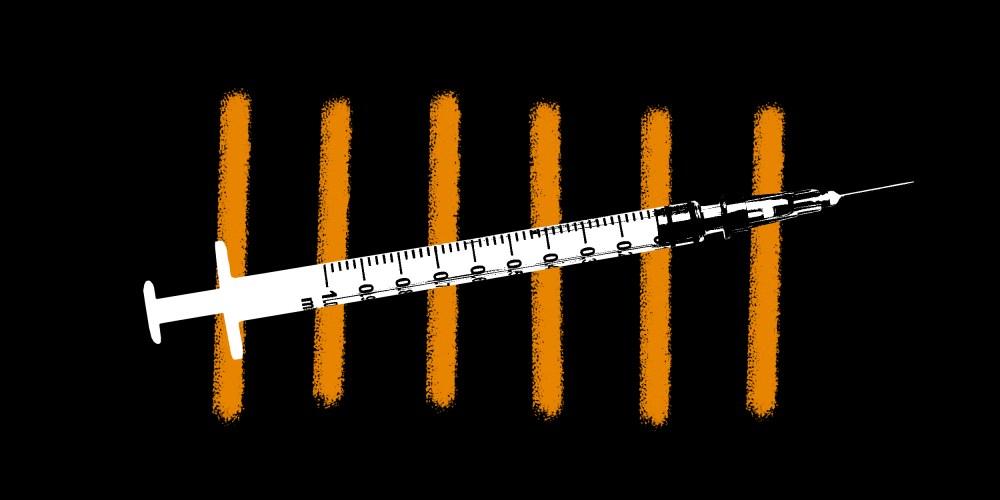
Inside America’s prisons and detention centers, however, it’s a different story. According to data collected by The Associated Press and The Marshall Project, less than 20% of prisoners across state and federal prisons have been vaccinated in any capacity, lagging far behind American adults in general.
By the end of March, states like Arkansas and Florida — which pride themselves on punitive approaches to criminal justice — had not yet begun to vaccinate prisoners despite overcrowded conditions, rampant infections and deaths. As in the case of other natural disasters — floods, freezes, fires — those remanded to the care of the state have received the least of its protection.
/ 00:00
This stark contrast of unequal care on different sides of prison walls puts paid to the all-American lie that choice determines circumstance, because those deprived of choice by the state have faced the grimmest circumstances of all.
Still, public discourse has turned to the thicket of individual choices that surround inoculation: We’ve read reports of white evangelicals’ disproportionate vaccine hesitancy; the Centers for Disease Control and Prevention has released new, cautious-but-heartening guidelines for what fully vaccinated people can do. We’re daring to dream of something approaching a pre-Covid-19 normal, with the flush of pressed-up bodies and flowing drinks or sandy beaches and mask-free sighs of pleasure in the sun. These vernal fantasies are urgently pressing on us with all the choices we can make.
This stark contrast of unequal care on different sides of prison walls puts paid to the all-American lie that choice determines circumstance.
Individual choices have also complicated Americans’ responses to the pandemic, in various forms: a complex patchwork of vastly differing state-by-state restrictions on congregation and commerce; public shame about individual risk-taking; the challenge of navigating an often-byzantine vaccine administration system; the swirl of conspiracy theories around the shots and the credulity of those who believe that vaccines contain a microchip or tissue of aborted fetuses.
But prisoners are bound by the political choices of others, having been stripped of their individuality by the law. Precious little attention has been paid to the country’s enormous incarcerated population being held in state and federal prisons, countless jails and migration detention facilities, those convicted and those held pre-trial, those awaiting deportation or freedom. In the archipelago of the prison state, the specter of hesitancy is outstripped by the very real fact of lack of access.
In St. Louis, inmates have revolted for a fourth time in the past few months against a draconian prison regime. Prisoner demands have focused on a lack of Covid-19 safety protocols, where those with symptoms are housed alongside those without symptoms, along with a lack of adequate care and hygiene. Close-quartered settings preclude social distance. They often don’t even have soap, let alone an adequate supply of personal protective equipment.
The protest this week culminated in detainees holding up signs against broken windows that read “HELP US,” focused on indefinite detainment without trial dates.
“We want court dates,” prisoners chanted. Many detainees have been held for a year or more without even the promise of a trial date. In the context of a rampant and spreading pandemic, and without access to vaccination, detainees are forced to live in perpetual fear of the pandemic without the prospect of freedom, justice or safety.
From the beginning of the pandemic, the issue of addressing a worldwide, pansociety phenomenon as a problem of individual choice — without offering significant state aid for people to stay home, and allowing a shambolic and irregular crop of state guidelines to spring up without federal guidance — has given rise to a staggering death toll in the United States.
For a half-million Americans, the freedom on offer was the freedom to die a prolonged and gasping death.
America’s fanatical individualism breaks down in the face of a threat that spans all sectors of society. The Trump regime’s refusal to aid those disproportionately affected, in the name of personal choice, meant that for a half-million Americans, the freedom on offer was the freedom to die a prolonged and gasping death.
In an era that promises hope, perhaps an ending to this dark period, we must turn away from the hyperindividualized dogma that has caused such harm. And in order to do so, we must uproot our unjust contempt for those whose choices we have taken away — and demand that prisoners receive unrestricted, prioritized and universal access to vaccines.
Talia Lavin
Talia Lavin is a freelance writer whose work has appeared in The New Yorker, The Washington Post, GQ, The Village Voice, The New Republic and many more publications. She is the author of the books "Culture Warlords: My Journey Into the Dark Web of White Supremacy" (Hachette Books, 2020) and "Wild Faith: How the Christian Right is Taking Over America" (October 2024). Her newsletter, The Sword and the Sandwich, is featured in Best American Food and Travel Writing 2024.




 — Casey Nolen (@CaseyNolen) April 5, 2021
