




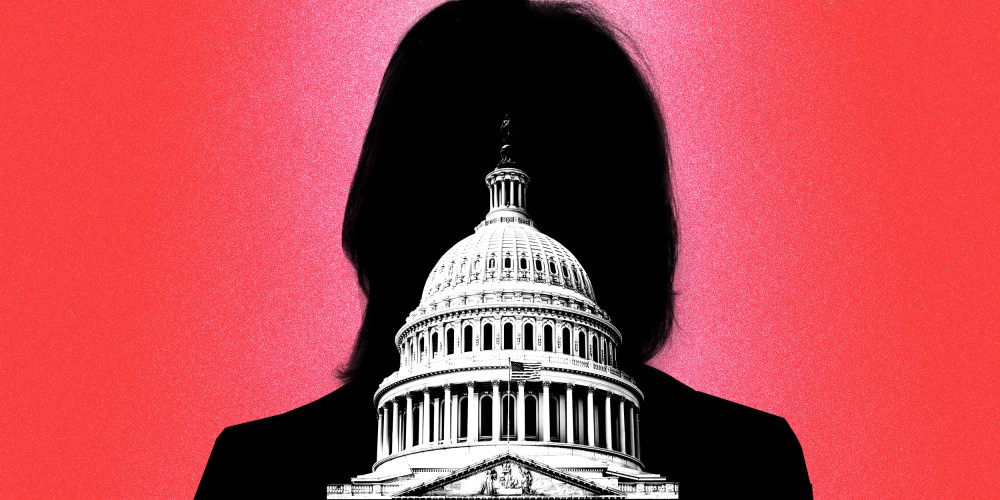
As a reader of MSNBC Daily, you’re probably pretty up on politics. You keep track of what’s going on in the Senate. You understand the filibuster, mostly, and why Senate Minority Leader Mitch McConnell, R-Ky., loves it. But let’s get one thing straight: Almost nobody really understands how the Senate works.
The biggest exception is the most powerful unelected official in Washington: Elizabeth MacDonough. Vice President Kamala Harris is officially the president of the Senate. But as Senate parliamentarian, MacDonough is its de facto chief justice, issuing rulings on everything from which committee has jurisdiction over bills to how whoever is serving as chair should direct proceedings on the floor.
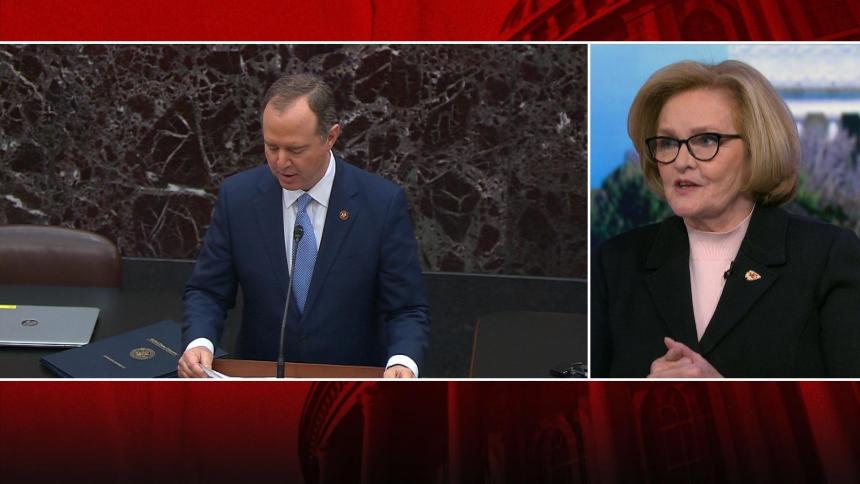
It’s a lot of authority to grant to someone who most Americans don’t know exists. But even when I don’t agree with her rulings, I’m glad she’s there — and you should be, too. There has to be someone in the Senate who can be a nonpartisan arbiter and expert that keeps things flowing as best as possible. And, no offense, it’s not a job that I’d really trust any current U.S. senator to do.
It would be easy to assume that MacDonough’s gig isn’t all that difficult; after all, the Standing Rules of the Senate aren’t that long. Those 44 rules, which govern everything from the jurisdiction of the various committees to how senators can and can’t accept gifts, aren’t that unwieldy by themselves. But layered on top of those rules is a byzantine maze of legal statutes, precedent from previous parliamentary rulings and various minutia that no sane person would ever memorize.

So, even though junior senators from the majority party take turns rotating in and out of the chairperson job to get a handle on how things work, very few go on to master the complexities of the body. Instead, they turn to MacDonough for the final word in what to say before tapping their gavel.
Her word has become critical in recent months as Senate Democrats try to maximize their minuscule majority. For example, it was MacDonough who decided that bumping the federal minimum wage to $15 per hour didn’t fit the rules governing the Covid-19 relief bill, drawing the ire of many progressives.
Now it seems like she may have thrown a slight wrench into Democrats’ plans for the next year. In April, Senate Majority Leader Chuck Schumer, D-N.Y., was very excited that he’d apparently found a way to pass multiple revisions to a budget reconciliation resolution in a single fiscal year. That would in turn allow Democrats multiple chances to bypass the 60-vote threshold needed to break a filibuster with just their 50 members and Harris as tiebreaker.

Except it seems that MacDonough was a bit more nuanced than that in her follow-up memo last week, as Slate reported:


The parliamentarian’s guidance, of which Slate obtained a copy, does not lay down hard rules about how reconciliation can’t be used to “avoid the regular legislative process”—that ship sailed a long time ago. There’s no rule spelled out that economic conditions need to change by a certain amount to unlock another reconciliation bill. Instead of such a rule, there’s only MacDonough’s opinion that doing this—revising budgets just to unlock reconciliation bills that the majority would use to bypass the pitfalls of regular order—would be an abuse of the provision’s original purpose.
Here we can see two things: First, that MacDonough would definitely be unhappy if Schumer tried to twist the Byrd Rule that governs how reconciliation works to completely alter the process. Second, that MacDonough has clearly learned a lot from her time with the Senate’s politicians. Like them, she refuses to let herself get pinned down entirely by a hypothetical in favor of giving herself maximum wiggle room in the future to rule on specific bills as written.
Now, she still works for the Senate and not the other way around — the Congressional Research Service notes that she is not “empowered to make decisions that are binding” on the Senate. Even if the chair has accepted MacDonough’s guidance, the rest of the body can overrule that decision if they want.
Budget Committee Chair Bernie Sanders, I-Vt., tried to do just that ahead of the Covid-19 relief bill’s final vote to get the $15 minimum wage bump back in. (The vote failed with seven Democrats voting against Sanders’ motion to appeal.) And I argued in February that, if necessary, Harris should be ready and willing to take up her role as president and overrule MacDonough to trash the filibuster in order to protect voting rights and pass other vital pieces of legislation.
But to poorly paraphrase Jack Nicholson’s Col. Nathan Jessup in “A Few Good Men,” we want MacDonough on that wall. We need her on that wall. And the vast majority of the Senate on both sides agree. Here’s how two of the most diametrically opposed members spoke of MacDonough in a recent profile of her in The New Republic:
Senators from both parties frequently approach the dais to have short conversations with her, exchanging fist-bumps over the desk. The bipartisan support MacDonough enjoys is stunning in the current political era. As Senator Ted Cruz told The New Republic, “She’s got a lot of experience and credibility. There have been times when Republicans have been unhappy with her rulings, there have been times when Democrats have been unhappy with her rulings. That’s probably a good sign for a parliamentarian.” Senator Elizabeth Warren echoed those remarks, saying, “I think she takes her cues from an umpire in a baseball game. She calls it the way she sees it regardless of what other noise is going on in the stadium.” A decade into the Tea Party era of partisanship-at-all-costs, MacDonough may be the only truly nonpartisan creature of Washington.
Therein lies the real source of her power, I think. MacDonough doesn’t just understand the written rules of the Senate better than anyone else. She understands the unwritten rules just as well. While the senators debate national politics and jostle for the cameras, MacDonough puts her head down and does her job. But she does so keenly aware of the fact that she could be fired, as former parliamentarian Robert Dove was in 2001.
And so, even if it is just part of her nature, MacDonough has managed to be a nonpartisan player in some of the most high-stakes office politics in the country. Everyone likes her even when they want to hate her for making the right call. Isn’t that what we want of all of America’s best politicians?

Hayes Brown is a writer and editor for MS NOW. He focuses on politics and policymaking at the federal level, including Congress and the White House.