




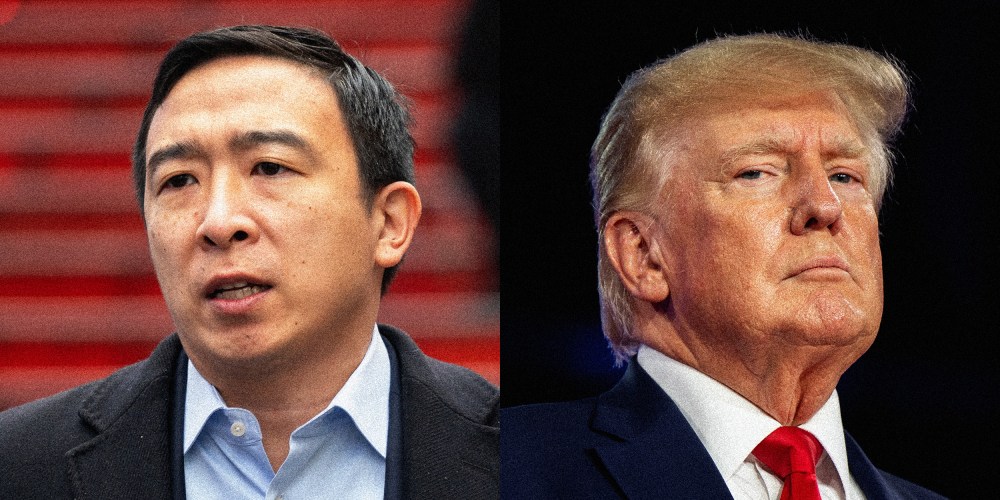
Andrew Yang, the former Democratic presidential candidate and founder of a dubious centrist third party called the Forward Party, has been criticizing the FBI search of Mar-a-Lago. Over several tweets in the past couple of days, he has said the search of the former president’s residence likely “activated extremism” and implied that the country would be better off if it had never happened, despite his opposition to Donald Trump.
Yang’s concerns can’t be dismissed entirely, but his doomsaying fails to consider the reality that the extremism he fears already exists — and that it’s a dangerous precedent to treat any politician who so flagrantly abused power as above the law.
The substance of Yang’s concern is that this search will vindicate beliefs among Trump’s base that there’s some kind of deep state conspiracy against him — and cost more than it’s worth politically. On Tuesday he tweeted that a key part of Trump’s appeal “has been that it’s him against a corrupt government establishment,” adding, “This raid strengthens that case for millions of Americans who will see this as unjust persecution.” About an hour later he tweeted, “I fear we will look back on this as a day that activated extremism and not the opposite.”
We know that the FBI executed a search warrant at the residence of a former president, but we don’t yet know why. As The New York Times reports, Trump is at the center of multiple criminal investigations, and it’s plausible that the search was “a relatively narrow attempt to recover classified documents — or much more than that.” We still don’t know if it will result in criminal prosecution.

There’s no reason to think the decision to execute this warrant was made casually or by some rogue bureaucrat, as Yang has suggested. “It seems like this was authorized by a local judge and a particular FBI office without buy-in or notification of higher levels of government,” he tweeted on Tuesday. That’s … incorrect. We know a federal magistrate signed off on the warrant, and as MSNBC columnist Glenn Kirschner, a former assistant U.S. attorney for the District of Columbia, has explained, the decision to request the warrant was undoubtedly vetted at the highest levels of the Justice Department and likely crossed Attorney General Merrick Garland’s desk.


Now the fact that something of this level of political sensitivity requires sign-off from high up in the Justice Department doesn’t necessarily mean that it was a prudent strategic decision. But it does mean that this decision wasn’t flippantly made. The FBI is now also more sensitive to how its conduct can shape public opinion after former FBI Director James Comey’s decision to revive an investigation of Hillary Clinton’s emails just weeks before the 2016 election potentially altered the results of that election. And legal experts say that precisely due to the political sensitivity of potentially prosecuting a former president, the bar for taking any kind of action against Trump is very high.
I’m no Trump fan. I want him as far away from the White House as possible. But a fundamental part of his appeal has been that it’s him against a corrupt government establishment. This raid strengthens that case for millions of Americans who will see this as unjust persecution.
— Andrew Yang🧢⬆️🇺🇸 (@AndrewYang) August 9, 2022
Since we don’t yet know which kinds of potential crimes were being investigated through this search warrant and what kinds of possible classified records were being sought, it’s impossible to weigh the potential benefits against the costs yet in any specific sense. Yet Yang is foreclosing the possibility that this search could turn up anything particularly important in the pursuit of justice. That seems premature to me, at the very least.
Trump flagrantly abused his power on countless occasions in office and attempted to execute a coup. If we pre-emptively rule out the possibility that he should be held accountable for any of his actions, that sets a scary precedent, as well: Presidents can get away with anything simply because they’re presidents. If Trump or a Trump-like politician were to make it to the White House in the future knowing federal prosecutors were afraid to take action against them purely out of fear of backlash, that would embolden them even more. The next flagrantly corrupt president could be considerably worse than what we saw during the Trump era if we rule out legal scrutiny.
Now, it’s possible that this search warrant is in support of a relatively narrow case against Trump’s handling of documents, there’s no bombshell revelation or substantial punishment, and yet the right still mobilizes much more aggressively ahead of 2024 because of it. That’s a possibility, and one could argue that the costs outweigh the benefits from a political perspective, even if that’s not what’s driving Justice department officials.
But Yang’s concern that we may look back at the day that Trump’s home was searched “as a day that activated extremism” isn’t compelling. The GOP is already extreme — the fact that Trump is already its 2024 front-runner after having overseen a white nationalist presidency and having failed to pull off a coup tells you that. This authoritarian movement is already primed to take extreme action in response to any struggle Trump faces, and that’s not a good enough reason to rule out accountability for violating the law. As long as the FBI doesn’t make the mistake of making a bombshell decisions just a few months before Election Day in 2024, it’s worth taking a more patient attitude toward these developments.

Zeeshan Aleem is a writer and editor for MS NOW. He primarily writes about politics and foreign policy.