





Over the last year, a number of very wealthy Americans have argued that the problem with the federal government is that it is full of unelected decision-makers working without authorization from Congress and the Constitution.
But as it turns out, these critics don’t really mind any of those things, as long as they’re the ones in charge.
The latest example of this turnabout is billionaire Silicon Valley investor Marc Andreessen. According to an article in the Financial Times, which cites two unnamed sources with knowledge, Andreessen is helping identify and interview candidates for President-elect Donald Trump’s advisory commission on cutting government spending.
If true, this is particularly odd, given the substance of Andreessen’s recent complaints about the Consumer Financial Protection Bureau, the agency created after the 2008 financial crisis to protect consumers from deceptive financial products.
In a recent appearance on Joe Rogan’s podcast, Andreessen went after the CFPB for being an independent federal agency:
We have this thing called independent federal agencies. So like, for example, we have this thing called the Consumer Finance Protection Bureau, CFPB, which is sort of Elizabeth Warren’s personal agency that she gets to control. And it’s an independent agency that just gets to run and do whatever it wants, right? And if you read the Constitution, like there is no such thing as independent agency, and yet there it is.
To be fair, the CFPB has an unusual structure, but this is by design. Congress created it in 2011 as an independent bureau within the Federal Reserve to keep it from being politically influenced. It is headed by a director appointed by the president and confirmed by the Senate to a five-year term. Other independent agencies include the Federal Reserve; the Federal Deposit Insurance Corp., which insures your bank accounts; and the Securities and Exchange Commission, which was created after the Wall Street crash of 1929 to regulate financial markets.
You might notice a theme here. All of these agencies were created to regulate some of the largest and most powerful companies in the United States and keep the economy from crashing. Like Odysseus lashing himself to the mast as his ship passed the sirens, Congress designed them to be independent to avoid the temptation to meddle with their work. Contrary to what Andreessen says, Sen. Elizabeth Warren — who first proposed the CFPB — no more “gets to control it” than any other senator.
Compare this to the Department of Government Efficiency, the advisory commission that Trump created to suggest spending cuts.
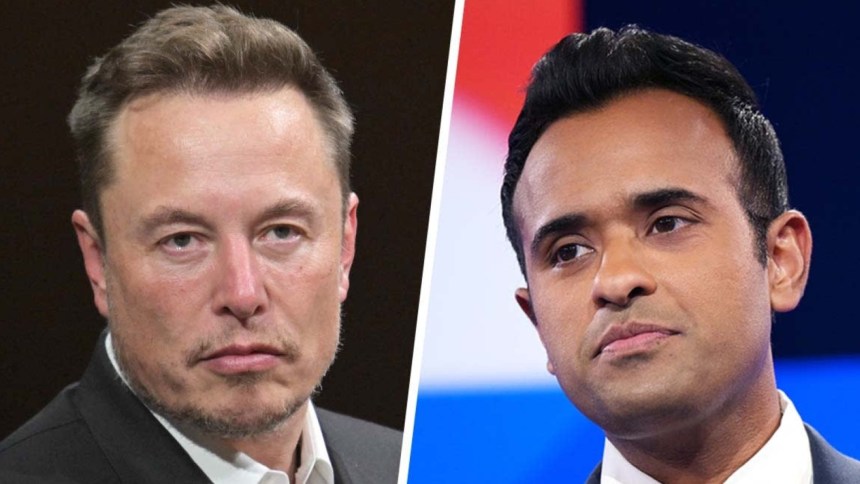
Although it has the mostly joking name of “department,” the commission is not a government agency at all, but more like one of those blue-ribbon panels that presidents occasionally create to give themselves outside advice. It’s being headed by billionaire Tesla owner Elon Musk and former presidential candidate Vivek Ramaswamy, both of whom supported Trump’s election. (Musk, it turns out, spent more than $250 million to boost Trump’s campaign.)
So, to be clear, DOGE is an independent advisory panel that Musk gets to personally control, with no limits on its purview, which is not directly authorized under the Constitution or even by Congress. In other words, it’s the exact thing that Andreessen decried — inaccurately — about the CFPB.
But it’s not just him. When Ramaswamy ran unsuccessfully for the Republican presidential nomination, he campaigned on “Ten Truths” that summarized his beliefs. No. 9 on the list: “There are three branches of the U.S. government, not four.” This supposed “fourth branch” was what he called “the administrative state,” the federal workers who write and enforce the rules at government agencies. Now that he’s one of the people in charge at DOGE, he has threatened to use it to target the jobs of those workers.
Now that he’s one of the people in charge at DOGE, Ramaswamy has threatened to use it to target the jobs of those workers. But where does this outside commission fit into the three branches outlined in the Constitution? Unlike the heads of those agencies, Ramaswamy and Musk won’t face Senate confirmation. Unlike the federal workers they criticize, the people on the DOGE commission aren’t a part of the executive branch. And unlike the jobs those workers do, their duties aren’t authorized by any congressional statute. Musk lodged similar criticisms against federal workers. “The unelected and unconstitutional Federal bureaucracy currently has more power than the presidency, legislature or judiciary!” Musk posted on X in November. “This needs to change.” Over the years, he’s been particularly concerned about “unelected” government officials who make decisions he doesn’t like, criticizing an “unelected” county health officer in California, an “unelected pseudo-judge” in Brazil, an “unelected official” in charge of online safety in Australia and “unelected” judges in Italy. But Musk, who has not won any election, is now going to make recommendations on what he says could be as much as $2 trillion in federal spending, including possibly cutting Social Security and other programs that help seniors and the poor. There are plenty of problems with DOGE, but how it’s set up is not one of them. To be clear, there are plenty of problems with DOGE, but how it’s set up is not one of them. Presidents have long had the authority to set up advisory committees overseen by outsiders not confirmed by Congress. Any of its recommendations, however ill-advised, will still have to go through Congress or be undertaken by executive orders from the president. Nothing in the Constitution bars Trump from asking for advice from a commission, even if the people staffing it seem ill-equipped for the task. But by the same token, there was never anything wrong with federal workers writing regulations based on laws passed by Congress, or with the president and Congress working together to create an agency that’s free from day-to-day political meddling, or with judges and other unelected officials making decisions. That’s how government has long worked, and the fact that Andreessen, Musk and Ramaswamy have suddenly dropped those concerns raises questions about how serious their complaints really were. If you only object to the rules when you aren’t in power, then you aren’t really objecting to the rules at all; you’re objecting to not being in power.
Ryan Teague Beckwith is a newsletter editor for MS NOW. He has previously worked for such outlets as Time magazine and Bloomberg News. He teaches journalism at Georgetown University’s School of Continuing Studies and is the creator of Your First Byline. 

