




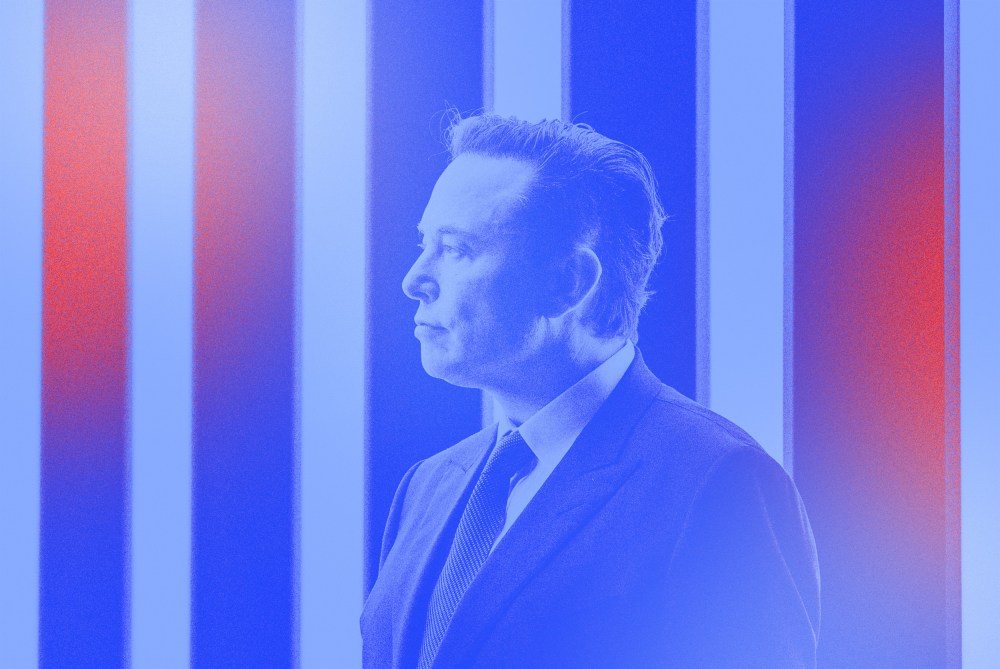
In a move that shocked the tech world, Elon Musk, the CEO of Tesla and the richest man in the world, disclosed that he had bought a roughly 9 percent stake in Twitter this week for $2.89 billion and then joined its board of directors. Musk has already signaled that as the company’s largest shareholder he’ll push the social media platform to adopt new policies and agitate for more “free speech.”
Twitter employees are reportedly “spooked,” and tech analysts have been feverishly speculating about everything the mogul is hoping to get out of his purchase, considering how much he already has his hands full with other huge projects like running Tesla, SpaceX and the Boring Company.
But perhaps more interesting than his plans for Twitter is the way Musk put himself in a position to do it. It only cost Musk 1 percent of his net worth to become a hugely influential player in the development of a social media platform that’s indispensable to the distribution of news and commentary — especially in the worlds of politics, technology and entertainment — across the English-speaking world and beyond.
We’re in need of better solutions for developing speech regulations that aren’t so vulnerable to being hijacked by whimsical oligarchs.
The move illustrates the limitations of grassroots efforts from users to change certain policies at Twitter, such as its regulation of hate speech. Hundreds of thousands of micro-complaints on Twitter are likely to be overshadowed by the concerns and interests of a billionaire who can single-handedly reshape the valuation of the company and get his calls answered any time he rings up the CEO. We’re in need of better solutions for developing speech regulations that aren’t so vulnerable to being hijacked by whimsical oligarchs.
While many progressives on Twitter say the site has done too little to crack down on harassment, hate speech and disinformation, signs suggest Musk is likely to push Twitter in the opposite direction. Musk has expressed interest in a more decentralized internet and has used the platform to be adversarial and provocative to the point that he has gotten embroiled in a defamation lawsuit. Given his inclination to use the platform like a troll, he’s likely to lobby for Twitter to adopt more lax content regulation, many observers of the technology industry say. There’s also been significant speculation as to whether that mission would entail ending Twitter’s ban on former President Donald Trump’s account. So far, his main focus has been to encourage Twitter to focus on instituting an edit button, but his polling his followers about “free speech” suggests some weightier lobbying is coming.


There are also other possibilities. Perhaps Musk, who seems to think about Twitter like a video game, will get bored after tampering with some user experience preferences. Or perhaps he views investing in Twitter primarily as a way to boost his own bottom line. As Max Read, a commentator on technology and society, wrote in his newsletter, “Twitter, and its ability to generate attention and hype, is an essential component of the business strategy for Tesla, SpaceX, and the Boring Company, and some level of internal power within the most important platform from which he promotes his ventures is surely worth $2.89 billion to Musk.” The richest man in the world might be tempted to agitate for policies that favor power-users in a bid to amass more power.
The reality is we don’t know what Musk will do. We do know, however, that he has the ear of Twitter CEO Parag Agrawal and former CEO Jack Dorsey and is already joking about causing a scene during board meetings. And we know Musk now has the kind of sway over a company that many millions of users put together don’t have because of his wallet.
As someone wary of Big Tech over-regulation of speech, I am not as worried about the possibility of modest deregulation of Twitter’s content moderation as many. But regardless of where you stand on Musk’s specific views, it’s more than a little unnerving that platforms that are so central to digital civic life in America can so easily come under the influence of the wealthiest members of society. Maybe the next Musk won’t favor deregulation, but will instead champion heavy-handed over-regulation that could silence certain kinds of political dissent.
We know Musk now has the kind of sway over a company that many millions of users put together don’t.
This whole episode is a reminder of how urgent it is that we develop more robust ideas for regulating and protecting speech spaces vital for the functioning of democracy. In a 2018 New York magazine essay about Facebook’s dominance, Read argued that when major tech platforms become large enough and have no checks on their power, they become sovereign powers — “supreme and unchallenged.” Citing the writing of K. Sabeel Rahman, a professor at Brooklyn Law School, Read laid out the counterbalancing power of “constitutionalism — that is, the design of institutions to ensure accountability, transparency, and clear limits on power structures.” Constitutionalism could take many forms, from requiring mega-platforms to be broken up to regulating them like utilities or the way we regulate radio and television airwaves. Constitutionalism could also mean a company forms a pact with its users and creates a constitution that clearly lays out bedrock principles, establishes user rights and creates a forum for real accountability and transparency. The point is to move away from ad hocism, arbitrary policy changes based on the zeitgeist and adopting the preferences of the ultra-wealthy influencers of the day.
I won’t pretend that I have a clear sense of the answer here, and the solution depends in part on the platform itself: Facebook, which has monopoly power in social networking, is used by billions and is very different from Twitter, which has a much smaller user base but has an unrivaled ability to shape news discourse. That in turn might mean they require very different approaches. But what I can say is that leaving these companies overly vulnerable to billionaires who can wield autocratic modes of power is a dangerous game — and one that will harm the public.

Zeeshan Aleem is a writer and editor for MS NOW. He primarily writes about politics and foreign policy.