





A year after he led a fateful raid on the office of the Marion County, Kansas, Record newspaper and its publisher’s home, former Marion Police Chief Gideon Cody was finally charged with a crime.
A government’s attacking the free press cannot be tolerated, so it’s encouraging that in a time when journalists are routinely maligned and threatened, the special prosecutors assigned to the case charged Cody with wrongdoing, specifically interference with the judicial process. They say the chief asked a woman — whose driving record the newspaper had been looking into — to delete incriminating text messages they’d exchanged with one another.
Cody’s not being charged with anything would have dishonored the memory of the 98-year-old co-owner of the Record, Joan Meyer, who yelled “Get out of my house!” to police raiding her home.
It’s a low-level felony, but Cody’s not being charged with anything would have dishonored the memory of the 98-year-old co-owner of the Record, Joan Meyer, who yelled “Get out of my house!” to police raiding her home. She died the next day from what her family says was the stress of the encounter. Though prosecutors didn’t pin Meyer’s death on the police and their raid, the newspaper’s publisher, Eric Meyer, in a lawsuit links Cody’s actions to his mother’s death.
The raid on the Record is a reminder that small-town journalists are among the bravest in the field. Exposing the scandals of heads of state and corporate titans is a low-risk, high-reward venture compared with calling out the misdeeds of, say, the winning football coach-turned-school board member or the beloved boy-done-good contractor. Especially when you know you’ll run into them or somebody close to them at the grocery store or the middle school band recital. Marion has an estimated 1,900 people, Marion County about 12,000. To conduct professional journalism in such small places takes a fearlessness that most journalists will never have to muster.
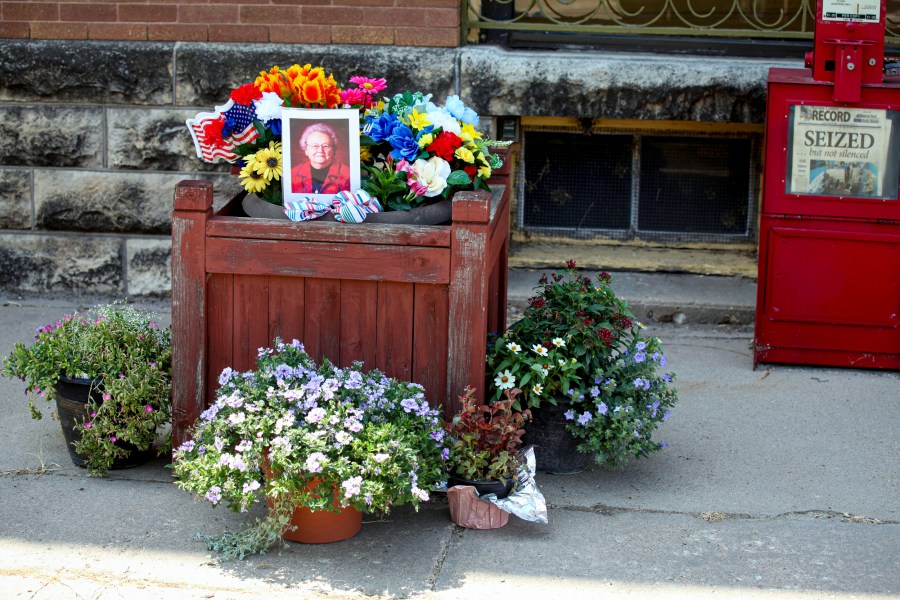
Based on a tip, the Record was looking into whether a local restaurateur’s DUI and record of a suspended license disqualified her from getting a liquor license. A Record reporter obtained the woman’s publicly available driving record. The paper didn’t run a story based on those records, but then the police (emboldened by a warrant that should never have been signed) decided that journalists examining public records had committed identity theft.
In his lawsuit, the newspaper’s publisher, who’s also a college journalism professor, accuses the mayor of prompting the police chief to investigate the newspaper. Two weeks before the fateful raid, according to reporting by the news sites Kansas Reflector and The Handbasket, the mayor of Marion had said in a Facebook post on his personal page that the “real villains in America … are the radical ‘journalists,’ ‘teachers’ and ‘professors’ who do nothing but sow division between the American people.” The police chief resigned in October when NBC affiliate KSHB of Kansas City reported that he had told the restaurant owner to erase the text messages they’d exchanged. The mayor decided against seeking re-election.

The attack on the Record is also a reminder that small-town newspapers are disappearing, and fast. According to a November report from the Medill School of Journalism at Northwestern, the loss of 2.5 local newspapers a week last year means “more than half of all U.S. counties now have limited access to reliable local news and information.” That report found that 228 more counties are “at high risk of losing local news.”


The disappearance of local news not only leaves people more in the dark about what’s happening around them, but it also foments the kind of cutthroat partisanship that we’ve seen play out at school board meetings and city council meetings. If the only news people get concerns Democrats and Republicans in Washington fighting tooth and nail, then they’re more likely to filter everything local through the same polarizing lens.
The disappearance of local news foments the kind of cutthroat partisanship that we’ve seen play out at school board meetings and city council meetings.
My journalism career began at a weekly newspaper not unlike the Marion Record, and the first crime story I wrote made me aware that journalism wasn’t as safe as I’d assumed. I quoted the sheriff in my part of rural Mississippi boasting of his department’s recovery of stolen goods at an unnamed pawnshop. The exceedingly large owner of another local pawnshop felt wrongly implicated and wanted an audience with me, the 17-year-old summer intern. As my editor was describing how he’d previously burst through the door yelling — and promising to order me to hide if she saw him approaching — I saw her eyes focus on the door behind me, and she said, “Oh, my God, here he comes!”
From my hiding place, I heard her explain that the sheriff had declined to give the name of the pawn shop, and I heard him vow to come back and raise hell if the sheriff didn’t confirm what she said. There was no warning the next time. The office stood frozen as he threw the door open, stuck his head inside and said the sheriff had confirmed what she’d said and that he no longer had it out for me.
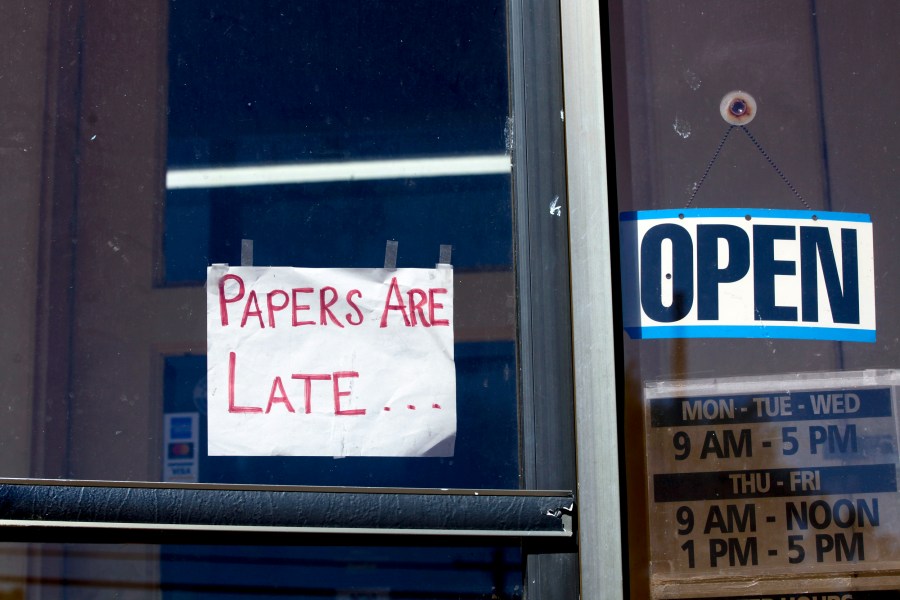
In the decades since, I’ve written things that have upset big-city mayors, governors and members of Congress. But I can attest, as I’m sure Meyer can, that offending high-ranking officials is nothing compared to getting crosswise with local small-town potentates.
The good news is that the readership of the Record has tripled since the raid: from 2,000 subscribers to 6,000. Still, Meyer is seeking $5 million in his lawsuit and says he doesn’t want to settle. He wants a precedent-setting verdict against those behind the raid. He said” “The whole point of doing this is not to get money. The whole point of doing this is to say ‘you can’t do this crap.’”

Jarvis DeBerry is an opinion editor for MS NOW Daily. He was previously editor-in-chief at the Louisiana Illuminator and a columnist and deputy opinion editor at The Times-Picayune.