




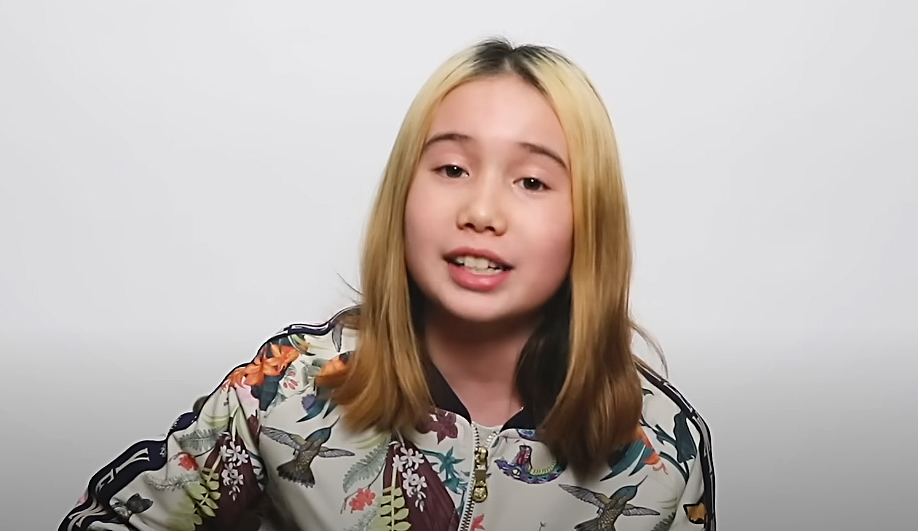
When social media exploded last week with false claims about the death of young viral rapper Lil Tay, it was in some sense a familiar tale. After all, celebrity death hoaxes are as old as the internet itself. Long before online misinformation became a major concern in the world of politics, the internet was notorious for spreading dubious rumors about celebrities dying. Snopes, the hoax-debunking website that has catalogued these incidents for decades, cites research showing that “the celebrity death hoax proliferates across the internet mainly because it feeds on a number of more basic instincts among users, such as ‘performing’ their grief on social media.”
By the time the false reports were taken down or corrected, the damage to Lil Tay, her family, and her friends had already been done.
The infrastructure of the internet also enables this rumor mill. For example, a website called Fake a Wish allows users to auto-generate such fake stories and attribute them to a phony but official-sounding source called Global Associated News. Yet the false narrative around Lil Tay’s demise also wound up as a headline in no less a credible source than the Los Angeles Times, one of America’s premier “papers of record.” By the time the false reports were taken down or corrected, the damage to Lil Tay, her family and her friends had already been done.
This pipeline — from a single bogus (and reportedly hacked) Instagram post to the broader social media community to culture aggregators like Pop Crave, and then to a prestigious news outlet like the Los Angeles Times — reveals something important about the accelerating problems of today’s pop culture news landscape. But more than that, it suggests something very worrying about our increasingly decentralized online news landscape generally.
Contemporary entertainment and celebrity journalism includes plenty of high-quality professional work, as well as reams of low-quality click bait. Yet the overall field has been plagued in recent years by a set of industry trends that the unfortunate Lil Tay saga lays bare. When massive social media publishers first picked up the Lil Tay story, they were not simply tracking the fake Instagram post in a vacuum. Rather, they were responding to the immense reaction that the post had already generated on social media, where it quickly became a hot topic of discussion and “user engagement.”
Today’s culture tastemakers, observers, professional gossipers and writers are tasked with constantly monitoring social media for the latest popular trend, with the goal of capitalizing on it for clicks and the advertising dollars that follow. In the cutthroat battle for online attention, the priority is to be part of the social media conversation — and never be left out. This incentivizes speed above all else, with sometimes disastrous results.


To be fair, the pressure to break news can be felt across the contemporary media industry. But professional journalistic practices like fact-checking are supposed to function as a check on these impulses. And here is where entertainment and celebrity journalism appears especially at risk. Celebrity and entertainment stories may not always feel as serious as the latest White House policy announcement or Supreme Court decision, but that doesn’t mean they don’t have real world consequences. They cannot exist in some post-truth vacuum.
Meanwhile, entertainment accounts, even ones that rely heavily or almost exclusively on anonymous, unvetted sourcing, have become immensely popular. Pop Crave boasts 1.5 million followers on Twitter, Pop Base has over 1 million Twitter followers and DeuxMoi has 2 million followers on Instagram. And, as Vox and others have recently pointed out, these platforms — sometimes run or written by only a few anonymous Very Online people — are increasingly muscling their way into politics. It is a slippery slope indeed from blindly repeating the death of a minor YouTube celebrity to blindly repeating political propaganda, QAnon conspiracy theories or anti-vaccine misinformation.
Entertainment accounts, even ones that rely heavily or almost exclusively on anonymous, unvetted sourcing, have become immensely popular.
We already know young people get a massive amount of their news from online sources. According to a 2022 study from Pew Research, “U.S. adults under 30 are now almost as likely to trust information on social media as information from national news outlets.” A recent report from The Verge details how Generation Z has become so reliant on getting updates directly from digital creators that they may not feel the need to dig deeper into outside sources. We also know that many of the more popular “news” sources are motivated by clicks over facts. This is a potential recipe for informational disaster.
The Lil Tay death hoax saga must be a warning. A key cornerstone of media literacy education is to always check the source of a news story to determine its credibility. Younger generations are potentially being groomed to do the opposite. That should alarm everyone. But of course it’s even worse when trusted news brands feed into the factually dubious frenzy.
Ultimately, one of the takeaway lessons here is the importance of following a breaking story over time and not just stopping at a single headline. Professional journalists, anonymous bloggers and readers all need to take the power of online virality seriously — as well as their respective roles in this complex ecosystem. Otherwise we’re heading toward a future where these types of hoaxes and misunderstandings become even more common — and even more damaging.

Joel Penney
Joel Penney is an associate professor at the School of Communication and Media at Montclair State University. His most recent book, "Pop Culture, Politics, and the News: Entertainment Journalism in the Polarized Media Landscape," was published by Oxford University Press in 2022.