




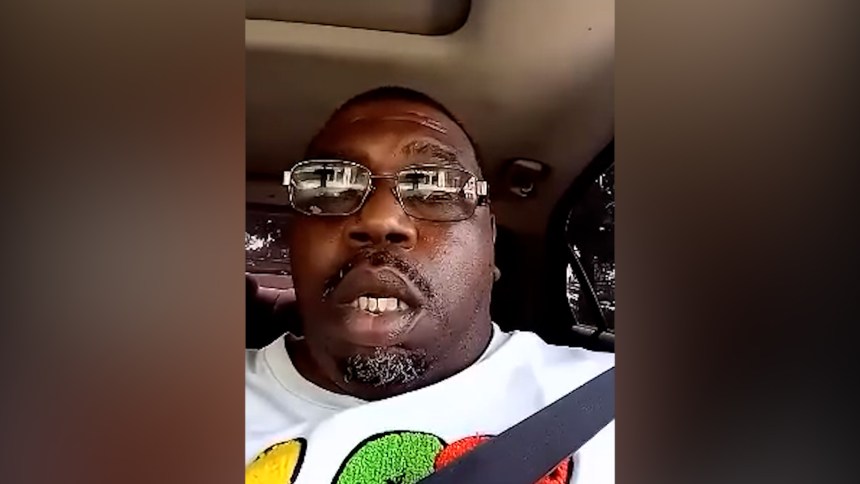
The whole world was laughing at Corey Harris, a 44-year-old Michigan man who Zoomed into a May 15 court hearing on charges of driving with a suspended license — from behind the wheel of his car. The judge responded by ordering him to report to jail.
“I’m pulling into my doctor’s office, actually,” Harris said when Washtenaw County Judge Cedric J. Simpson asked him if he was driving. “Just give me one second. I’m parking right now.”
As comical as the situation may have appeared, this is no laughing matter. Not for the millions across the country who have had their licenses suspended, nor for Harris, who we have since learned should have been free and clear to drive.
Harris, who’s become the subject of multiple memes on the internet, appears stunned when the judge calls him out for driving and audibly expresses his frustration when the judge orders him to jail.
But as comical as the situation may have appeared, this is no laughing matter. Not for the millions across the country who have had their licenses suspended, nor for Harris, who we have since learned should have been free and clear to drive to a doctor’s appointment or anywhere else he wanted to go.
Detroit’s WXYZ-TV says it took “less than five minutes … to search Saginaw County records to see that in January 2022, a judge had rescinded the order that suspended Harris’ driver’s license so he could be reinstated.” That judge’s order was reportedly not properly communicated to the state’s secretary of state’s office.
Indeed, Harris, who called the situation “very embarrassing,” told the television station that his suspension “was supposed to have been lifted two years ago, but they didn’t.”
We all owe this man an apology. https://t.co/Zh6hTWzM8m
— Franklin Leonard (@franklinleonard) June 3, 2024
Contrary to what people may have assumed, Harris’ license was not suspended for anything related to his driving but for unpaid child support. This is the way it is across the country. States use driver’s license suspensions to enforce unpaid debt. It has become the default sanction without any recognition of its harsh impact on individuals, families or communities and despite unequivocal evidence that, as a policy, it doesn’t work. Suspending a person’s driver’s license deprives them of their livelihood. If the goal is to get someone to pay money, then why would we take away their means of getting to work? Debt-based license suspensions defy logic.
As a retired judge, I know that to administer justice requires understanding the full circumstances of those who appear before the court. Judge Simpson, like the rest of the world would eventually do, appeared to jumped to conclusions. He rolled his eyes when he got confirmation that Harris was driving, said, “I don’t even know why he would do that,” and he sent Harris to jail. He was locked up for two days.
In the video that his court released, the judge doesn’t take the time to learn the facts about Harris. And his seeming reflexive decision to revoke his bond and order Harris to jail suggests that he hasn’t considered how draconian and counterproductive debt-based suspensions are.
As a retired judge, I know that to administer justice requires understanding the full circumstances of those who appear before the court.
Of the millions of people in the U.S. who have their license suspended for unpaid debt, the overwhelming majority simply can’t afford to pay what they owe, and suspensions are disproportionately imposed on low-income people and people of color such as Harris, who’s Black.
The majority of driver’s license suspensions follow basic infractions, such as a traffic ticket. However, a $100 traffic fine in California carries $390 in additional fees for a total of $490. As the Federal Reserve Board just reported, roughly 40% of Americans do not have ready access to $400 in the event of an emergency, which means many people can’t pay a traffic ticket without sacrificing food, rent or other necessities for themselves or their families.


A study of unpaid child support found about 70 percent of past-due child support is owed by parents with no reported income or an income of $10,000 or less per year. Most Americans drive to work and losing their licenses means they often lose their jobs or are forced to take a job at reduced wages. Conservatively calculated, a suspended driver’s license leads to an estimated annual earnings loss of $12,700. In a recent national survey, 99 percent of the parents of minor children had to cut back on at least one essential need in order to pay court-imposed fines and fees. Without a driver’s license, parents can’t legally drive their children to school or a family member to a doctor’s appointment. Indeed, Mr. Harris was driving his wife to an urgent medical appointment when he appeared via Zoom in court.

“What was I thinking?” he said in an interview with WXYZ-TV. “I was thinking about getting my wife medical help. That’s what I was thinking. I wasn’t thinking about the fact that I got a suspended license. I don’t care about all that.”
This failed policy is also felt across entire communities. In Texas, researchers conservatively estimate that driver’s license suspensions lead to $5.5 billion in lost earnings annually. That’s $5.5 billion that is not circulating through the Texas economy. Conversely, in Phoenix, after roughly 7,000 licenses were restored through the City’s Compliance Assistance program, GDP in the city increased by $149.6 million.
Our Constitution prohibits people from being sent to jail for unpaid court debt, unless a judge finds that they have the ability to pay what they owe. Yet people can, and often do, find themselves behind bars.
They are jailed not ostensibly for the unpaid debt — but because of the sanction imposed for not being able to pay that debt. Because people with suspended licenses often have to drive, they are often stopped by law enforcement and charged with driving on a suspended license, which is a misdemeanor in every state. Consider Harris’ case. Judge Simpson didn’t ask why his license had been suspended nor did he ask whether he could afford to pay what he had owed before sending him to jail. This happens every day in far too many courtrooms in this country. It’s an end run around the Constitution.
A growing coalition of legislators, advocates and affected people, spanning the political spectrum, see debt-based suspensions for what they are: unfair, harsh and exceptionally ineffective. They believe licenses should only be suspended for unsafe driving, not for the crime of being poor. In the last five years, over 20 states have reformed or eliminated debt-based driver’s license suspensions, and the legislatures in Delaware and Maryland are currently considering bills to end suspensions for unpaid child support.
The rest of the states need to follow, but until they do, we need to remind judges — and the public — of the reality behind debt-based license suspensions and the need to treat everyone with respect and dignity. Harris didn’t deserve to be mocked. And he didn’t deserve to have his license suspended in the first place.

Judge Lisa Foster, retired
Lisa Foster is a retired judge and the former director of the Office for Access to Justice at the United States Department of Justice. As a California Superior Court Judge in San Diego, where she served 10 years, Judge Foster presided over criminal, family and civil cases and served as the presiding judge of the court’s appellate division. Prior to founding FFJC, Judge Foster served as a director in the Department of Justice where she led the department's efforts to address fines and fees.