




Hundreds of millions of Americans will gather Thursday to watch football, catch up with family and friends and eat themselves into a food coma — and it will be a miracle.
One year ago, a return to traditional Thanksgiving celebrations seemed unimaginable. Covid-19 was still raging across the country. Vaccines had been developed, but no Americans had received them. The day after Thanksgiving 2020, there were around 160,000 Covid-19 cases reported, according to the Centers for Disease Control and Prevention. It was a time with close to 100,000 Covid-related hospitalizations and more than 1,500 Americans dying every day.
The progress that has been made on vaccinations is one of the most extraordinary accomplishments in human history.
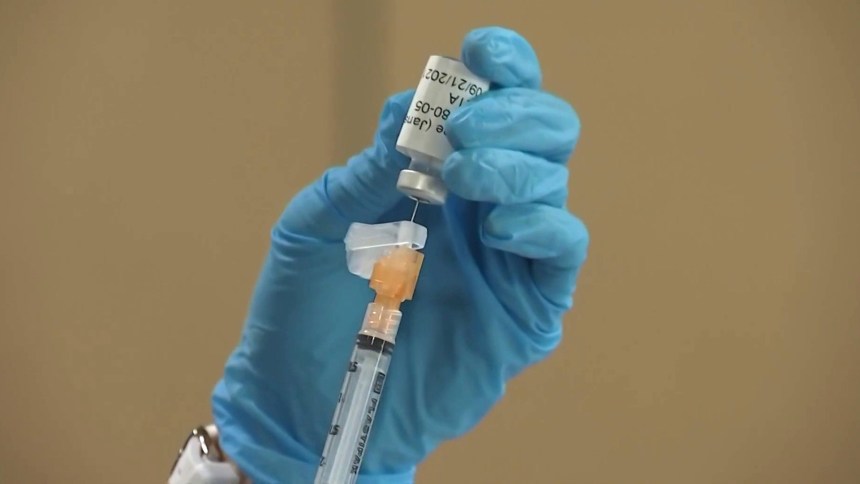
Then, on Dec. 14, Sandra Lindsay became one of the first Americans outside a clinical trial to receive a coronavirus vaccine, and everything changed. Since then, more than 231 million people in the U.S. have received at least one dose of a Covid vaccine, according to the Centers for Disease Control and Prevention. More than 80 percent of Americans ages 12 and over have received at least one dose, and more than 69 percent are fully vaccinated. For those ages 65 and over, the age group most vulnerable to the ravages of Covid, more than 99 percent have received at least one dose.
Americans who refuse to get vaccinated continue to get sick and die. Each death is a needless tragedy. But the progress that has been made on vaccinations is one of the most extraordinary accomplishments in human history.

Of course, these advances are not just happening in the United States.
In less than a year, 7.78 billion doses of Covid vaccines have been given out, and a stunning 3.32 billion people worldwide are fully vaccinated.
China did not give full approval to a Covid vaccine until Dec. 30. But recently it reported that more than 1 billion of its citizens are fully vaccinated. India is second, with about 412 million fully vaccinated people. However, that number represents only about 30 percent of the population, which is a reminder of how much work still needs to be done to make sure everyone on the planet has the opportunity to be fully vaccinated.
We may never know how many lives the vaccines saved, but the figure would likely be in the millions.
As Christopher Nichols, a historian at Oregon State University who has written about past pandemics, told me, “I can’t think of a truly comparable world-historical event of the likely impact and import of the 2020-21 global race for effective Covid-19 vaccines and production and distribution to get this many shots in arms this fast.”
In Nichols’ view, “the vaccination and distribution race likely saved us all from a pandemic much closer to the 1918 flu pandemic, in which a far smaller global population had an estimated 50 million deaths.”
We may never know how many lives the vaccines saved, but the figure would likely be in the millions.
What is perhaps even more extraordinary than the numbers we’re seeing is the safety and efficacy of the vaccines. No major or minor side effects are being reported in any significant numbers. Moreover, the vaccines are extraordinarily successful.
Covid deaths among vaccinated people are vanishingly rare. A person who has been vaccinated is about 14 times less likely to die from Covid than someone who has not.
Indeed, right now, even with Covid cases increasing, the levels of hospitalization and deaths remain low. In New Jersey, for example, cases have jumped by 66 percent in the past two weeks, but the state’s hospitalization rate is around 830, approximately five times lower than in January.


With the increase in protection, our lives are slowly but surely returning to normal. Kids are back in school; college students are back on campus; even workplaces are being populated again. The normal rhythms of life are returning.
Travel is opening up as the U.S. travel ban on Europe has been lifted, and even New Zealand, which had one of the most stringent lockdowns in the world, is preparing to allow tourists to return.
Professional hockey and basketball teams have played more than 550 games in indoor arenas to an estimated 8 million fans. There has been nearly three months of professional and college football. Tens of thousands of concerts and plays have taken place. There are virtually no reports of any being a superspreader event.
All of this is made possible by the vaccines.
As if that weren’t enough, we appear to be getting closer to a therapeutic treatment for Covid. Earlier this month, Pfizer applied for emergency use authorization of a Covid treatment pill that the company said can reduce the risk of hospitalization and death by 89 percent in people who are at high risk of severe illness.
In the immortal words of Jesse Pinkman: “Yeah, science!”

Of course, for all the progress that’s been made, there are still tens of millions of people in the United States who are refusing to get the shot. Their actions are prolonging the pandemic and contributing to Covid spikes. Worst of all, approximately a thousand people are still dying every day. In addition, around half of the people on the globe remain unvaccinated. The next year must bring renewed effort to ensure everyone has access to a vaccine.
But the progress we’ve made suggests we can get there — and we must not let ourselves be distracted by the know-nothing contingent. Billions of people around the world struggled and suffered, but most have done their part. They wore masks, socially distanced and demonstrated empathy, decency and resilience in the face of a once-in-a-lifetime global plague. When the time came to get vaccinated, billions acted. It’s a hopeful reminder of our shared humanity, no matter our differences.
As we gather this week, that is reason enough to give thanks.

Michael Cohen is an MS NOW columnist. He is also the publisher of the newsletter Truth and Consequences and hosts the weekly podcast That ‘70s Movie Podcast.