




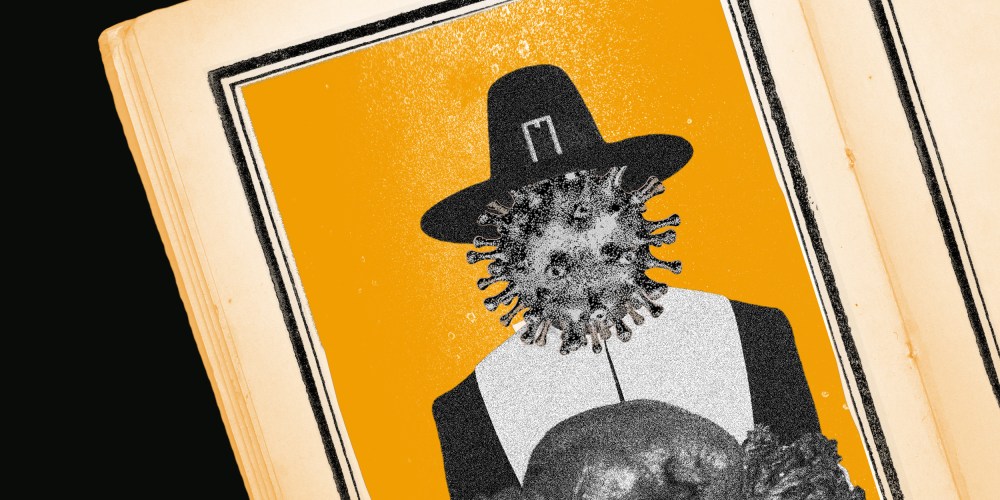
We love stories in America. Especially when we can see ourselves in the heroes. That’s part of why the tale of the humble Pilgrims, rescued from starvation by kindly Natives, has such a cherished place in our folklore.
Thanksgiving Day, for all its feasting and pageantry, is a holiday built on the stories that we tell ourselves. This year, though, it is being celebrated as we’re in the throes of a pandemic that a divided country can’t properly define. It makes me wonder: What stories will we eventually tell ourselves?
American exceptionalism lends itself to rejecting anything that feels uncomfortable or immoral.
It feels like a good time to think about this, with a rough winter ahead and the promise of vaccines waiting on the other side. I see at least two distinct versions of 2020 that could take root in the fertile soil of our imaginations: the tidy fable that makes us feel good about ourselves and the nuanced, sometimes difficult-to-look-at truth. Americans have a lot of practice with the former — our exceptionalism lends itself to rejecting anything that feels uncomfortable or immoral. We need look no further than the story of the first Thanksgiving to see how this predilection influences the collective historical record.
Generations of American children struggling to pronounce the word “cornucopia” have learned about Squanto, the kindly Native American who helped the colony at Plymouth. As the tale goes, after landing at Plymouth Rock in 1620, the Pilgrims — who had risked everything to come to the New World in search of religious freedom — survived the harsh New England winter thanks only to Squanto’s help teaching them to plant corn and catch eels. The Pilgrims, in their gratitude, gathered with several dozen Indigenous people to share their bounty in the first Thanksgiving in 1621.
It’s a happy tale, with a positive moral takeaway. And with the parable having properly been conveyed, the turkey is sliced, the pie is eaten, and everyone goes to watch football.
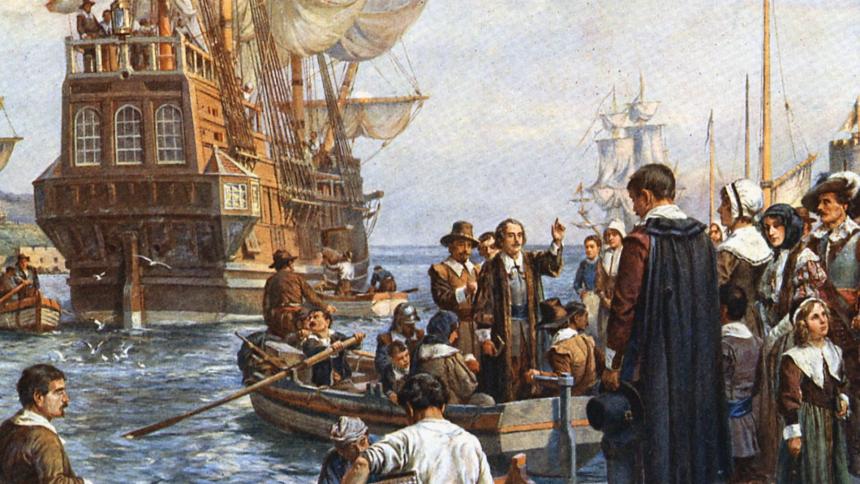
But the actual story is harder to hear. It also dovetails rather neatly with this year’s calamities. The Pilgrims weren’t the first Europeans the region’s Wampanoag tribe had encountered and to this point managed to contain over the previous century. Squanto, whose full name was Tisquantum, was the only surviving member of the Patuxet band. He didn’t just happen to be fluent in English. Six years before the Mayflower landed in North America, he’d been taken captive and sold as a slave in Europe, before he eventually made his way back home in 1619. But he returned to find only ghosts.
During his time as a slave in Europe, the entirety of his village had died from a plague. Scientists are still unsure exactly what disease killed off the Patuxet people. A recent theory put forward in the Centers for Disease Control and Prevention’s medical journal Emerging Infectious Diseases is that the Natives had succumbed to a wave of leptospirosis — a bacterial disease spread by urine that attacks the renal organs and the central nervous system. In their study, the authors attribute the outbreak to rats and other rodents brought over to the Americas on European ships.
It makes me wonder, then, what uncomfortable truths will be wiped out as we tell the story of Covid-19 in the years to come.
It’s impossible to know for sure whether that was the culprit; others have suggested that it might have been a viral case of hepatitis A or bubonic plague. It’s also difficult to know how many lives the mystery disease took — one estimate cited in the Emerging Infectious Diseases paper said as many as 2,000 people might have been living in the Patuxet village before its collapse. But what’s clear is that the abandoned Patuxet land wasn’t empty for long. The Pilgrims, fresh off the Mayflower, marveled at the rows of corn their deceased predecessors had planted before their deaths.


It was in part because of these deaths, likely a result of European migration, that Plymouth was able to flourish. It’s an uncomfortable truth, one that’s wiped out from most quick and easy retellings. It makes me wonder, then, what uncomfortable truths will be wiped out as we tell the story of Covid-19 in the years to come.
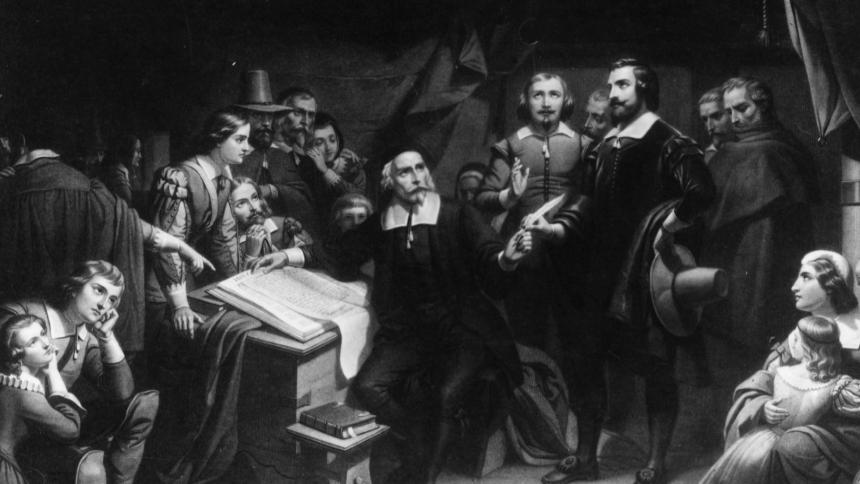
The Trumpist version of the story will likely focus on the brave men and women of America who defied tyranny and cast off their oppressive masks to live free of fear. The massive death toll goes unmentioned in this telling.
There’s a second option, which fits the arc of American greatness a little better. In this retelling, the people of the United States banded together to fight off illness, determined and resolute until a vaccine delivered us from the coronavirus scourge. Think of it as a secular Hannukah legend, in which the quarantine snacks lasted almost a full year. The death toll is probably mentioned in this version — but more as a road bump on the way to eventual victory over disease.
I don’t know which of these versions will eventually become part of the American mythology. Or maybe a third, as-yet-unknown version will be the one that schoolchildren recite 30, 40, 50 years in the future. Just as with Thanksgiving, it’s all too easy to sanitize the truth, either to make it more palatable to young students or to make a nation feel better about its mistakes. But who knows? Maybe I’ll be surprised. Maybe we’ve learned enough in the recent past about how to keep the truth of history alive that we’ll skip past the bowdlerization of Covid-19.
Maybe, just maybe, we’ll be mature enough as a country by then that our future speeches and stories and will be the actual, real truth — as we’re living it now.

Hayes Brown is a writer and editor for MS NOW. He focuses on politics and policymaking at the federal level, including Congress and the White House.