





The “Velshi Banned Book Club” is taking a look at a work of writing that has sparked ferocious and unrelenting debate since its publication. A work of writing that has been quoted and misquoted for generations. A work of writing that has been challenged for removal by none other than a former U.S. president. A work of writing that is arguably the most weaponized in our nation’s history. A work of writing that proves how powerful words can be — the United States Constitution.
Written in 1787 in the same Pennsylvania State House where the Declaration of Independence was penned, the Constitution lays out the framework and constraints for the U.S. government. It was followed by the Bill of Rights in 1791, created after some signers expressed a need for a clear description of individual rights. Since then, more than 10,000 amendments have been introduced to Congress. Many, many more haven’t made it that far. Just 27 have received the necessary approvals to become ratified, including critical amendments like the 13th, which abolished slavery, and the 19th, which granted women the right to vote.
After years of history assignments and “Schoolhouse Rock” episodes, it’s easy to forget that the Constitution was nothing short of an audacious political novelty in its time. Hardly any written Constitutions existed for the Founders to study. Decades later, in an America that hardly bares any resemblance to the one the Founders knew, the document remains controversial.
We’ve said before on the “Velshi Banned Book Club” that writing can have an impact for three reasons: words, story, or author. In the case of Constitution, it’s unequivocally all three.
Let’s talk about the words. Although the Constitution is, at its core, a landmark legal document, the writing is, simply put, beautiful. Take the preamble — no stranger to meaningful and necessary debate in a modern context, it begins with the three most referenced words in the entire document:
“We the People of the United States, in Order to form a more perfect Union, establish Justice, insure domestic Tranquility, provide for the common defence, promote the general Welfare, and secure the Blessings of Liberty to ourselves and our Posterity, do ordain and establish this Constitution for the United States of America.”
These lyrical words read as defiant, deliberate and hopeful, words written with an eye to an optimistic future, like a rising sun. The Constitution masterfully distills complex ideas into bullet points, not too dissimilar to some of the poems we have featured on the “Velshi Banned Book Club.” If you believe great writing is characterized by cultural change, then perhaps these are the most formative words ever written.
The debate over the Constitution boils down to how one understands these words and entails two increasingly rigid camps: those who believe the document is living and breathing, and those who believe the Constitution should be read exclusively as its drafters wrote and intended. Our nation hangs in the balance of those two starkly different interpretations.
Perhaps the most controversial passage today is the Second Amendment, which reads in its entirety:
“A well regulated Militia, being necessary to the security of a free State, the right of the people to keep and bear Arms, shall not be infringed.”
Colloquially known as “the right to bear arms,” contemporary debate focuses on whether the Second Amendment protects the right of private individuals to own guns. But much has changed since 1791, not least of which is the nation’s military structure and capability. For one, civilians are no longer expected to use their household weapons for military duty. Militias are actually illegal in the United States, replaced by the National Guard. Moreover, the Founders feared the potential need for a physical response to federal oppression. Most Americans do not share that fear.
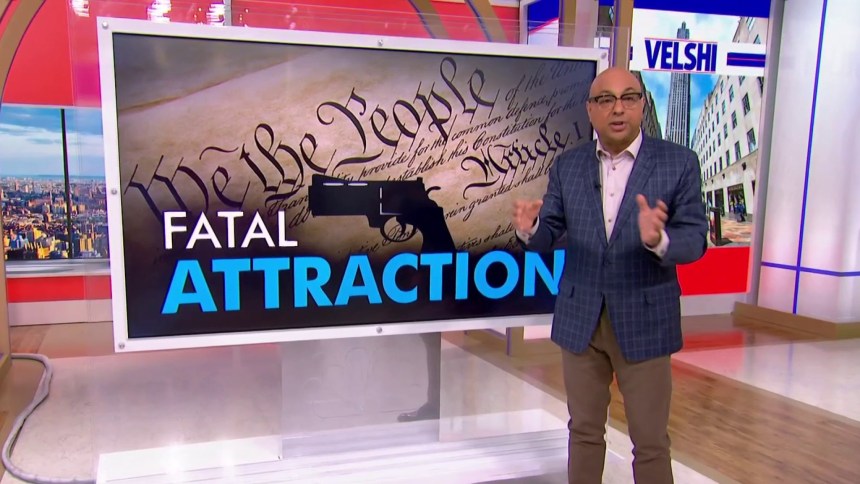
Originalists argue for the Second Amendment to stay exactly as is. Everyone else argues for an amendment that considers modern America, modern weaponry and the relentless gun violence our nation is facing.
The reality is that both sides have used creative interpretations of the Constitution to push their own agenda; that’s always how it is with words, literature and documents from a time long ago. Some, like former President Donald Trump, have argued for a different treatment of the sacred document: termination. Last year, Trump wrote on Truth Social: “A Massive Fraud of this type and magnitude allows for the termination of all rules, regulations, and articles, even those found in the Constitution.”
Part of the reason we are so committed to reading and discussing banned books is this: The kind of regime that tolerates book banning is often the kind of regime that will take that next step toward authoritarianism that Trump advocated: the end of our government, the termination of the Constitution.
This is an excerpt from a special August 19 edition of the “Ali Velshi Banned Book Club.” Keep listening and learning along with Velshi on his new “Banned Book Club” podcast.

Ali Velshi is the host of “Velshi,” which airs Saturdays and Sundays on MSNBC. He has been awarded the National Headliner Award for Business & Consumer Reporting for “How the Wheels Came Off,” a special on the near collapse of the American auto industry. His work on disabled workers and Chicago’s red-light camera scandal in 2016 earned him two News and Documentary Emmy Award nominations, adding to a nomination in 2010 for his terrorism coverage.

Hannah Holland
Hannah Holland is a producer for MS NOW's "Velshi" and editor for the "Velshi Banned Book Club." She writes for MS NOW.