







The Supreme Court has set a high bar for prosecutors to prove public corruption cases, so it’s difficult to predict how even the most shocking allegations against politicians will turn out in court. But one thing that may help the government in the newly unsealed case against New York City Mayor Eric Adams is the almost absurd collection of cover-up type behavior alleged in the indictment.
“Fake paper trails” and deleted messages are among such alleged evidence that no criminal defendant wants to be in a position of having to explain away, even if it’s the prosecution that has the burden to prove guilt beyond a reasonable doubt at trial while the defendant has no burden. Indeed, such evidence can help the government clear that properly steep hurdle.
Adams, who is presumed innocent like any defendant, confronts this evidence in an indictment that alleges the former New York City police officer “sought and accepted improper valuable benefits, such as luxury international travel, including from wealthy foreign businesspeople and at least one Turkish government official seeking to gain influence over him.”
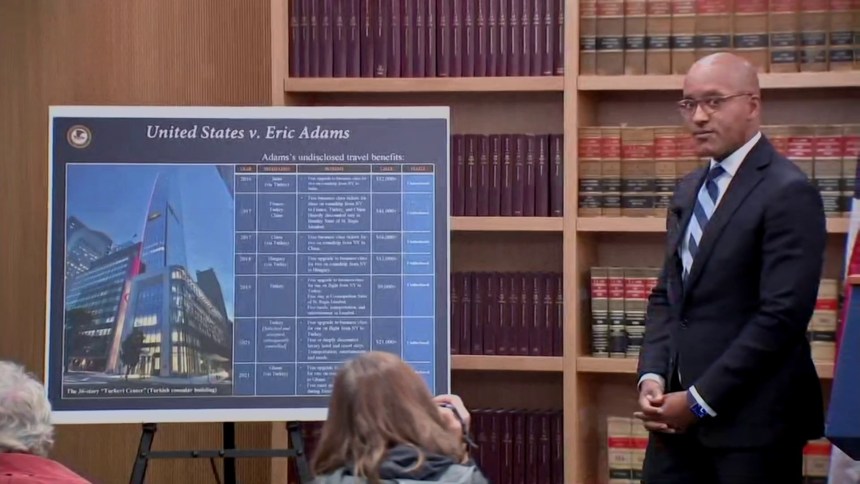
The alleged fake paper trails — again, really not something anyone wants to have to explain — arise in part of the indictment that claims Adams “created and instructed others to create fake paper trails, falsely suggesting that he had paid, or planned to pay, for travel benefits that were actually free.” For example, prosecutors allege that Adams “attempted to create a fake paper trail suggesting he had paid for his 2017 flights on the Turkish Airline, when in fact he had not.”
Regarding the allegedly deleted messages, those surface in the prosecution’s claim that Adams concealed benefits from foreign nationals seeking to gain influence over him. The indictment says that an Adams staffer texted the mayor, in the context of planning a possible trip to Turkey, to delete “all messages you send me” in order to be on the “safe side.” To which Adams allegedly replied: “Always do.”
One doesn’t have to be a lawyer to understand how such evidence can be damning.
Similarly, another stranger-than-fiction passage in the indictment alleges that, during a voluntary interview with FBI agents, the staffer went to a bathroom and deleted the encrypted messaging applications that she had used to communicate with Adams and others.
One doesn’t have to be a lawyer to understand how such evidence can be damning. It can therefore easily resonate with a jury, which could be useful for prosecutors, especially if Adams can raise doubts about the underlying charges themselves. Prosecutors could then ask the natural question: If he wasn’t doing anything wrong, then why try to cover it up?
Of course, this indictment was only just unsealed, and we don’t know what, if any, defenses Adams will raise if the case does go to trial. Most cases don’t go to trial. But if this one does, this type of evidence can be useful to prosecutors in any sort of case.
Subscribe to the Deadline: Legal Newsletter for updates and expert analysis on the top legal stories. The newsletter will return to its regular weekly schedule when the Supreme Court’s next term kicks off in October.
