







Did Donald Trump pardon Edward Kelley for conspiring to murder FBI agents?
Usually, whether someone was pardoned for something isn’t a matter of debate. But it’s one of the latest legal questions raised by Trump’s blanket clemency for Jan. 6 defendants, at a time when his administration has been supporting those defendants and attempting to rid the government of the people who worked on their cases.
Kelley was charged and convicted in the District of Columbia of assaulting law enforcement and other crimes. Trump’s blanket order obviously clears Kelley there.
But the Tennessee man was separately charged and convicted of the murder conspiracy in his home state, based on evidence that, while awaiting his D.C. trial, he planned to murder law enforcement, including FBI agents and employees.
“The proof showed that Kelley developed a ‘kill list’ of FBI agents and others who participated in the investigation into his conduct on Jan. 6 and that Kelley distributed this list — along with videos containing images of certain FBI employees identified on the list — to a co-conspirator as part of his ‘mission,’” the Justice Department said upon his Tennessee conviction. He was scheduled for sentencing in both cases this spring, before Trump issued his clemency order last month.
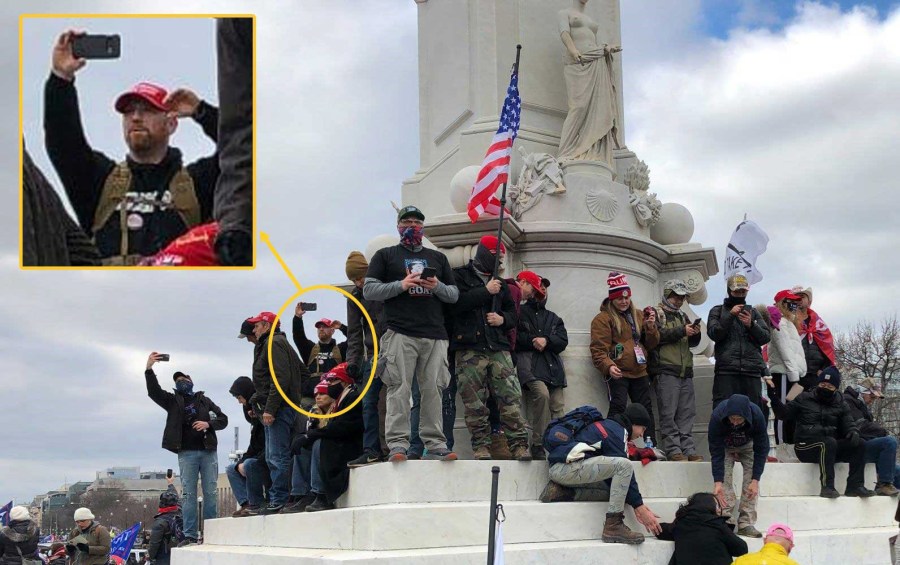
With the D.C. case clearly wiped out by Trump’s executive action, Kelley’s Tennessee case remains pending sentencing.
But he’s now asking a judge there to vacate his conviction, to dismiss the indictment and to release him immediately from custody, citing Trump’s granting of “a full, complete and unconditional pardon” to individuals “convicted of offenses related to events that occurred at or near the United States Capitol on January 6, 2021.”
Kelley argues that his murder conspiracy case “is unmistakenly ‘related to’ his charges in Washington, D.C. and covered by his Presidential pardon.”
Further spelling out his reasoning in a legal memorandum, Kelley’s counsel said that both cases were led by the same FBI agent and that “[t]he only reason Kelley was able to draft a list was due to a mistake in the U.S. Attorney’s Office in Washington, D.C. and his first attorney in the D.C. case providing him discovery. But for the Washington D.C. indictment, this case would have never been investigated, charged and prosecuted. The cases are clearly related to one another.”
While seemingly blaming the government for enabling him to conspire to kill its agents doesn’t sound like the best strategy when asking a court for mercy during sentencing, that’s not the purpose of this motion. Rather, it attempts to avoid sentencing altogether by framing his murder conspiracy case as necessarily captured by the blanket Jan. 6 pardon.
“If he had wanted it to apply to just the actions of January 6th he would have said so,” Kelley went on to argue, referring to Trump. “Rather he styled his executive action as ‘related to’ events that occurred at or near the Capitol on January 6, 2021,” he said. “Thus,” he argued, “Kelley is entitled to the immediate dismissal of the indictment in this Court and immediate release from custody.”
The docket in Kelley’s case doesn’t reflect a response to his motion from the court or the Trump DOJ. Of course, if the court doesn’t think the blanket pardon covers Kelley’s murder conspiracy, then Trump could just issue another specific pardon for that crime. Indeed, doing so would fit with the administration’s track record of not only freeing and celebrating the Jan. 6 defendants — including violent ones — but investigating and retaliating against the government employees who worked on their cases.
Subscribe to the Deadline: Legal Newsletter for expert analysis on the top legal stories of the week, including updates from the Supreme Court and developments in Donald Trump’s legal cases.
