





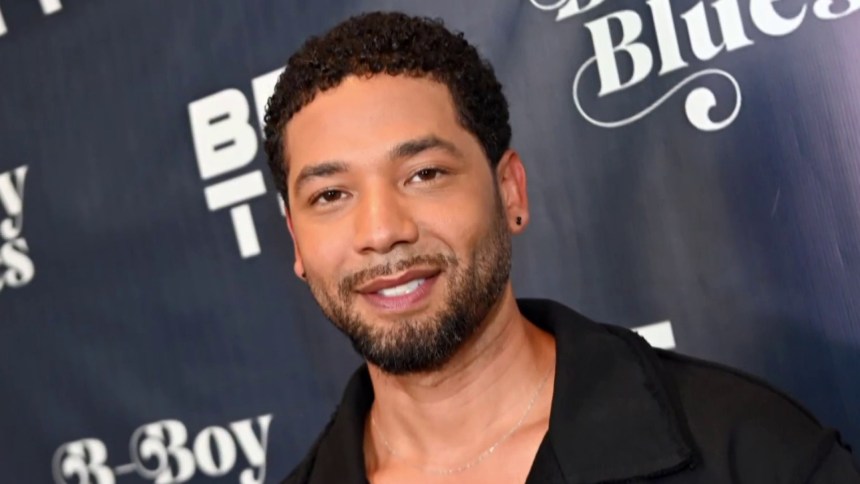

The Illinois Supreme Court reversed actor Jussie Smollett’s conviction on due process grounds, reasoning that he couldn’t be prosecuted again after his case was previously dismissed.
Smollett, who is Black and gay, was indicted in 2019 for felony disorderly conduct based on allegations that he falsely reported to Chicago police officers that he had been the victim of a hate crime. But the state prosecutor’s office said at the time that it would “nol-pros” or not move forward with the charges. A special prosecutor was appointed after that, and Smollett was charged again and convicted. He later appealed. He maintains that his allegations were not a hoax.
“Today we resolve a question about the State’s responsibility to honor the agreements it makes with defendants,” the court wrote on Thursday. “Specifically, we address whether a dismissal of a case by nolle prosequi allows the State to bring a second prosecution when the dismissal was entered as part of an agreement with the defendant and the defendant has performed his part of the bargain,” the court wrote, concluding that “a second prosecution under these circumstances is a due process violation, and we therefore reverse defendant’s conviction.”
“We are aware that this case has generated significant public interest and that many people were dissatisfied with the resolution of the original case and believed it to be unjust,” the court wrote. “Nevertheless, what would be more unjust than the resolution of any one criminal case would be a holding from this court that the State was not bound to honor agreements upon which people have detrimentally relied.”
Smollett, best known for starring in the since-cancelled TV drama “Empire,” reported to police in 2019 that two men attacked him, shouted racist and homophobic slurs at him, and yelled that he was in “MAGA country.” But two brothers told the jury during Smollett’s 2021 trial that the actor had paid them to stage the attack. Smollett was convicted of five counts of felony disorderly conduct, sentenced to 30 months of probation with the first 150 days to be served in the Cook County Jail, and ordered to pay a $25,000 fine and $120,106 in restitution to the City of Chicago.
Explaining why the second prosecution was barred, the court noted that the initial charges were dismissed in exchange for Smollett’s community service and forfeiture of his bail bond. Because he performed his end, the court wrote, “the State is bound by the agreement.”
Subscribe to the Deadline: Legal Newsletter for expert analysis on the top legal stories of the week, including updates from the Supreme Court and developments in Donald Trump’s legal cases.
