





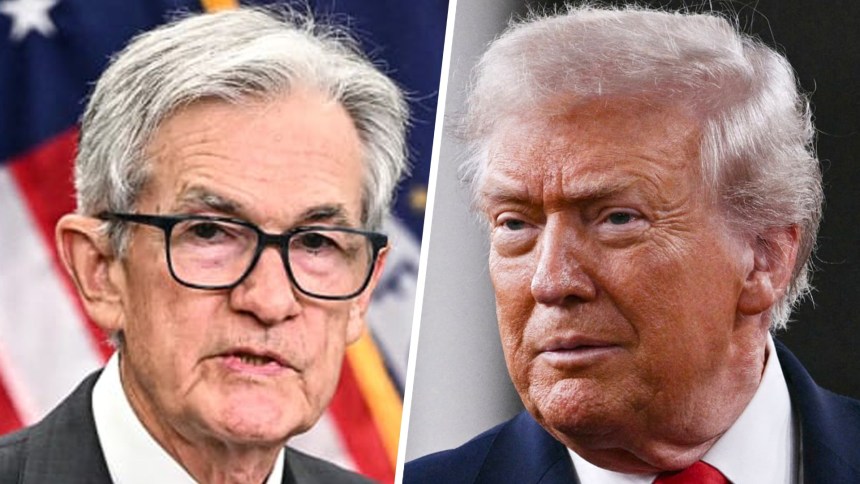

News that the Justice Department is investigating Federal Reserve Chair Jerome Powell comes just ahead of a Supreme Court hearing over President Donald Trump’s bid to fire Lisa Cook from the Fed’s Board of Governors.
While the high court’s Republican-appointed majority has broadly blessed Trump’s firing powers and doesn’t seem to care much for independent federal agencies in general, the court has nonetheless signaled it wants to insulate the Fed from Trump’s consolidation of agency power. Indeed, the court let Cook stay on the board pending the outcome of the litigation, which the court hasn’t allowed for many other agency members.
Against that backdrop, news of the Powell probe might not help the Trump administration in the Cook case. It’s unclear whether the new investigation will come up directly in the appeal, but the addition of further apparent evidence that the administration is weaponizing the DOJ to carry out the president’s policy goals could make the high court even more likely to take steps to secure the central bank’s independence.
In a video statement Sunday night, Powell said the DOJ served the Federal Reserve with grand jury subpoenas on Friday, threatening prosecution related to his testimony to the Senate Banking Committee last June. The testimony was about renovations to Fed office buildings.
Yet, Powell said the “threat” wasn’t really about his testimony or buildings. He said those are “pretexts” and that the “threat of criminal charges is a consequence of the Federal Reserve setting interest rates based on our best assessment of what will serve the public, rather than following the preferences of the President.”
While that pretext is clear to anyone watching this unfold, it’s nonetheless remarkable to hear Powell call that out directly.
The Cook case is different from the pending Trump v. Slaughter case, argued earlier this term, in which Justice Sonia Sotomayor said the administration is trying to “destroy the structure of government.” In the Slaughter case, the court seems poised to let the president remove members of the Federal Trade Commission and other agencies without cause before their Senate-confirmed terms conclude.
In the Cook case, however, Trump has claimed he has cause to fire her over alleged mortgage fraud that purportedly took place prior to her Senate confirmation to the board, and the legal fight is over the sufficiency of that alleged cause and related issues. The administration argues that courts can’t even review the president’s assertion of cause, while Cook argues that unproven claims over alleged actions that predate her taking office are insufficient. She argues that Trump’s “insistence that his removals are not subject to judicial scrutiny would eviscerate Congress’s choice to safeguard the Board’s independence and protect Board governors from arbitrary removals.”
Again, the Powell investigation might not surface formally at all at the Cook hearing, and perhaps the court was already determined to safeguard Fed independence — at least more than other agencies.
But the court that has gone out of its way to protect the Fed is surely aware of the news. And to the extent that it agrees with Powell’s pretextual view of the probe, that would only seem to strengthen the court’s apparent inclination to protect the Fed’s independence.
Subscribe to the Deadline: Legal Newsletter for expert analysis on the top legal stories of the week, including updates from the Supreme Court and developments in the Trump administration’s legal cases.
