





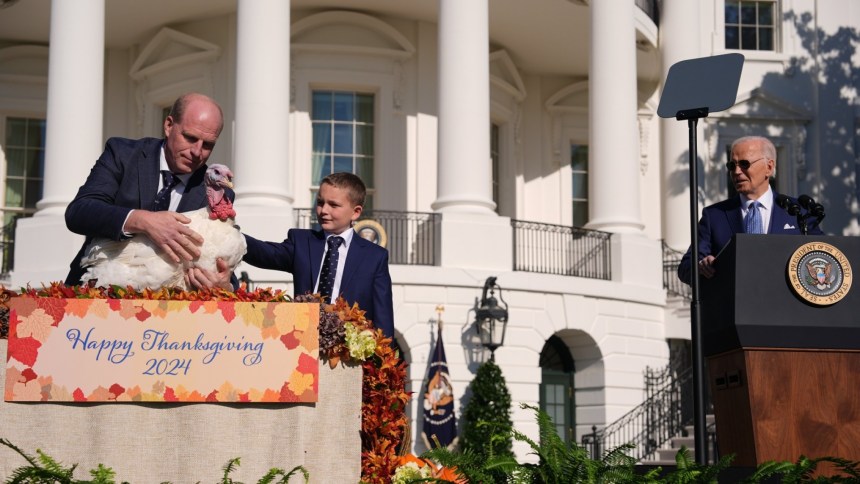

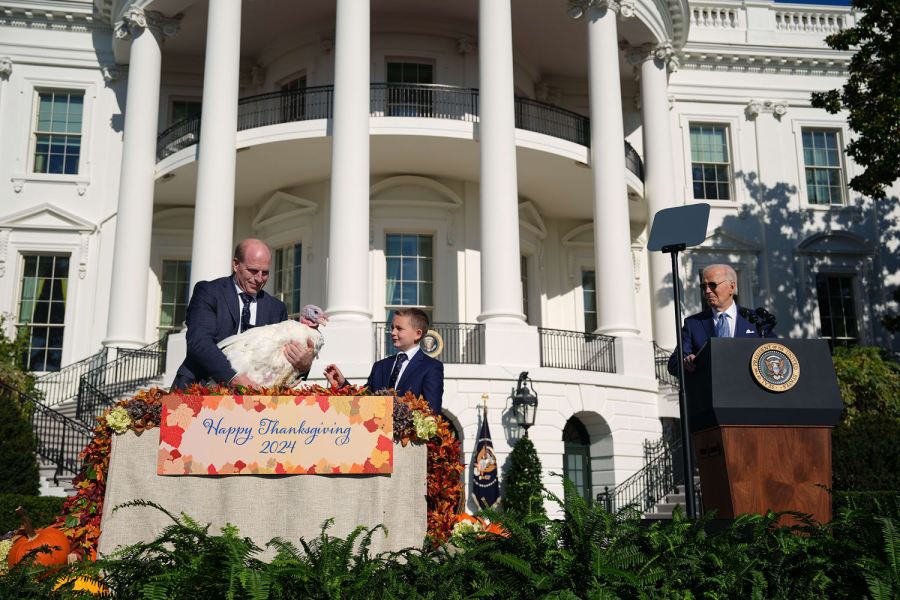
In one of the remaining public acts of his presidency, Joe Biden ceremoniously “pardoned” two turkeys named Peach and Blossom on Monday. The intendedly lighthearted tradition comes into stark relief this year, with serious questions looming about how Biden will use his clemency power before he leaves office and how Donald Trump will use it when he takes office.
One question for Biden is whether he’ll commute the sentences of federal death row prisoners to life in prison, as he suggested he would during his 2020 campaign. If he declines to do so, then that will help streamline a continuation of executions that Trump’s administration started in his first term.
Beyond death row, Jan. 6 looms large for defendants charged in the Capitol attack as well as for Trump himself.
The president-elect has vowed clemency for Jan. 6 defendants, and that prospect has already led judges to postpone trials so as not to waste time if the cases ultimately vanish. The potential for these sweeping “blanket” pardons across the board prompted one of those judges (a Trump appointee) to say that would be “beyond frustrating and disappointing.”
But a judge’s feelings have nothing to do with it. The pardon power rests entirely with the president, whom the Constitution plainly says “shall have Power to grant Reprieves and Pardons for Offences against the United States.” As the saying goes, elections have consequences.
Those consequences are stark for one criminal defendant in particular: the president-elect. His political victory ensured that his two federal cases would go away one way or the other. Special counsel Jack Smith is due to update the courts on Dec. 2 with how he wants to proceed (or not) in those cases. If they’re still around on Inauguration Day, Trump’s new Justice Department could withdraw them, and DOJ policy against charging and prosecuting sitting presidents would likely pause them either way.
So Trump won’t likely need to attempt a legally untested self-pardon to get rid of his federal cases. But whether he tries to do so remains to be seen. (Presidents can’t pardon state cases, and it’s unclear what will happen with his New York and Georgia prosecutions.)
And while Trump has said he would pardon Jan. 6 defendants, Biden has said he won’t pardon his son Hunter, who’s awaiting sentencing. The two situations are different, partly because Biden doesn’t face criminal charges from the same events that led to Hunter’s charges like Trump does in the federal election interference case.
The two situations are different, partly because Biden doesn’t face any criminal charges overlapping with Hunter’s, whereas Trump faced criminal charges overlapping with those against Jan. 6 defendants.
But Trump’s and Biden’s different approaches to those scenarios in which they’re personally connected could be said to illustrate their clemency approaches more broadly. (A Washington Post opinion piece argues that Biden should pardon Trump, which seems unlikely to happen for multiple reasons, including because Trump’s federal cases are basically gone already.)
Ultimately, whatever one thinks of the turkey pardon tradition, it reminds us that there are important open clemency questions in real cases.
Subscribe to the Deadline: Legal Newsletter for expert analysis on the top legal stories of the week, including updates from the Supreme Court and developments in Donald Trump’s legal cases.
