





This is the Jan. 12, 2026, edition of “The Tea, Spilled by Morning Joe” newsletter. Subscribe here to get it delivered straight to your inbox Monday through Friday.
This weekend brought news of protests sweeping across Iran and the possibility that a government that’s been at the epicenter of international terrorism since 1979 may now be overthrown by the same kind of uprising that brought it to power 47 years ago.
President Donald Trump issued a stern warning to Iran’s leaders that the United States would respond forcefully if Iran attacked protesters.
The president’s words rang hollow just days after an Immigration and Customs Enforcement agent fatally shot a young Minneapolis mother in her car, firing two of three shots at point-blank range into the side window of Renee Good’s Honda Pilot.
Homeland Security Secretary Kristi Noem called Good a “domestic terrorist” and falsely claimed she was attempting to run over the ICE agent.
That account was quickly proved false by video, which showed that far from trying to strike the officer, Renee Good was turning her steering wheel sharply to the right — attempting to avoid the officer and drive away.
Even her final words were conciliatory, telling the man who would shoot her seconds later that she was “not mad” at him.
The agent then fired three times — shouting obscenities at Good as she lay mortally wounded and her car crashed to a stop.
Many Trump supporters immediately came to the defense of the shooter, despite the agent’s feet being out of the path of the car on all three shots.
Most law enforcement experts were uniform in their condemnation of the shooter’s tactics.
This weekend, a Wall Street Journal investigation revealed that Noem’s ICE agents have been caught on tape using deadly force against civilians in vehicles — at least 13 times.
Even after the killing, some ICE agents appeared to be emboldened — one threatening a protester: “Have you not learned?”
Retired Gen. Barry McCaffrey warned that the government’s repressive tactics were a threat to U.S. citizens — and only getting worse.
Noem came under intense scrutiny this weekend for her handling of an increasingly unpopular agency veering recklessly out of control — and the administration’s hypocrisy regarding the support of law enforcement officers.
The same White House that warns Iran not to attack protesters is allowing its agents to attack protesters on American soil. The same administration that condemns protests against ICE agents also pardoned the most violent offenders from the riot on Jan. 6, 2021 — people found guilty by a jury of their peers of assaulting cops on Capitol Hill.
Noem’s brutish tactics have caused public opinion to turn sharply against the agency she runs, with 51% of Americans finding ICE tactics too extreme.
Approval of ICE itself has plummeted by 30 percentage points in less than a year.
And the president’s standing in the polls on immigration — long his strongest issue — have collapsed in the wake of repeated controversies surrounding Noem’s handling of the agency.
The president’s poll numbers are down, more Americans are viewing ICE officers as dangerously incompetent, and a young mother is dead after being shot at point-blank range through her passing car window.
“Not U.S. Law Enforcement. A threat to citizens. It’s getting worse.”
— Retired four-star Gen. Barry McCaffrey on the Immigration and Customs Enforcement officers’ brutish tactics.
SUPPORT FOR ICE DWINDLES
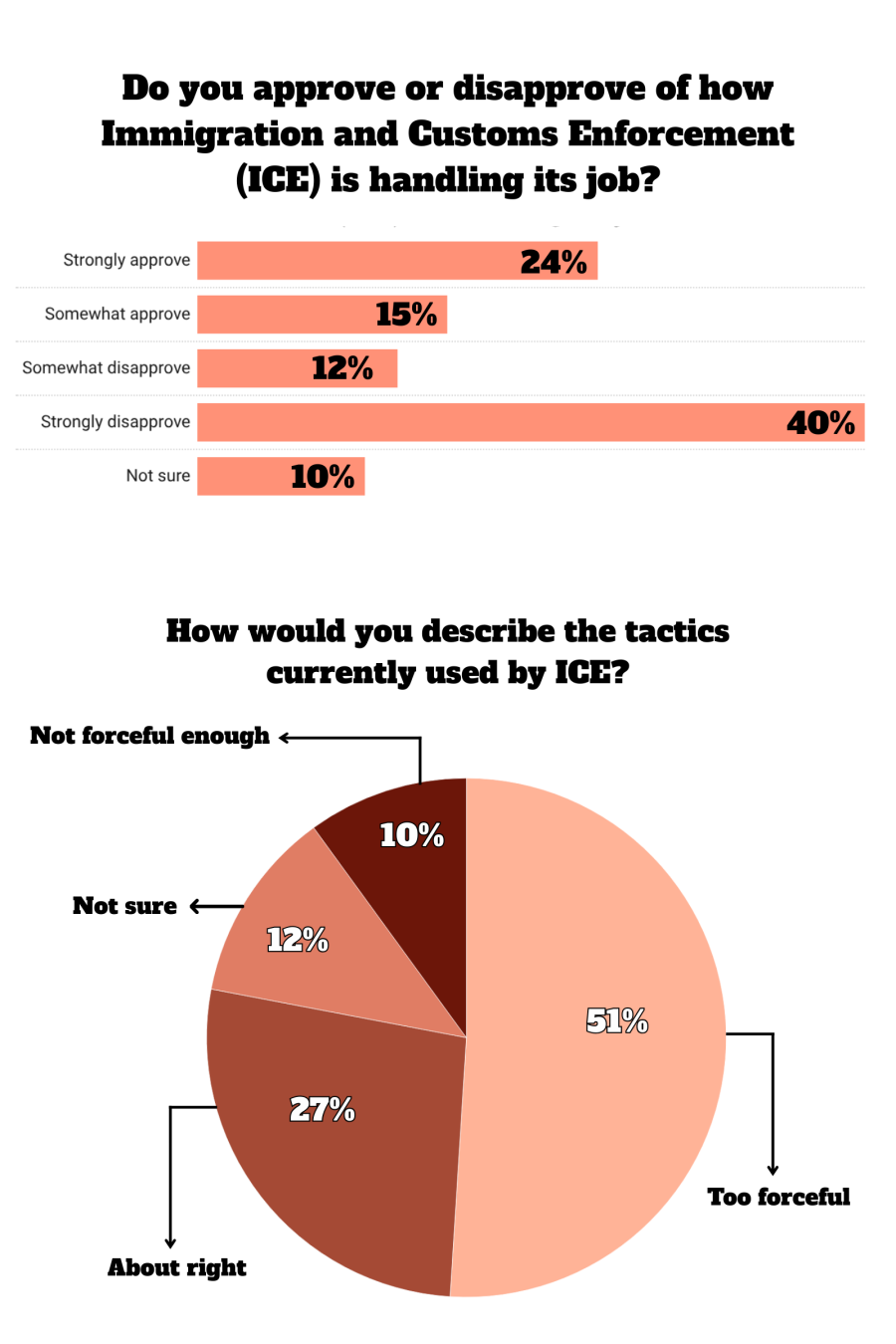
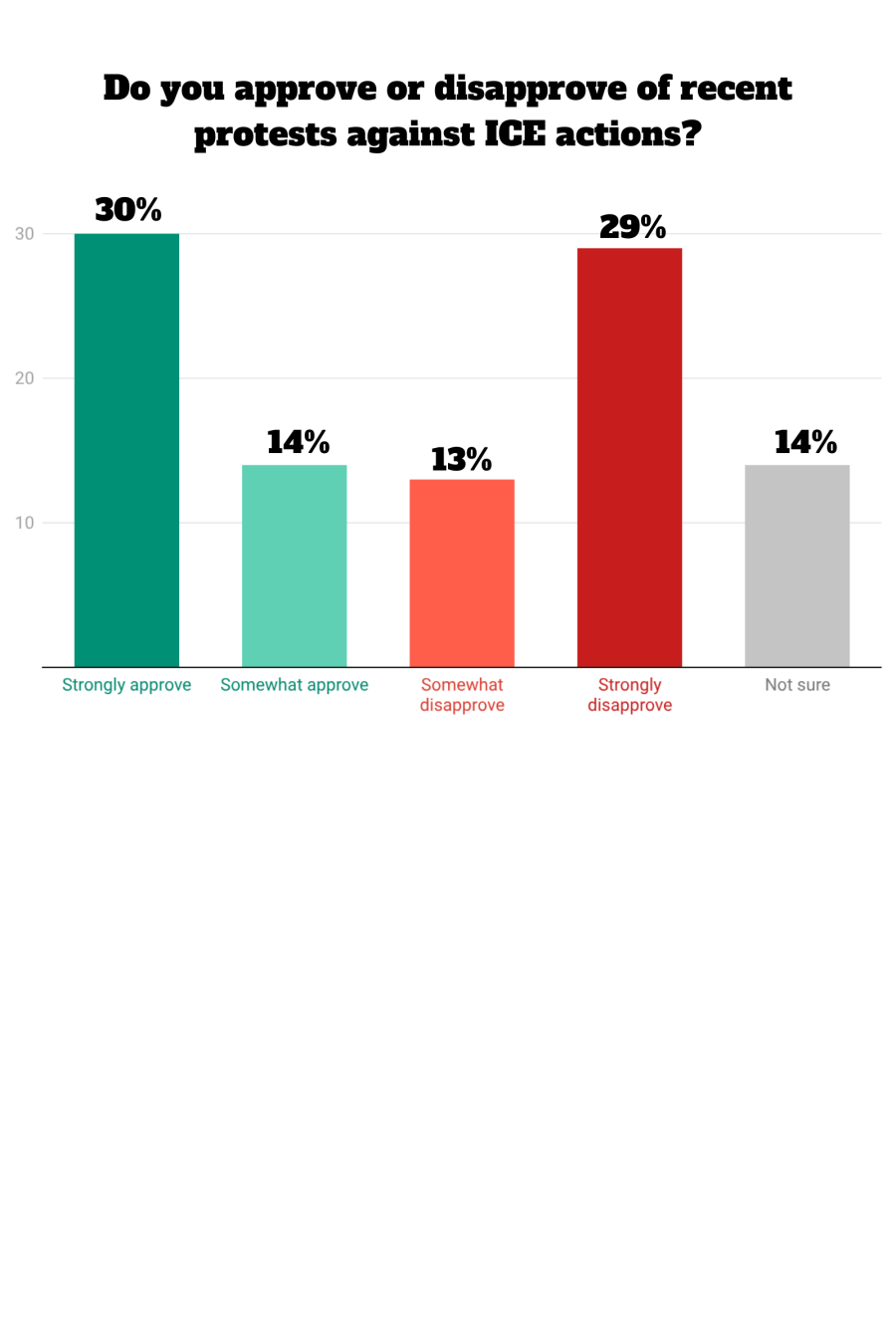
Source: YouGov poll, Jan. 7, 2026, 2,686 US adults surveyed
DHS DOUBLES DOWN
As Trump officials urge you to reject the evidence of your own eyes, it’s important not to look away. Here’s “Morning Joe”’s report today on the killing of Renee Good and what many fear is the most significant shift toward authoritarianism in modern U.S. history.

BETH ISRAEL, AGAIN
A guest essay by Johannah Lowin
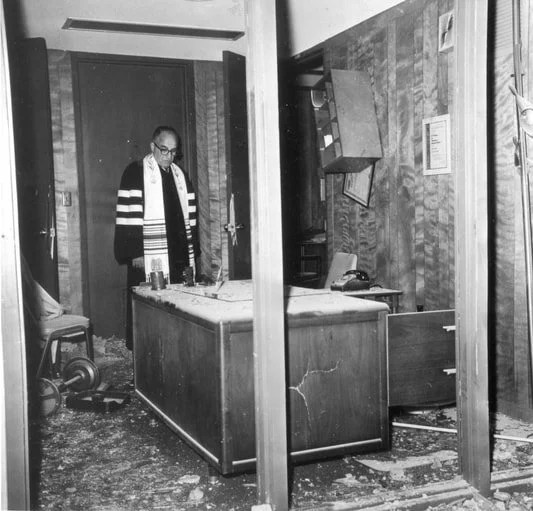
Rabbi Perry Nussbaum surveys damage at Beth Israel Congregation following the bombing on Sept. 18, 1967.
Just over 24 hours after an apparent arson attack on the oldest synagogue in Mississippi, I dropped off my sons for Hebrew school at our congregation in Washington, D.C.
By coincidence, administrators were handing out identification lanyards — one of many new layers of security in the face of rising antisemitism and threats against Jewish institutions nationwide.
Beth Israel in Jackson has been here before. In 1967 members of the Ku Klux Klan bombed the synagogue in retaliation for Rabbi Perry Nussbaum’s support for civil rights. Two months later, the Klan bombed his home.
This weekend’s fire reduced Beth Israel’s library to blackened, charred ruins, destroyed two Torahs, and rendered the building unusable for the foreseeable future. In a statement, the congregation’s president expressed both resolve and gratitude, noting that Beth Israel would continue with services and programming at borrowed sites, including churches that have opened their doors.
Civil rights leaders in Jackson, among them the prominent Black Baptist pastor CJ Rhodes, issued swift condemnations. “That history reminds us that attacks on houses of worship, whatever their cause, strike at the heart of our shared moral life,” he wrote on Facebook.
The suspect has been arrested and charged with arson. But the safety precautions now routine at Jewish institutions, in this country and beyond, underscore the limits of such reassurance.
A CONVERSATION WITH DAVID IGNATIUS AND KARIM SADJADPOUR
Widespread protests are sweeping across Iran, and President Trump is issuing stark warnings of retaliation.
To make sense of the moment, “Morning Joe” turned to Washington Post Columnist David Ignatius and senior fellow at the Carnegie Endowment for International Peace Karim Sadjadpour for a conversation about what this unrest could mean for Iran — and the world.
JS: David Ignatius, in your Washington Post column this week, you compared what we’re seeing in Iran right now to the late 1970s. What’s similar about this moment?
DI: As in 1979, this rebellion began in the bazaars — with merchants who felt squeezed by a collapsing economy — and then spread and became more overtly political. One important difference is that in 1979, there was a leader emerging to symbolize and lead the movement. This time, there isn’t anyone like that.
JS: Is this another round of protests the regime can ride out — or something different?
DI: Right now, I see a one-way street. The regime is headed toward deeper and deeper crises. It may suppress this revolt, as it did in 2022, 2023, and earlier years, but it can’t do that forever. This regime is simply running out of gas, and Iranians know it.
JS: What’s driving this anger inside Iran?
DI: They see Saudi Arabia and the United Arab Emirates racing into the future, becoming AI superpowers, they hope, while Iran is stuck. It can barely feed itself. Inflation recently climbed above 40%, putting enormous strain on ordinary Iranians.
FF: What does the military option look like at this point?
DI: The best-case scenario is that a regime whose security forces are weak and rusty, and that failed to protect its own proxies or fend off an Israeli attack last June, would begin to crack if it were hit hard.
FF: What does “hit hard” actually mean?
DI: It means heavy munitions hitting barracks, bases, and missile-production facilities the Iranians would use to retaliate — while showing the Iranian people that a security force so widely hated isn’t invincible and can itself be put on the run.
JS: You’ve said before that Iran is different from other foreign policy crises. How so?
DI: The world turned on a hinge in 1979 with the Iranian Revolution. The shocks it sent through the region helped give rise to al-Qaida and Osama bin Laden. For Iran to turn back — to stop being a cause and become a nation that makes rational decisions, as Henry Kissinger once put it — would be a fundamental change in the world.
JS: So if President Trump decides this is the moment, what has to happen next?
DI: He would need to plan it more carefully than he does most matters — especially what comes after that first day, when the B-2s come in and he can say, “bang, we did it.” That would only be the beginning, and without a serious plan for what follows, the situation could quickly deteriorate.
MB: Karim, your new Atlantic piece argues Iran now meets the conditions for a revolution. What’s changed internationally?
KS: Since Hamas’ Oct. 7, 2023, attack on Israel, Iran’s fortunes have shifted dramatically. Israel has gone after Iran’s regional proxies, other allies have fallen, President Trump struck Iran’s nuclear program, and oil prices have dropped. The global environment has turned sharply against the regime.
JS: You’ve studied Iran for decades. Does this feel like a tipping point?
KS: I think we’re nearing that. The Islamic Republic is a zombie regime — its ideology, legitimacy, and economy are dying, even as it still wields lethal force. And its 86-year-old leader won’t be around forever, which is why even people inside the system no longer believe the status quo can survive.
JS: So if the Islamic Republic really starts to unravel, who steps in?
KS: Every revolution needs two kinds of leadership — someone who inspires people and someone who organizes them. That organizational leadership has to come from inside the country. You can’t run a revolution from 6,000 miles away.
This conversation has been condensed and edited for clarity and length.
GOLDEN MOMENTS

Nikki Glaser hosted the Golden Globes for a second straight year – and she had plenty of stars to roast.
- “Welcome to the Golden Globes, without a doubt, the most important thing that’s happening in the world right now.”
- “There are so many A-listers here, and by A-listers I mean people who are on a list that has been heavily redacted.”
- “What a career Leonardo DiCaprio has had. Countless iconic performances, you’ve worked with every great director, you’ve won three Golden Globes and an Oscar, and the most impressive thing is you were able to accomplish all that before your girlfriend turned 30.”
“And lastly, Steve Martin and Martin Short, keep proving that in this industry, you’re never too old to still need money.”
ONE MORE SHOT
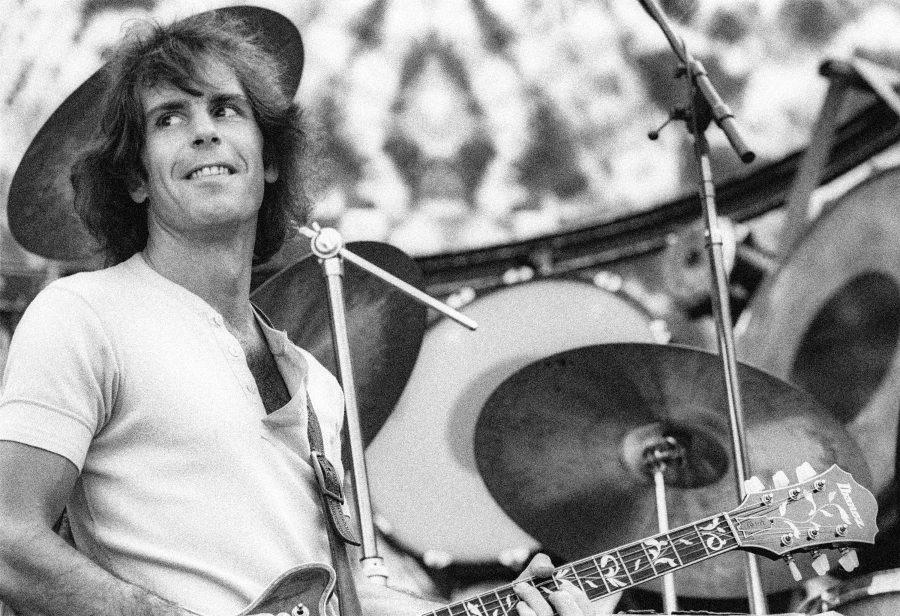
Bob Weir performs here with the Grateful Dead in 1983 at the Greek Theater in Berkeley, California. Weir, who passed away this weekend, was a founding member of the hugely impactful rock band.
SPILL IT!
In the coming weeks, actor and comedian Sean Hayes will join us to discuss his new off-Broadway show, “The Unknown,” and actress and writer Jeanette McCurdy will join us to talk about her new novel, “Half His Age.”
Have a question for them? Ask here, and we may feature your question on the show.
CATCH UP ON MORNING JOE


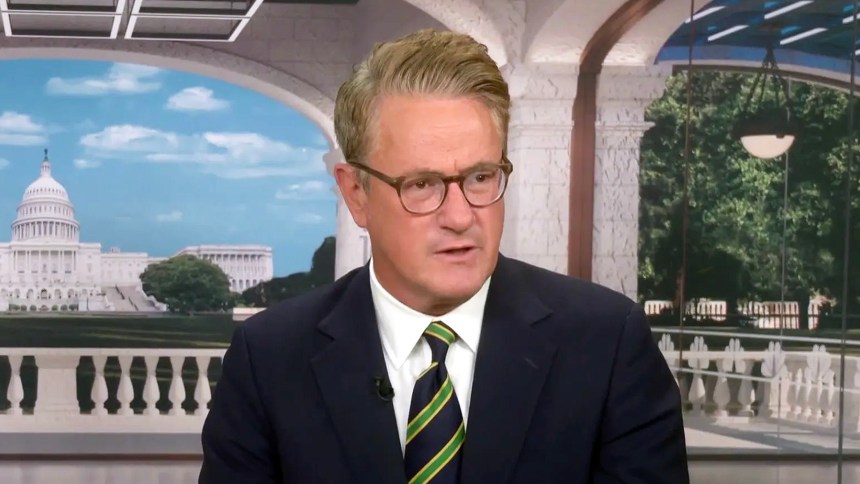


Former Rep. Joe Scarborough, R-Fla., is co-host of MS NOW's "Morning Joe" alongside Mika Brzezinski — a show that Time magazine calls "revolutionary." In addition to his career in television, Joe is a two-time New York Times best-selling author. His most recent book is "The Right Path: From Ike to Reagan, How Republicans Once Mastered Politics — and Can Again."