The Rachel Maddow Show WEEKNIGHTS 9PM ETMorning Joe WEEKDAYS 6AM ETDeadline: White House with Nicolle Wallace Weekdays 4PM ETThe Beat with Ari Melber Weeknights 6PM ETThe Weeknight Weeknights 7PM ETAll in with Chris Hayes TUESDAY-FRIDAY 8PM ETThe Briefing with Jen Psaki TUESDAYS – FRIDAYS 9PM ETThe Last Word with Lawrence O’Donnel Weeknights 10PM ETThe 11th Hour with Stephanie Ruhle Weeknights 11PM ET
46 years ago, Armstrong took ‘one small step for man’
The lunar landing marked a pinnacle of NASA’s Apollo 11 mission and now, 46 years later, it remains a major milestone in American history.
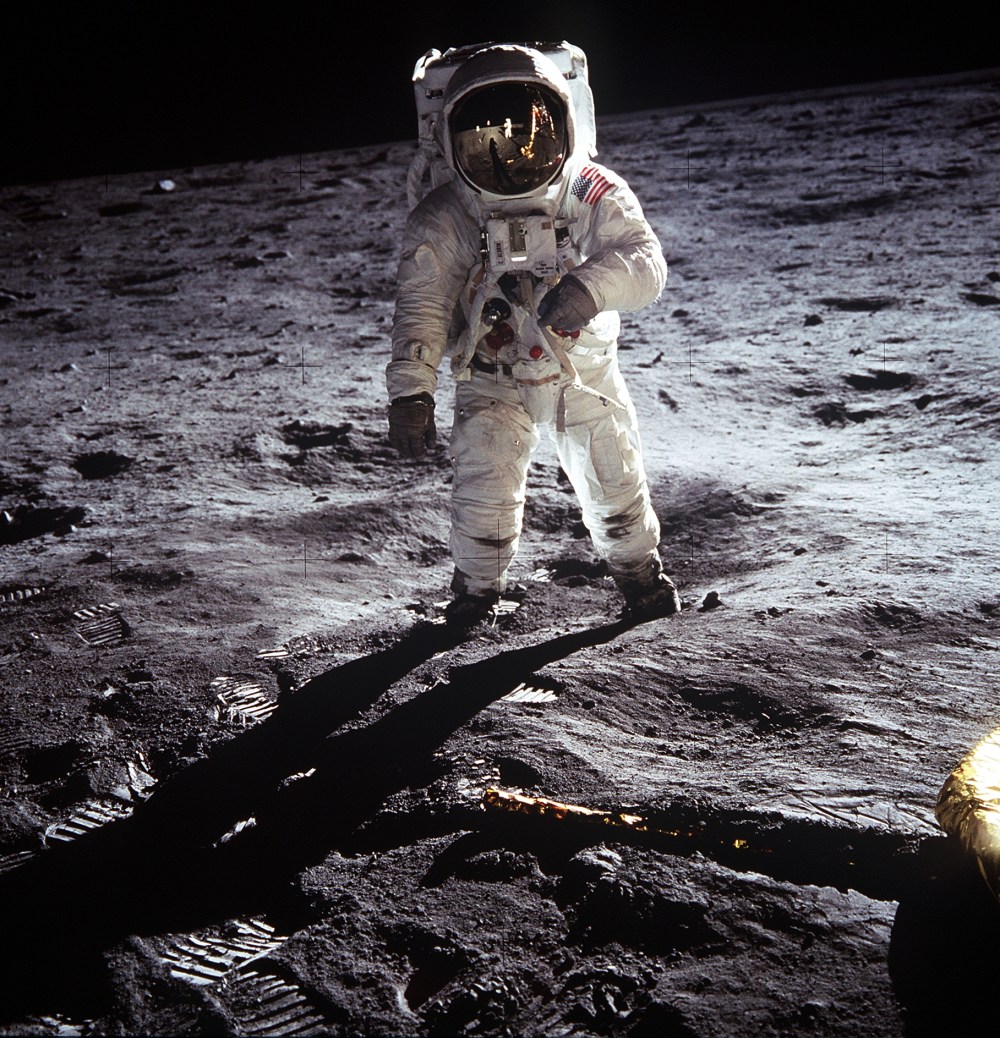
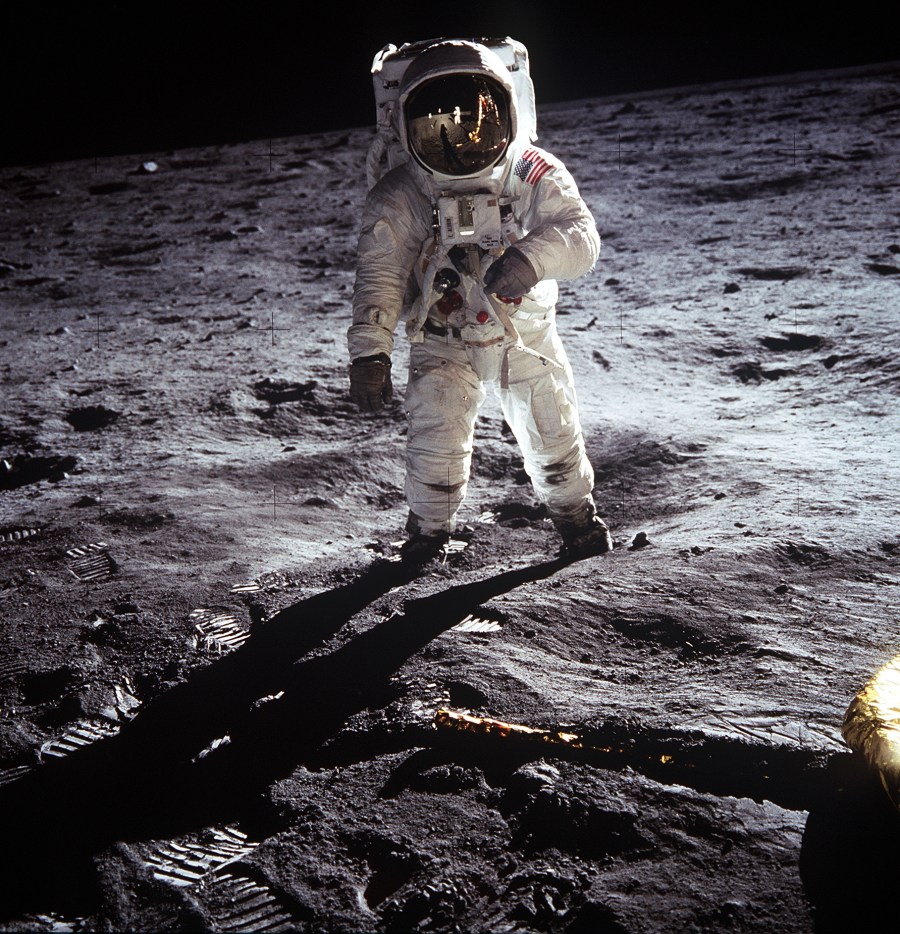
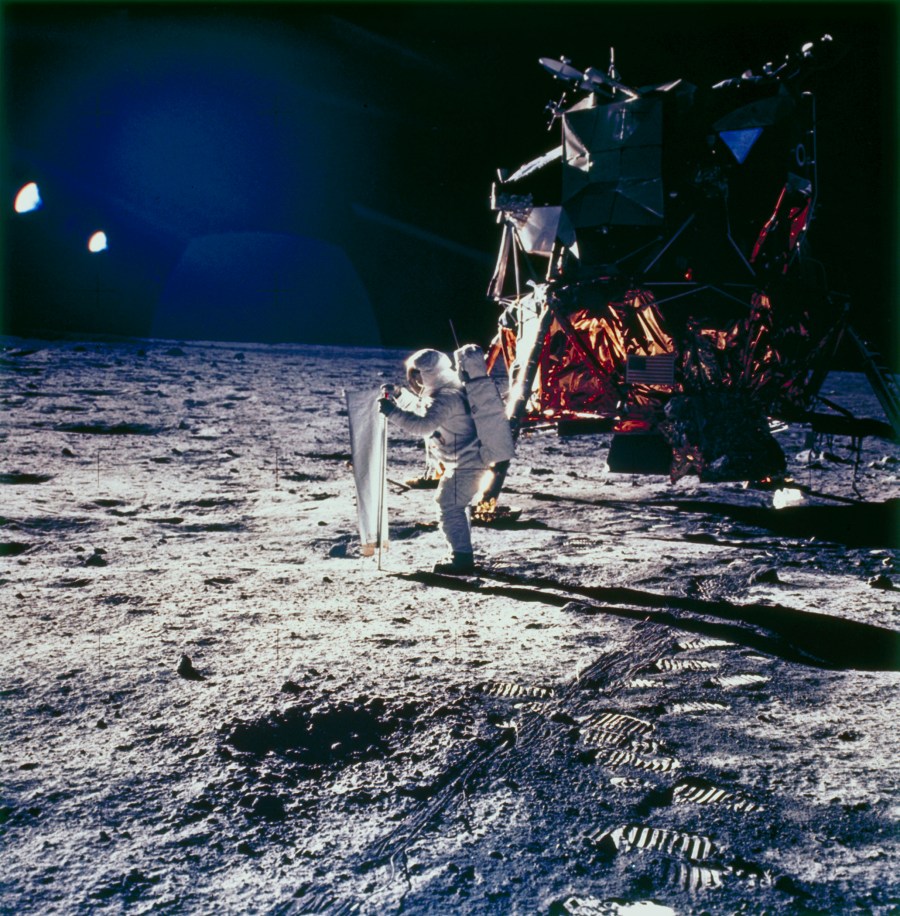
Astronaut Edwin E. Aldrin Jr. walks near the Lunar Module during the Apollo 11 extravehicular activity July 20, 1969 on the Moon. Getty Images
By
Olivia Kestin and
Joy Y. Wang
Static crackled and hissed as NASA astronaut Neil Armstrong took the historic first step on the surface of the moon and uttered the now unforgettable phrase, “one small step for man, one giant leap for mankind.” Back home on Earth, approximately 530 million people watched the moment play out on their television screens.
The lunar landing marked a pinnacle of NASA’s Apollo 11 mission and now, 46 years later, it remains a major milestone in American history. The space flight — manned by Armstrong, as well as Edwin “Buzz” Aldrin and Michael Collins — had been given a mission by President John F. Kennedy three years prior: Land a crew on the moon and return to Earth.
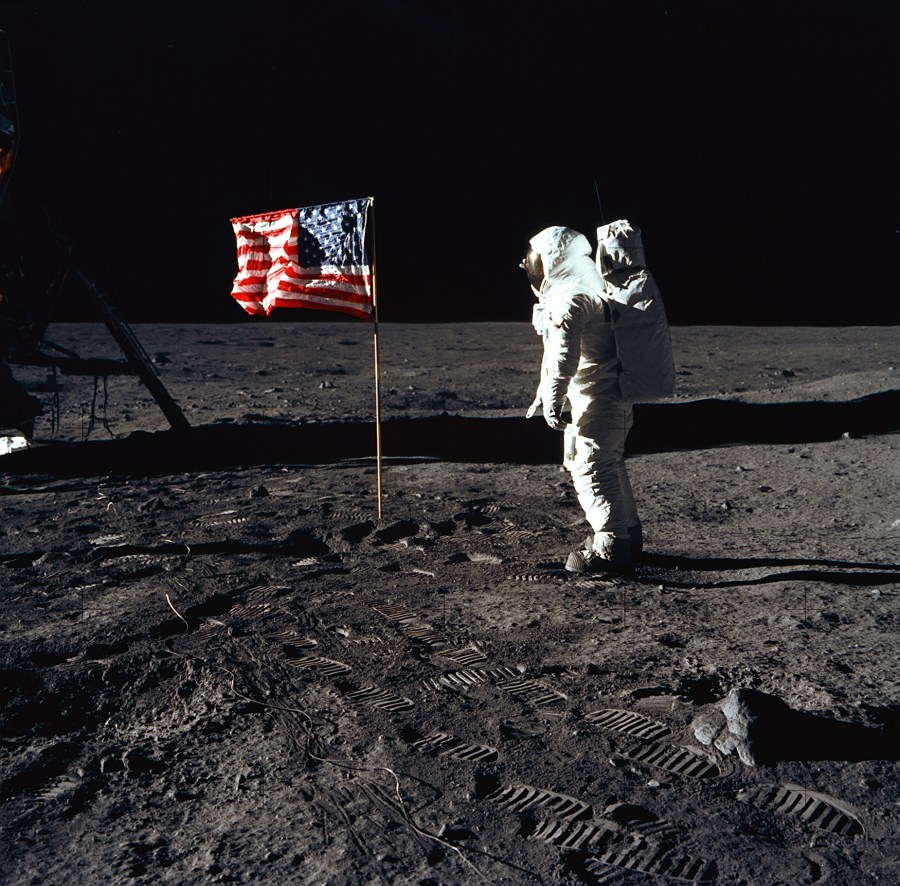
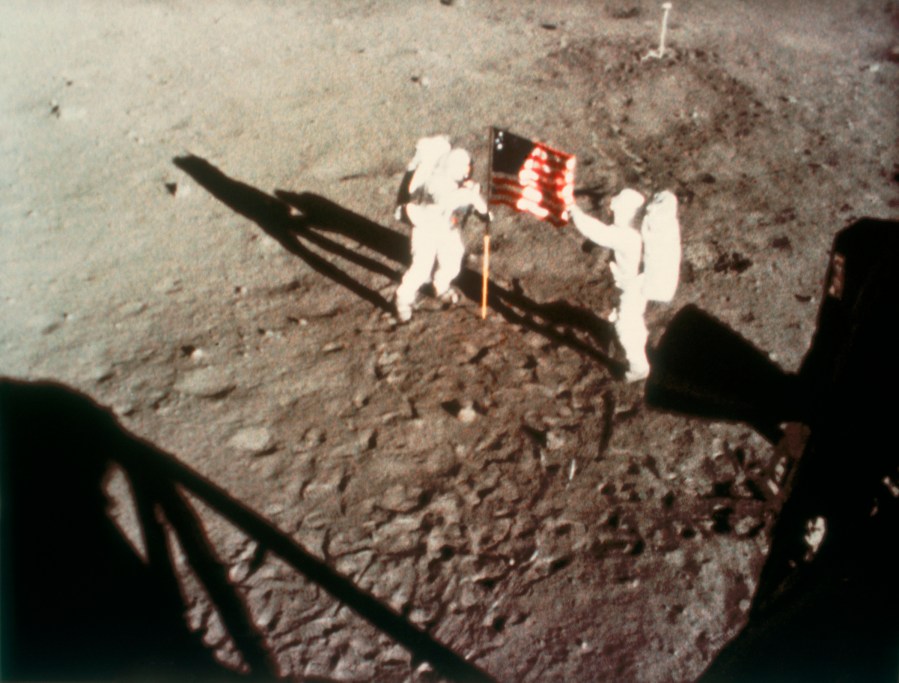
Aldrin and Armstrong planted the American flag on the dusty gray surface, though it was blown over when their spacecraft took off, according to NASA.
In addition to footprints in the gray lunar dust, the crew left five commemorative medallions inscribed with the names of three Apollo 1 astronauts who died in a launch pad fire and two who died in accidents. There was also a special message from humans: They also left a small silicon disk with goodwill messages from 73 countries and the names of those who’d contributed to the mission’s success.
See the remarkable photos from that memorable mission below.
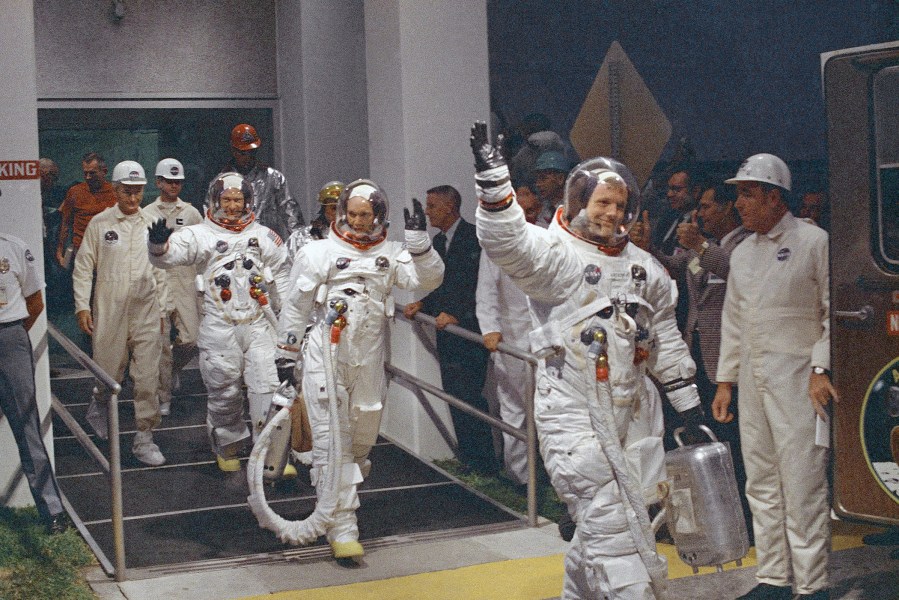
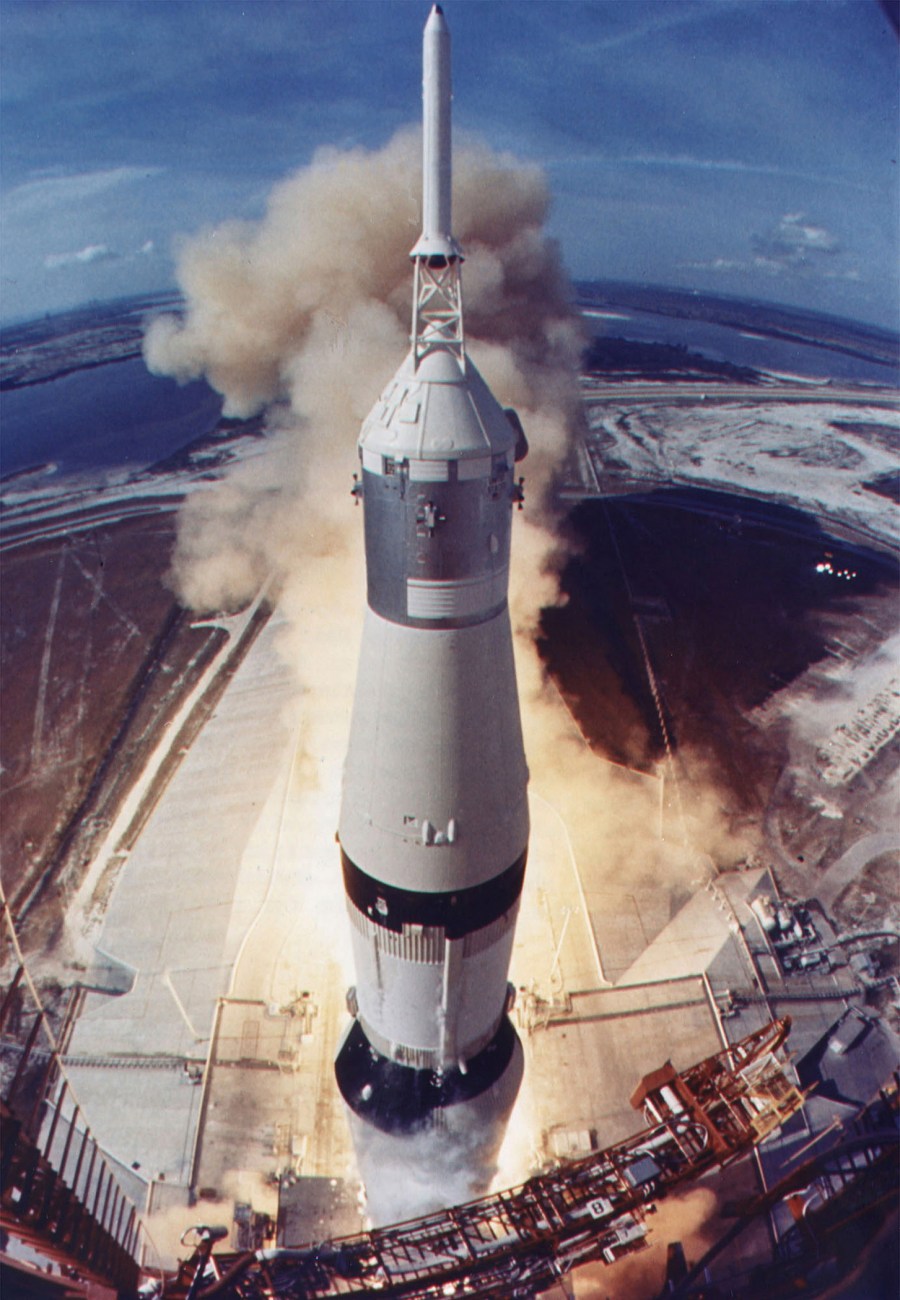
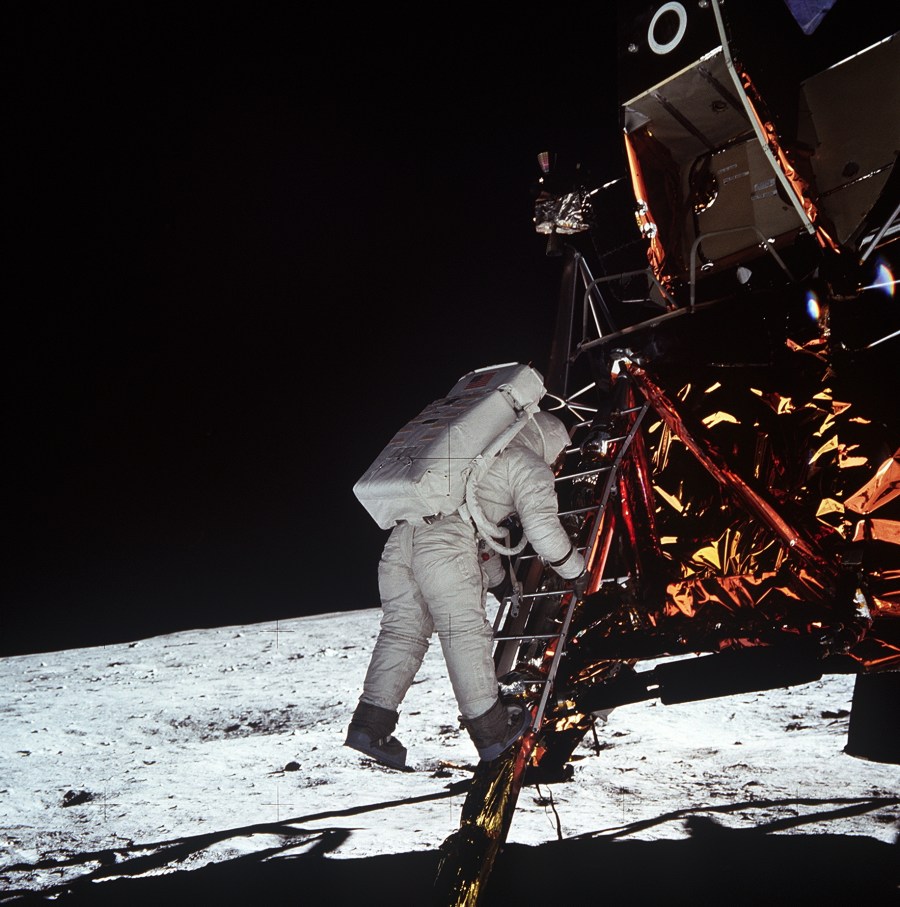
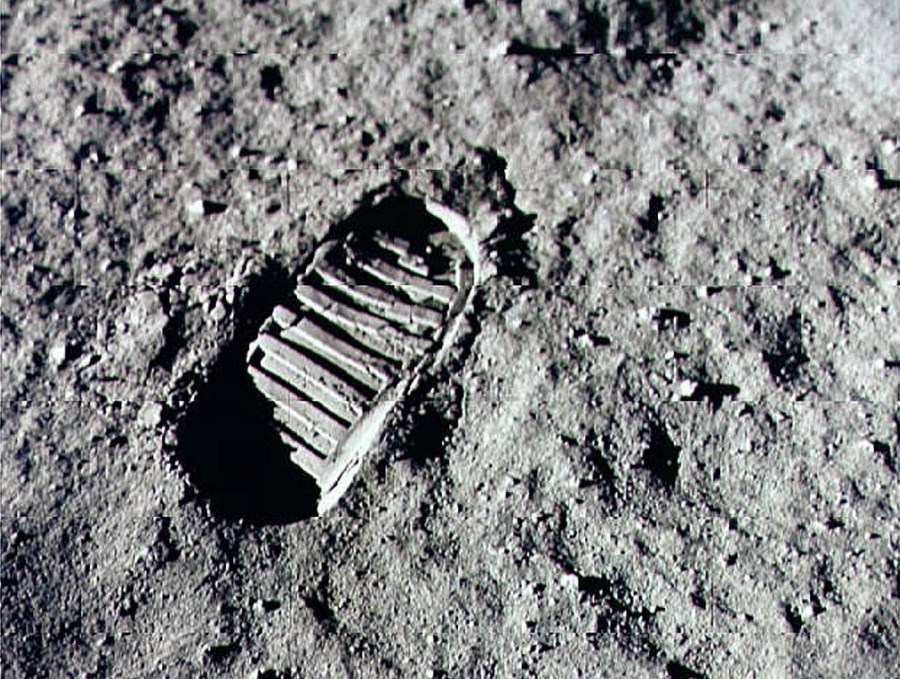
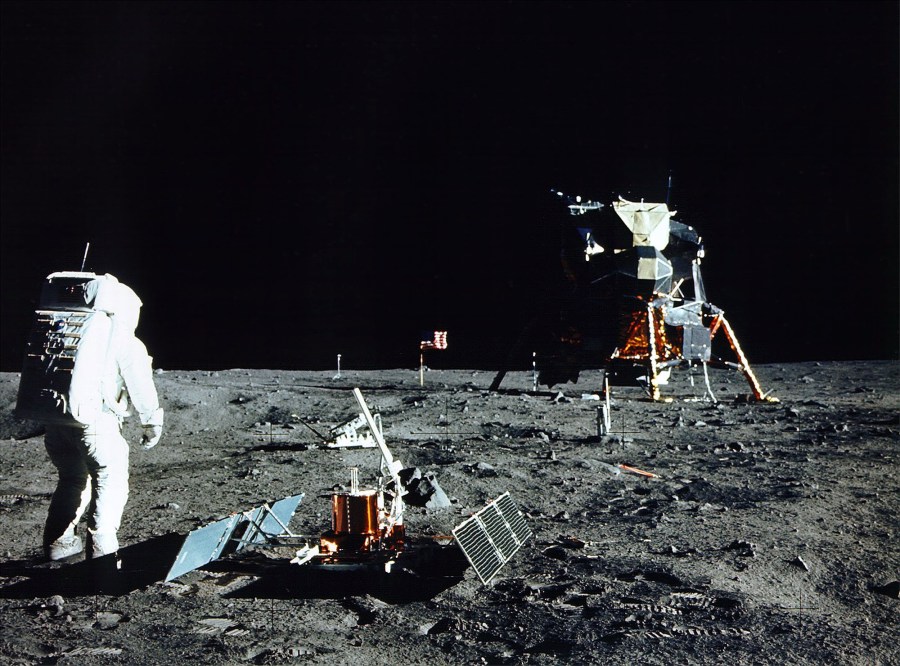
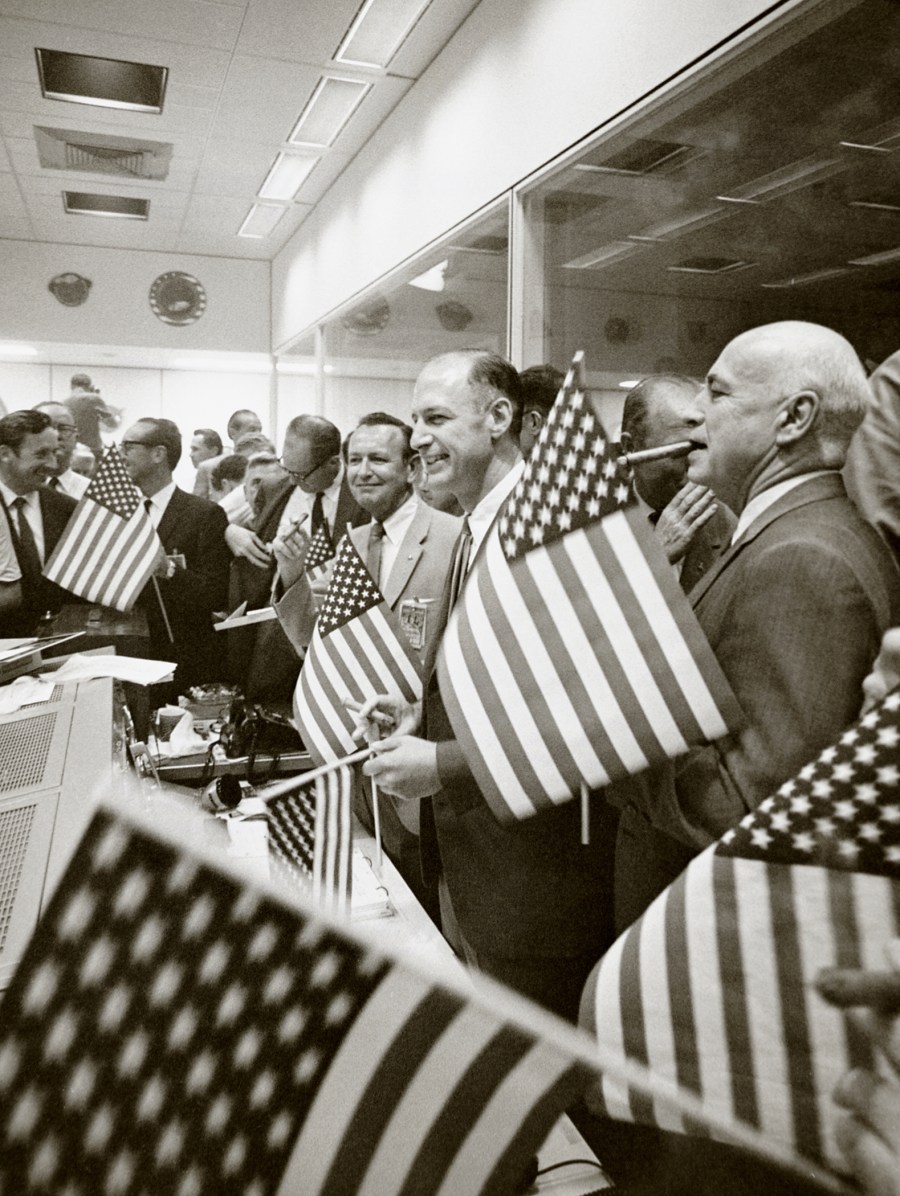
In this July 16, 1969 file photo, Neil Armstrong waving in front, heads for the van that will take the crew to the rocket for launch to the moon at Kennedy Space Center in Merritt Island, Fla. Armstrong commanded the Apollo 11 spacecraft that landed on the moon July 20, 1969. He radioed back to Earth the historic news of “one giant leap for mankind.”APThe Apollo 11 Saturn V space vehicle lifts off July 16, 1969 from Kennedy Space Center’s Launch Complex in Florida. The space craft was injected into lunar orbit on July 19 with Astronauts Neil A. Armstrong, Michael Collins and Edwin E. Aldrin Jr. on board.Getty ImagesAstronaut Edwin E. Aldrin, Jr., lunar module pilot, descends the steps of the Lunar Module ladder July 20, 1969 as he prepares to walk on the Moon. This photograph was taken by Apollo 11 commander astronaut Neil A. Armstrong with a 70mm lunar surface camera during the Apollo 11 extravehicular activity.Getty ImagesAstronaut Edwin E. Aldrin Jr. walks near the Lunar Module during the Apollo 11 extravehicular activity July 20, 1969 on the Moon. Getty ImagesAn Apollo 11 astronaut’s footprint in the lunar soil, photographed by a 70 mm lunar surface camera during the Apollo 11 lunar surface extravehicular activity. Neil Armstrong steped into history July 20, 1969 by leaving the first human footprint on the surface of the moon.Getty ImagesAstronaut Edwin E. Aldrin, Jr., the lunar module pilot of the first lunar landing mission, stands next to a United States flag July 20, 1969 during an Apollo 11 Extravehicular Activity (EVA) on the surface of the Moon.Getty ImagesAstronaut Edwin E. Aldrin Jr., Lunar Module Pilot, stands near a scientific experiment on the lunar surface.Getty ImagesAldrin is deploys the solar wind experiment on the lunar surface. The lunar module is in the background. SSPL via Getty ImagesApollo 11, the first manned lunar landing mission, was launched on 16 July 1969. Four days later, at 10.56.15pm EDT on July 20, 1969 astronauts Neil Armstrong and Edwin “Buzz” Aldrin climbed down the steps of the Lunar Module to become the first humans to set foot on another planetary body. The third member of the crew, Michael Collins, remained in lunar orbit.SSPL via Getty ImagesCelebrations in the Manned Spacecraft Centre in Houston, Texas, upon the successful return of the Apollo 11 lunar landing crew on July 24, 1969. From right to left: MSC Director Dr Robert Gilruth, Manager of the Apollo Spacecraft Program George Low, MSC Director of Flight Operations Dr Christopher Kraft Jr, and Lt Gen Samuel Phillips and Dr George Mueller of NASA.Getty Images