




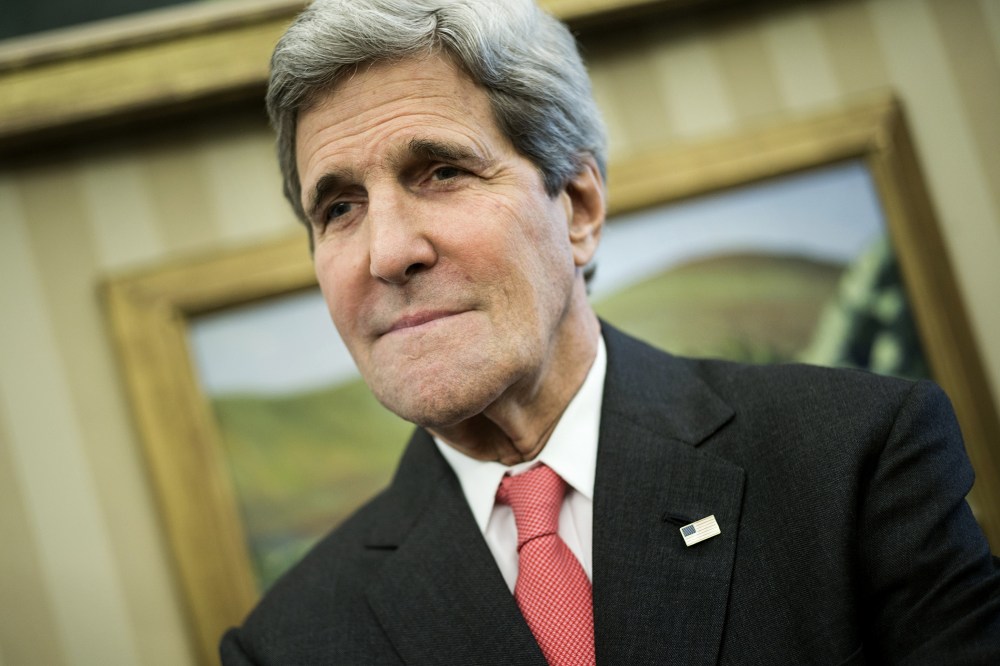
A spokesperson for the State Department rebuked the Republican-controlled House Oversight Committee on Thursday, after Committee Chair Darrell Issa, a California Republican, yet again issued a subpoena for Secretary of State John Kerry to testify regarding Benghazi. State Department spokesperson Marie Harf said the subpoena “was accompanied by a headline-grabbing, highly political tweet attacking the integrity of the State Department itself.”
“This is not the way legitimate and responsible oversight is conducted, and it’s a departure from the days when Rep. Issa himself once lamented that a Secretary of State should not be distracted from the work of national security to testify at the barrel of a subpoena,” said Harf.
Harf did not specify the offending tweet, but Issa made several remarks on Twitter earlier Thursday which could be construed as “highly political.”
With State's slippery tactics, it's no wonder our friends in the world are losing faith in us and our adversaries doubt our credibility.
— Darrell Issa (@DarrellIssa) May 15, 2014The House Oversight Committee had previously issued a subpoena for Secretary Kerry to testify on May 21. The State Department replied that Kerry could not testify on that date because he would be traveling abroad. The subpoena issued on Thursday commands Kerry to testify on May 29; in a statement announcing the new subpoena, Issa said that State “had discussed May 29 as a possible alternative date and that’s when Secretary Kerry will be obligated to appear.”
Harf’s statement did not say whether Kerry would comply with the new subpoena.
“As we have said, and we reiterate today, we will continue to work with the Committee to resolve their request, but we have not made arrangements for a hearing date, and we hope to explore with them whether there are witnesses better suited to answer their questions and meet their needs for oversight,” she said.

Ned Resnikoff is an urban policy analyst, researcher, writer, and editor. His byline has appeared in a variety of publications, including the New York Times, San Francisco Chronicle, Dissent, and The Nation. He writes the newsletter Public Comment, which can be found at publiccomment.blog.