




Lawmakers were looking for answers. What they got was a political Rorschach test.
After The Washington Post published a report about U.S. troops killing survivors of a military strike on an alleged drug boat in the Caribbean, Capitol Hill has been buzzing with questions about who ordered the second strike and whether the Trump administration’s policy of killing alleged drug smugglers in international waters is legal.
While top congressional leaders received a briefing Thursday from Adm. Frank Bradley — the man the White House and Defense Secretary Pete Hegseth have said was responsible for the “double-tap” strike — immediate reactions on Capitol Hill were breaking along party lines.

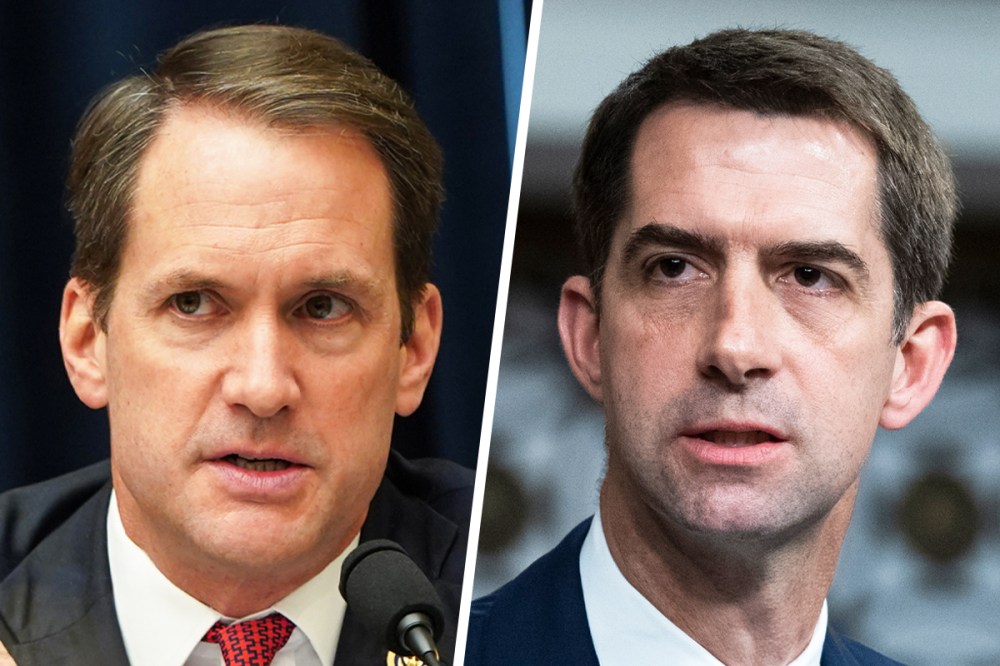
Rep. Jim Himes of Connecticut, the top Democrat on the House Intelligence Committee, told reporters after his closed-door briefing that what he viewed was “one of the most troubling things I’ve seen in my time in public service.”
“You have two individuals in clear distress, without any means of locomotion, with a destroyed vessel, who were killed by the United States,” Himes said.
It was a similar, albeit less vivid, reaction from Sen. Jack Reed of Rhode Island, the top Democrat on the Senate Armed Services Committee.
“I am deeply disturbed by what I saw this morning,” Reed said Thursday. “The Department of Defense has no choice but to release the complete, unedited footage of the September 2nd strike, as the President has agreed to do.”
Reed added that the briefing had “confirmed my worst fears about the nature of the Trump Administration’s military activities.”
“This must and will be the only beginning of our investigation into this incident,” he said.
But Republicans had a very different reaction. Hours after Himes’ remarks, Sen. Tom Cotton, R-Ark. — the chairman of the Senate Intelligence Committee — described the strike as “righteous.”
“These are narcoterrorists who were trafficking drugs that are destined for the United States to kill thousands of Arkansans and millions of Americans,” he said, calling the strikes “entirely lawful and needful.”
“They were exactly what we’d expect our military commanders to do,” Cotton said.
In a statement, Rep. Rick Crawford, R-Ark., the chairman of the House Intelligence Committee, lauded the “highly professional manner in which the Department of War conducted, and is conducting, the operations our nation has called them to do” to protect the U.S. from dangerous cartels. He then took a swipe at the Obama administration.
“Those who appear ‘troubled’ by videos of military strikes on designated terrorists have clearly never seen the Obama-ordered strikes, or, for that matter, those of any other administration over recent decades,” Crawford wrote.
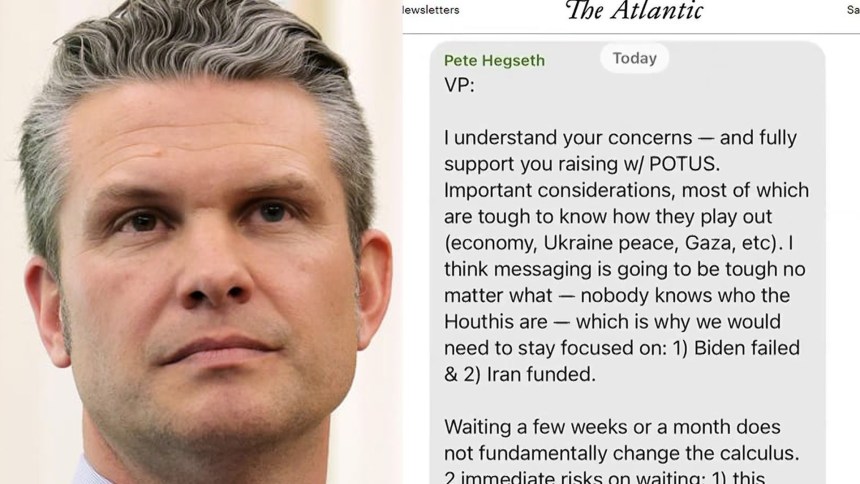
Lawmakers met with Bradley and Gen. Dan Caine, the chairman of the Joint Chiefs of Staff, in different meetings, one on the House side and others in the Senate, with the gatherings taking place in secure facilities in the basement of the Capitol.
The briefings come days after The Washington Post published a bombshell report that, in September, the U.S. military struck an alleged drug boat off the coast of Trinidad for a second time after officials saw two survivors “clinging to the smoldering wreck.” Following the second strike, the two remaining men were killed, the Post reported.
A person with direct knowledge of the operation said Hegseth ordered officials “to kill everybody,” according to the Post.
Hegseth quickly thrust Bradley to the center of the controversy, saying the admiral made the combat decision during the operation. On Tuesday, Hegseth said he “didn’t stick around” for the second strike.
That same day, President Trump said he didn’t know about the second strike. “I wasn’t involved in it,” Trump said. “I knew they took out a boat.”
One detail that top lawmakers in both parties did agree on is that Hegseth did not give an order to “kill everybody.”
Leaving the briefing, Himes told reporters that “the admiral confirmed that there had not been a kill them all order, and that there was not an order to grant.”
Cotton backed up Himes’ account. “Admiral Bradley was very clear that he was given no such order, not to give no quarter or to kill them all,” he said.
The military has not released a video of the second strike publicly, giving lawmakers wide latitude to offer different interpretations. Himes, for example, said that while Bradley outlined “a whole set of contextual items” — such as the fact that the boat was allegedly carrying drugs — the clip still depicts the U.S. striking shipwrecked individuals who were unable to carry out their assignment.
“Under the DoD manual for abiding by the laws of armed conflict, the specific example given of an impermissible action is attacking a shipwreck,” Himes said. “Any American who sees the video that I saw will see the United States military attacking shipwrecked sailors. Bad guys — bad guys — but attacking shipwrecked sailors.”
Sen. Chris Coons, D-Del., who was also briefed by the Pentagon officials, told reporters that “it’d be hard to watch the series of videos and not be troubled by it.”
But Cotton said he “didn’t see anything disturbing.”
“What’s disturbing to me is that millions of Americans have died from drugs being run to America by these cartels,” Cotton said. “What’s gratifying to me is that the president has made the decision, finally, after decades of letting it happen, that we’re going to take the battle to them.”
He added that he saw the two survivors of the boat strike trying to flip their vessel “so they could stay in the fight.”
“Admiral Bradley, Secretary Hegseth did exactly what we would expect them to do,” Cotton said.
The differing accounts are just fueling Democratic calls to release the full, unedited video.
“Releasing the video would show everyone exactly what happened,” Reed said. “And if they have nothing to be concerned about, it should be almost automatic.”
Asked about releasing the video, Cotton mostly dodged the question — but he didn’t outright oppose such an idea.
“I’ll leave that to the Department of Defense, and whether or not there’s anything in there they don’t want to release,” Cotton said. “I didn’t see anything in there that concerned me.”

Syedah Asghar
Syedah Asghar covers Congress for MSNBC.

Mychael Schnell is a reporter for MS NOW.

Jack Fitzpatrick covers Congress for MS NOW. He previously reported for Bloomberg Government, Morning Consult and National Journal. He has bachelor's and master's degrees from Arizona State University.