




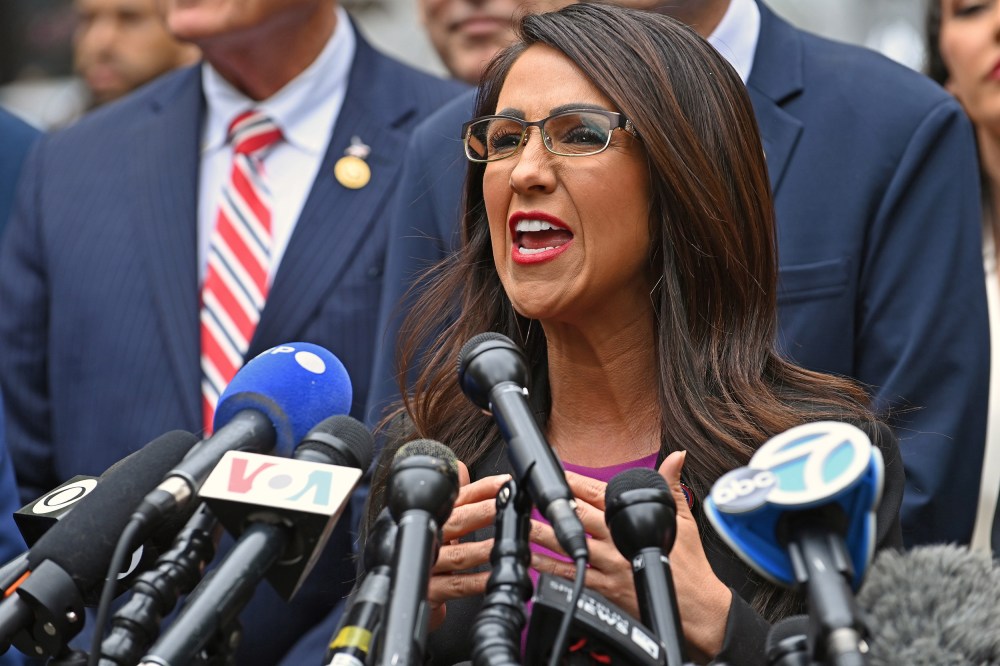
The House voted Thursday not to override President Donald Trump’s first two vetoes in his second term, including a Colorado safe drinking water bill proposed by GOP Rep. Lauren Boebert.
The Finish the Arkansas Valley Conduit Act would have facilitated a water pipeline in Colorado to deliver water from the Pueblo Reservoir to communities in the Arkansas River Valley.
The Miccosukee Reserved Area Amendments Act would have expanded the Miccosukee Reserved Area into an area known as Osceola Camp in Florida.
The House passed each bill unanimously.
In his veto, Trump argued that the Colorado bill would force taxpayers to fund the “massive costs of a local water project.”
Democratic Sens. John Hickenlooper and Michael Bennet of Colorado had protested the water project veto, saying that “Trump has left these communities out to dry — communities that have been waiting for safe drinking water for 60 years.”
Boebert, a Trump ally who proposed the legislation for her district, had also blasted the veto. “President Trump decided to veto a completely noncontroversial, bipartisan bill that passed both the House and Senate unanimously,” Boebert told MS NOW last month. “Why? Because nothing says ‘America First’ like denying clean drinking water to 50,000 people in Southeast Colorado.”
The veto was seen as retaliation for Colorado keeping Trump ally Tina Peters in prison. Peters was convicted of facilitating access to voting systems in the wake of the 2020 election to investigate claims of fraud by Trump. The president tried to pardon Peters in December, but presidential pardons do not cover state convictions.
Trump said the Florida bill would “obstruct reasonable immigration policies,” referring to a detention center in the area known as “Alligator Alcatraz” that the Miccosukee tribe has fought against.
A representative of the Miccosukee tribe, Chairman Talbert Cypress, defended the bill, telling the Florida Phoenix, “We never sought to obstruct the President’s immigration agenda. Instead, we have taken action to ensure sufficient environmental due diligence is performed to protect federal restoration investments.”

Tim Collins is a platforms producer and editor at MS NOW.