





With less than a week to go in New York City’s mayoral race, Andrew Cuomo appeared on Fox News with host Maria Bartiromo to deliver his closing pitch to New Yorkers heading to the ballot box. And it was foreboding.
The former Democratic governor referred to the fact that his opponent Zohran Mamdani, who would be the first Muslim and South Asian mayor of the city, was born in Uganda. Cuomo said Mamdani — a state assemblyman whose family moved to the city when he was 7 — “doesn’t understand the New York culture, the New York values, what 9/11 meant.”
In his final moments on the show Wednesday, Cuomo concluded: “If Mamdani wins, the city will not survive that as we know it, and it will not recover for a long time.”
It was a stark warning emblematic of a campaign marked by fear and grievance, coming just days after Cuomo faced criticism for chuckling on a radio show when the host, Sid Rosenberg, made Islamophobic comments that Mamdani would cheer on a Sept. 11-style attack.
It’s the same approach that contributed to Cuomo’s surprise double-digit defeat by Mamdani in the Democratic primary in June, in what Cuomo’s backers had hoped would mark his triumphant return to politics.
And now, in the final days of a historic race, with turnout surging citywide and some polls tightening, Cuomo is continuing to count on fear to carry him over the finish line.
The race has become a battle over the identity and values of New York and the broader Democratic Party. And while Cuomo has successfully tapped into some voters’ anxieties and differences, many New Yorkers appear unwilling to follow him down a dark path.
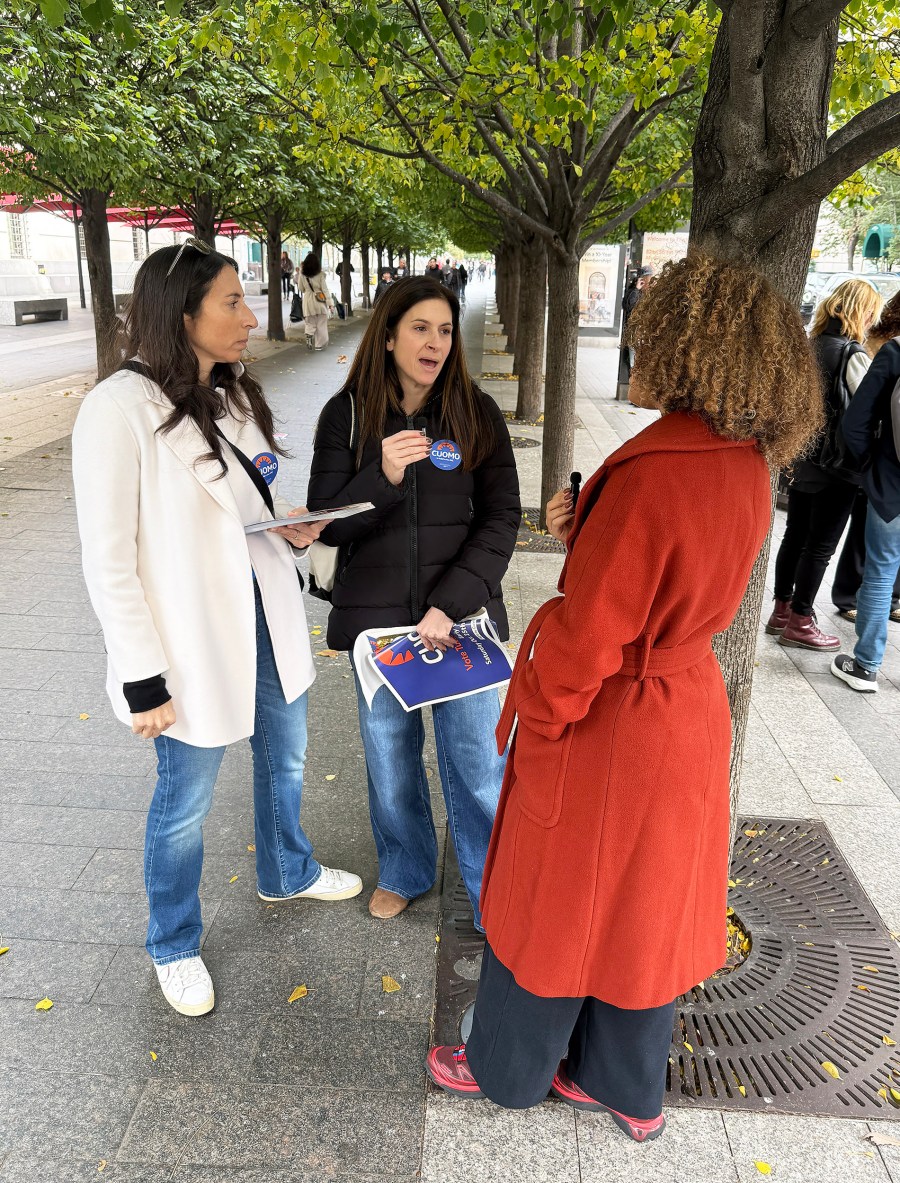
Outside an early voting site at the Metropolitan Museum of Art, fear was equal parts motivator and repellent. Julie Kopel and Jeanne Peldman told MSNBC they took time away from their jobs to canvas for Cuomo. They said that, as Jewish New Yorkers, they’re concerned about Mamdani’s criticisms of Israel, including his belief that Israel has committed genocide in Gaza.
“Andrew Cuomo is not the perfect candidate,” Kopel told MSNBC. “But this is one of those situations where you have to vote for the better candidate, and Mamdani would be absolutely horrible for our city.”
Mamdani has picked up endorsements from prominent Jewish politicians in New York, including U.S. Rep. Jerry Nadler and city Comptroller Brad Lander. That hasn’t been enough to quell all the concerns that Cuomo and others have drummed up.
Mamdani, Peldman said, “hasn’t aligned with us, and it’s terrifying. I’m scared if he becomes mayor of the city.”
But Ben Wilson, a 26-year-old resident who described himself as Jewish but not religious, said he was drawn to Mamdani’s focus on making the city affordable for lower-income New Yorkers and did not buy claims that he is antisemitic.
Alyssa Cass, a Democratic strategist and partner with Slingshot Strategies, told MSNBC she doubted Cuomo’s negative messaging would change the fundamentals of the race.
“I am highly skeptical that [Mamdani] is somehow scarier after months of being mainstream and on the tip of everyone’s tongue,” she said.
Cass also pointed to high turnout in Brooklyn as good news for Mamdani, while noting that turnout on the Upper East and Upper West sides was more positive for Cuomo.
Two-time Republican nominee Curtis Sliwa is back on the ballot as well, mounting another long-shot bid to run the heavily Democratic city.
Beyond disparaging Mamdani, Cuomo’s scare tactics come off to some voters as an attempt to keep the conversation away from his resignation in 2021, after investigators commissioned by Attorney General Letitia James determined that the governor had sexually harassed 11 women, including several state employees. (Cuomo has denied the allegations.)
In fact, several Democratic women told MSNBC this week that their primary fears in this race were about Cuomo himself. Rebecca Perry, an Upper East Side mom of two, said Cuomo’s history of allegations of sexual harassment meant she had “zero interest in supporting him in any way, shape or form.”
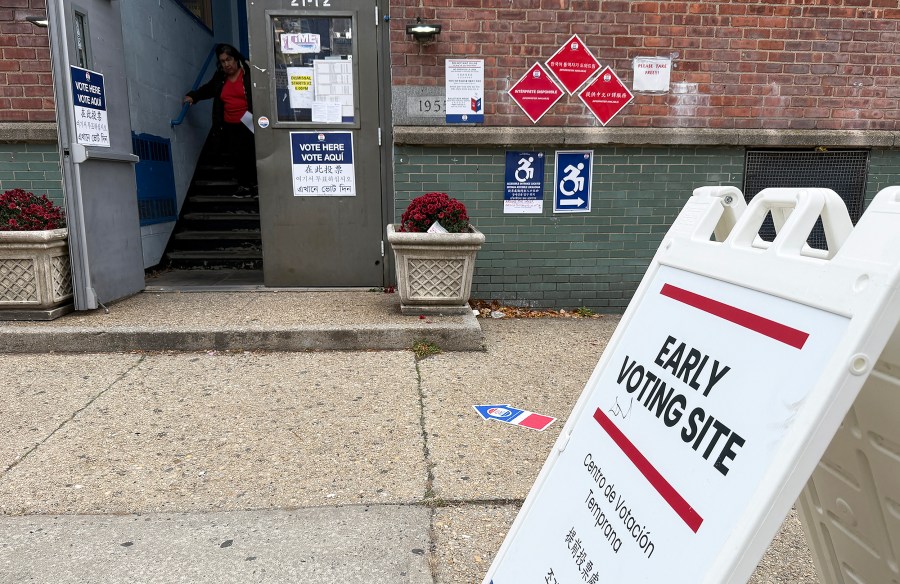
Cuomo’s warnings about rampant crime under a Mamdani-led city seemed to resonate with some older voters, despite the fact that city data shows that major crimes are down and the New York Police Department recorded record-low transit crime numbers on the subway this fall.
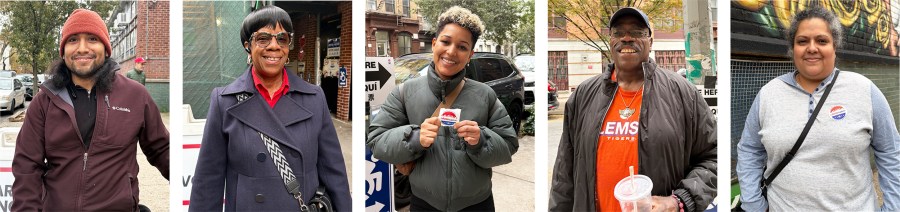
At a polling location in West Harlem, Joann Goodson, a Black woman and lifelong New Yorker, said she had trouble believing Mamdani would be able to tackle the city’s affordability crisis as promised. She also described a fear of crime on the subway system as a reason to vote for an experienced politician like Cuomo. “I’ve got to keep my eyes open and make sure I’m looking around me all the time,” she said.
Another Black retiree, Vincent Fortune, said he didn’t like Mamdani’s past criticism of Democratic figures like Vice President Kamala Harris and was voting for Cuomo because “he was the less of all of the evil.”
It’s the older, more moderate Democrats that Basil Smikle, Columbia University professor, MSNBC political analyst and Democratic strategist, believes could help Cuomo. He called Cuomo’s campaign tactics racist and Islamophobic, but also cautioned that fear can be the strongest political motivator.
“In many instances, it even overshadows aspiration,” he told MSNBC. “I don’t think a lot of moderate to establishment Democrats and moderate Democrats loved [current Mayor] Eric Adams, but they saw him as a firewall against progressive politics. I don’t think that that’s changed with Andrew Cuomo. I think he tried to actually take the torch from Adams in that regard.”
Still other Harlem voters expressed excitement at the possibility of the first Muslim mayor — welcome representation for a neighborhood with a significant Black Muslim population. Boubakar Diallo, a Senegalese American, was so proud to vote for Mamdani he ran back inside the polling site when he realized he forgot his voting sticker.
Dolores Pereira, a Harlem-based theater performer, canvassed for Mamdani. It was the first time she’d ever volunteered for a politician.
She was outraged by the way Cuomo spoke of Mamdani’s religious background. “It’s disgusting to weaponize his faith, to weaponize anybody’s faith against them,” she told MSNBC.
Pereira said much of her family had been forced to move to Niagara Falls, N.Y., due to the rising cost of living in New York City, and that she was concerned by the fact that Cuomo and President Donald Trump shared some of the same wealthy donors. “I am not a Trump supporter and I’m not an Andrew Cuomo supporter, because they answer to the same people,” she said.
In an Oct. 25 interview with MSNBC’s Ayman Mohyeldin, Mamdani argued that Islamophobic rhetoric was meant to distract voters from the cost-of-living crisis. “It’s not a question of what is said, it’s what is tolerated,” he said. “And the fact that we’re speaking about some of the most prominent politicians in this country.”
Mamdani called the verbal attacks a glimpse into the discrimination faced by all Muslim New Yorkers. The rhetoric from his opponents — including Sliwa and current Mayor Eric Adams, who recently dropped out and endorsed Cuomo — is also “a reflection of their own recognition that they do not have a plan to make the most expensive city in America affordable, or that their plan is in fact make it more expensive,” he said. Mamdani is a self-described democratic socialist who has made affordable housing the first plank in his platform.
In Astoria, Queens, Mamdani’s own neighborhood, a stream of young men under 45 entered an early voting site in a Boys & Girls Club. Over the course of about 90 minutes, MSNBC could not find one man who said he was voting for Cuomo. They described Mamdani as the first politician in recent memory to make them feel hopeful about the future.
Tim McCarthy, who said he voted for Mamdani in the primary as well, summed up Mamdani’s campaign as the antithesis of fear: “It’s inclusivity, it’s positivity, and it’s not being an establishment politician.”
A lifelong New Yorker and 35-year-old father, Damon Smallwood, told MSNBC that Cuomo’s campaign was “mostly run on trying to get people to be afraid of having Mamdani become the mayor.”
Jose Cruz, a hospital worker who says he became critical of Cuomo’s leadership during the pandemic, described the former governor and political scion’s campaign with one word: “vicious.”
In some cases, Cuomo’s choice to double down on fearmongering in the final days may even cost him the votes of people who once had his back.
Ximena Gambino, a lifelong Democrat in Queens, said her family supported the Cuomo family for decades and she was happy to cast her vote for Andrew Cuomo in June. But soon after the primary, she spoke with her son, a Mamdani supporter, and researched both of the candidates’ comments. “The way [Cuomo] spoke to Mamdani is, to me, racist. And just, like, awful,” she said. “It’s actually an embarrassment.”
“Being 53 years old, you know, shame on me for not taking the time to really investigate and really not just vote out of tradition,” she said. “Hopefully, I rectified it.”
Antonia Hylton is co-anchor of "The Weekend: Primetime" and an award-winning correspondent for MS NOW.

Kyla Guilfoil
Kyla Guilfoil is an associate producer for MS NOW.

Emily Berk
Emily Berk is a field producer for MS NOW.