




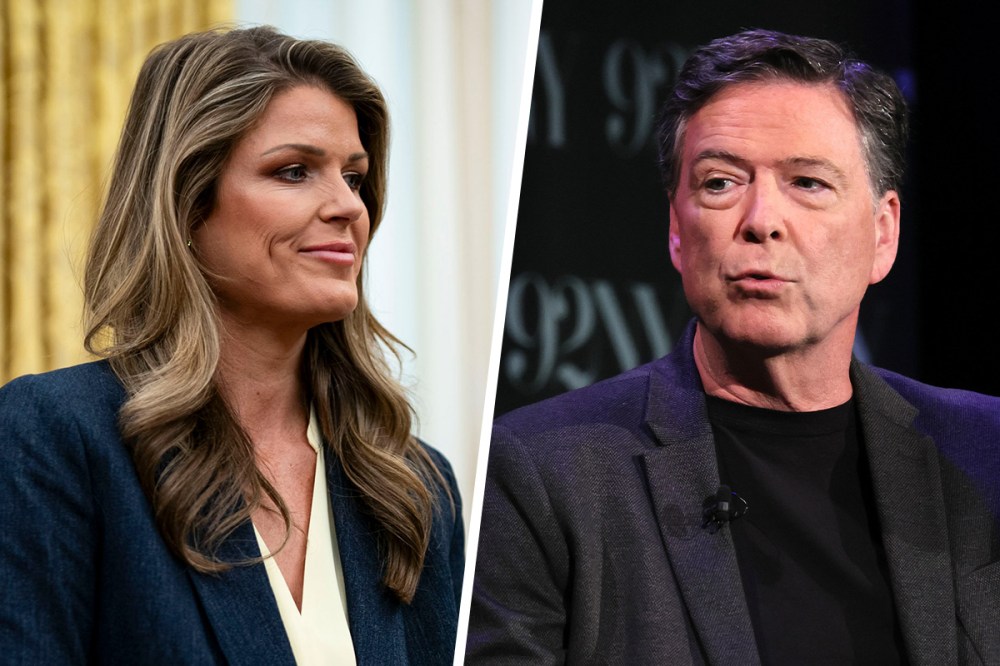
What a week for former FBI Director James Comey, culminating in his legal team late Friday afternoon filing a motion to dismiss his entire criminal case.
On Wednesday, Comey’s lawyers argued that the federal criminal charges against him should be dismissed because he has been both “selectively and vindictively” prosecuted by the Trump administration — at the direction of President Donald Trump himself.
Yet the biggest revelation from that hearing had little to do with Trump’s allegedly personal vendetta against Comey. Instead, courtroom attendees were stunned to hear both the Justice Department’s lead lawyer, Tyler Lemons, and the interim U.S. attorney for the Eastern District of Virginia, Lindsey Halligan, acknowledge that the two-count indictment was never shown to the full grand jury — or even presented in the grand jury room.
Those present in the courtroom said the admission was so shocking and unexpected, you could hear a pin drop.
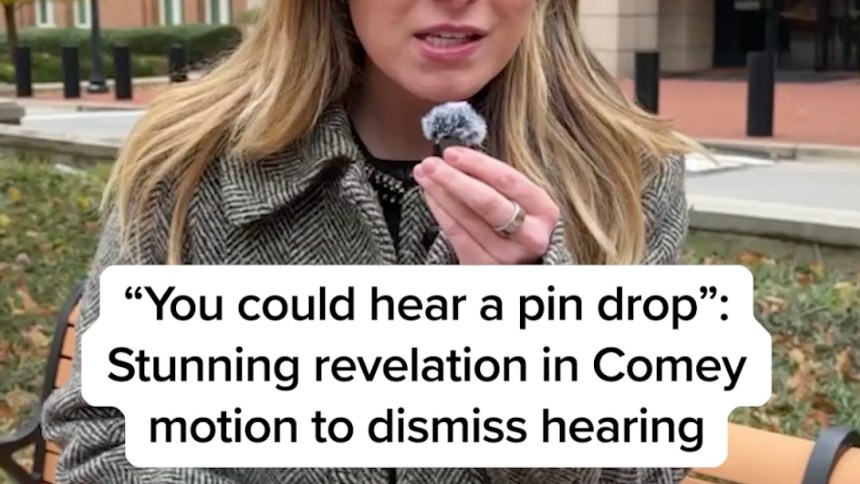
Lemons and Halligan each admitted that after the grand jury rejected count one of the indictment and voted to approve two others, the DOJ simply prepared a new document with only those charges and had both Halligan and the jury foreperson sign it.
The DOJ did an about-face on Thursday, insisting that the grand jury voted on and approved the two-count indictment.
But the consequence of that courtroom admission, at least according to Comey lawyer Michael Dreeben, remains stark — and severe. And now the legal team has moved to dismiss the case permanently.
“There is no indictment that Mr. Comey is facing that was returned before the elapse of the statute of limitations,” Dreeben had asserted in court. In other words, the alleged crime by Comey happened a while ago — and the government had a finite period of time to indict him. That deadline passed at the end of September, just five days after the indictment was served.
Dreeben continued: That would not only be an additional basis for dismissal, but if “no indictment was returned before the statute of limitations expired . . . that would be tantamount to a complete bar of further prosecution in this case.”
So does this mean the Comey criminal case will end nearly as quickly as it began? Not exactly. Here’s what we know:
First, with the DOJ reversing course on the courtroom admission, it seems the events that were agreed upon Wednesday are now, once again, in dispute.
Second, late Friday, Comey’s team moved to dismiss the case on grounds of misconduct before the grand jury, making the statute of limitations argument we heard in court earlier in the week. Essentially, time has run out to indict, since a “proper” indictment didn’t happen within the five-year allowed time frame. The motion also addressed that DOJ reversal, noting that it “contradicts numerous other representations that the government has made” to the court.
Third, it’s conceivable that dismissal is not the only option for Judge Michael Nachmanoff. In order to dismiss an indictment for prosecutorial misconduct, Nachmanoff must be convinced that the misconduct actually prejudiced Comey by “substantially influenc[ing]” the grand jury’s decision to indict or suggesting that the violations tainted the decision-making process.
To that, the DOJ argues, if the grand jury did approve the two counts that were ultimately charged against Comey, just via a different document, how could he have been prejudiced?
So the big question is: What should we expect to happen next?
My bet is that the case will be dismissed imminently — but not because of any misconduct by Halligan per se. Her appointment as the interim U.S. attorney — and the fact that she alone presented to the grand jury, as opposed to placing that responsibility in the hands of career prosecutors, as is typically done — is the subject of a separate dismissal motion before yet another federal judge. At the oral argument last week, that judge was not only skeptical of DOJ’s insistence that Halligan’s appointment was lawful, but also said a decision would come to rule before the end of this month.
It’s that ruling that, in my view, is the most likely — and the cleanest — way to end the Comey prosecution before Thanksgiving. And the growing number of instances of potential misconduct?
Those may turn out to be, well, gravy.

Lisa Rubin is MS NOW's senior legal reporter and a former litigator.