




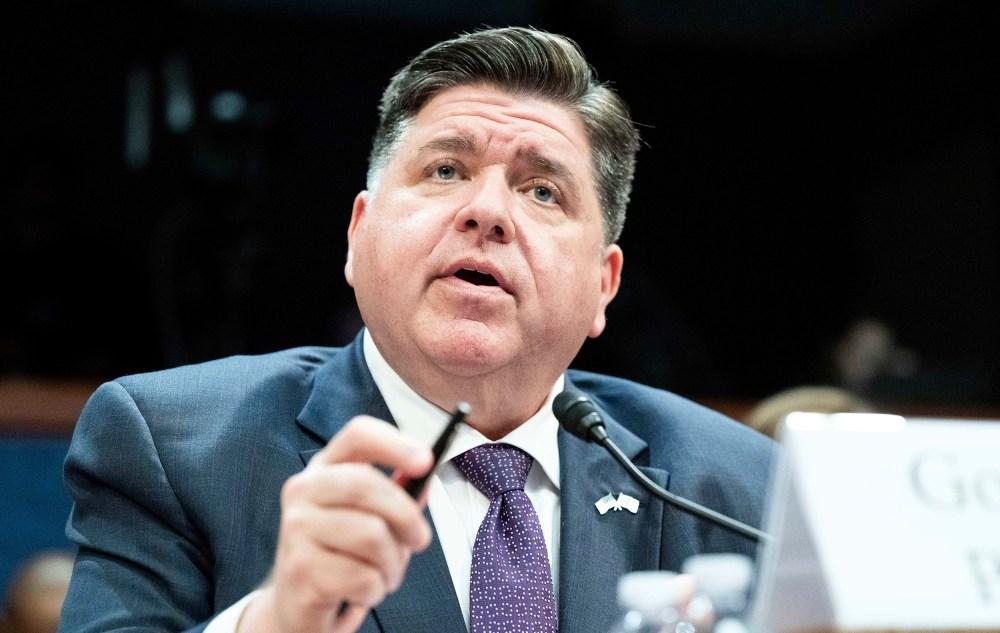
Illinois Gov. JB Pritzker doesn’t face any competition in the Democratic primary as he runs for a third term. But that doesn’t mean he isn’t facing a challenge.
In fact, the elections on Tuesday will be the first major test of Pritzker’s barely concealed presidential ambitions, as he attempts to expand his political reach in the state.
As Illinois voters head to the polls, they will see at least two candidates who have earned Pritzker’s formidable financial and political backing. Those include his No. 2, Lt. Gov. Juliana Stratton, who is running for an open Senate seat, and his pick for state comptroller, Illinois state Rep. Margaret Croke.
The Senate race in particular could indicate whether the governor is a true kingmaker with the ability to move public opinion, or just another billionaire throwing money at losing Senate campaigns.
The race to fill retiring Sen. Dick Durbin’s seat will effectively be over after the Democratic primary in the blue state, especially in midterms that will likely turn out anti-Trump voters en masse.
Stratton faces Rep. Raja Krishnamoorthi, who has led in most polls, and Rep. Robin Kelly, who was ousted by Pritzker as chair of the Illinois Democratic Party.
Some Democrats fear that Stratton and Kelly, who are both Black women, could split support in a crucial demographic, allowing Krishnamoorthi to win with a plurality. Unlike Texas, where a three-way race for the Republican Senate nomination is headed to a runoff, statewide primaries in Illinois go to the candidate with the most votes, even if the total is below 50%.

Pritzker has poured at least $5 million into Illinois Future PAC, the group created to fund Stratton. Without that financial boost, Stratton would have faced an uphill battle against Krishnamoorthi, who has amassed the second-largest war chest among federal candidates this season, raising more than $30.5 million in the last year.
Apart from Pritzker’s cash, Stratton has also leaned on the governor’s record.
First elected to the Illinois House of Representatives in 2016, she has now spent the bulk of her political career with Pritzker since running on the ticket with him in 2018.
In televised debates, she has expressed a desire to take a page out of the state of Illinois’ book by raising the federal minimum wage over a six-year period. She also suggested using nuclear energy to help solve the energy drain from data centers, a policy adopted by Pritzker, who earlier this year lifted a state moratorium on new nuclear power.
If Stratton prevails, it would be a helpful boost to Pritzker’s image, especially among Black women voters, and give him a new ally in Washington. But if she falls short, it wouldn’t necessarily hurt a future presidential bid, according to Illinois politicos.
“Obviously, the governor’s put a lot of himself into the commercials, and it is kind of his election in many ways,” said William Daley, former chief of staff to President Barack Obama. “But she is a separate person, and so I think if she wins, it’s a huge victory for him. And if she doesn’t win, I don’t think it’s a defeat for him, because very few politicians can transfer their popularity to somebody else.”
Prizker spokesperson Alex Gough said that he makes endorsements “based on who he thinks is the best person for the job, not political calculation.”
Pritzker handily won a second term in 2022, though his approval rating has dipped slightly.
Pritzker handily won a second term in 2022, though his approval rating has dipped slightly from a high of 61% in 2020. A November poll of likely general election voters found 52% approved and 41% disapproved.
With no other Democrat in Illinois daring to challenge him in the primary, Pritzker seems to be on a glide path to a rare third term. The last Illinois governor to serve three terms was Republican Jim Thompson, who served from 1977 to 1991.
But another year in Springfield could complicate Pritzker’s presidential ambitions. Illinois’ fiscal house still lies in shambles; the state faces a $2.2 billion budget shortfall, and persistent woes like its pension crisis continue to bedevil lawmakers.
Ambitious fixes to those financial crises, such as reviving a vote on a graduated income tax plan that he tried in 2020, would take a great deal of time and political capital. That’s even more difficult to accomplish while running for president, according to Kent Redfield, professor emeritus of political science at the University of Illinois Springfield.
“That limits his ability for risk taking,” he said. “You’re not going to do that before the 2027 session, and then all of a sudden there’s an election in 2028.”
This is a preview of MS NOW’s Project 47 Newsletter. As President Trump continues implementing his ambitious agenda, get expert analysis on the administration’s latest actions and how others are pushing back sent straight to your inbox every Tuesday. Sign up now.

Leigh Giangreco is a freelance journalist based in Chicago. She is originally from Buffalo, New York.