




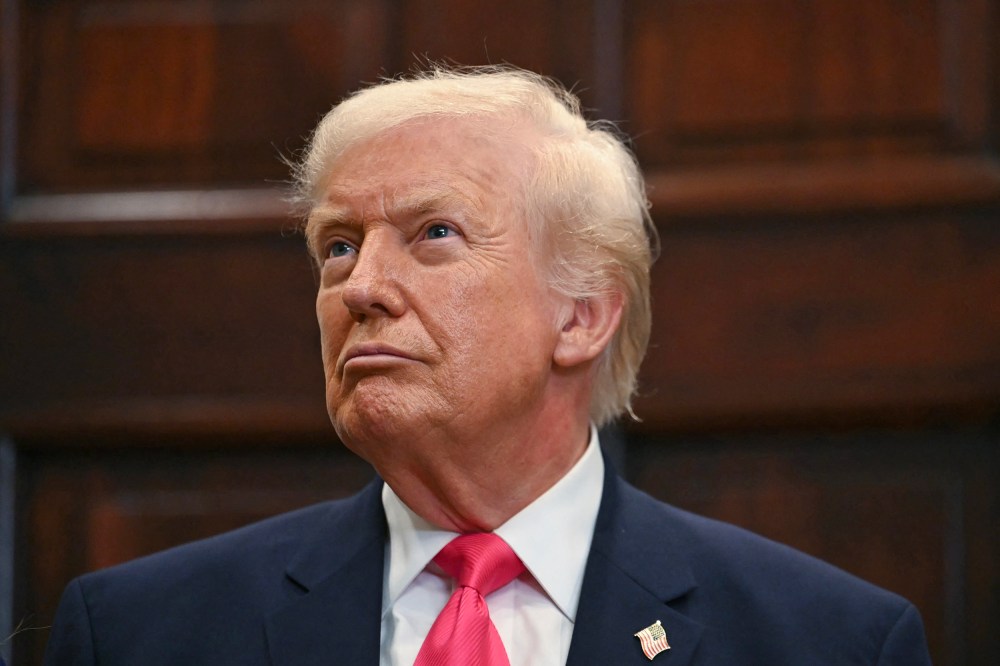
When five Senate Republicans voted with Democrats last week to advance a resolution to restrict President Donald Trump’s military authority in Venezuela, it looked like a significant rebuke of the administration.
Now, a week later — after two Republicans flipped their votes following intense lobbying from Trump and the White House — it looks like the latest example of GOP lawmakers bowing to the president.
On Wednesday, Senate Republicans approved a procedural gambit to block the Venezuela war powers resolution from getting a final vote, stopping the bipartisan effort dead in its tracks after it appeared headed for success.
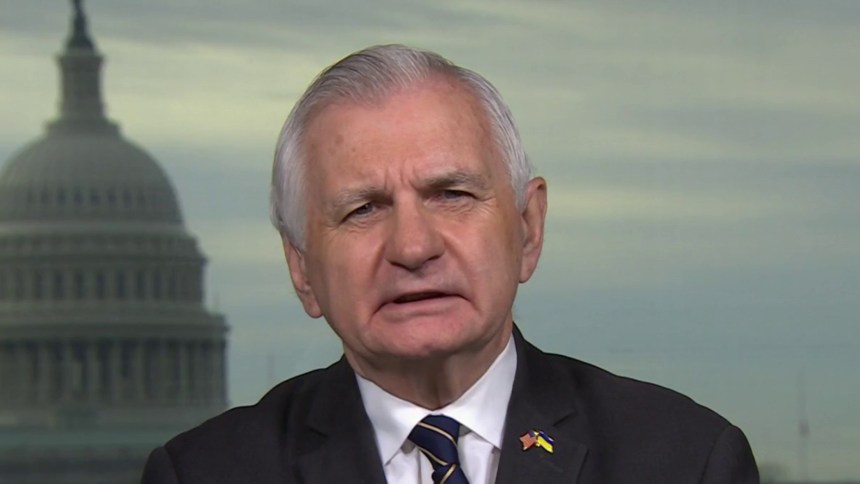
The vote was 51-50, after Vice President JD Vance arrived at the Capitol on Wednesday night to break a tie.
The outcome is, once again, another win for Trump — who ardently opposes any attempt to limit his authority in Venezuela — and it’s a blow to the bipartisan sponsors of the war powers resolution, who wanted to put a check on the president following the administration’s surprise operation in Caracas.
The turn of events came to fruition after Republican Sens. Josh Hawley of Missouri and Todd Young of Indiana — two of the GOP senators who voted to advance the measure last week — sided with Republicans on a point of order to rule the war powers resolution ineligible for a fast-track vote.
Republican Sens. Rand Paul of Kentucky, Susan Collins of Maine and Lisa Murkowski of Alaska, who voted to advance the resolution last week, still sided with Democrats against the procedural maneuver.
But Hawley and Young said their decisions came down to assurances from Secretary of State Marco Rubio, who said the U.S. did not have troops on the ground in Venezuela and would not send any without notifying Congress.
In a letter written to Senate Foreign Relations Committee Chairman Jim Risch, R-Idaho, and obtained by MS NOW, Rubio said the deployment of active-duty service members in Caracas “will be undertaken consistent with the Constitution of the United States and we will transmit written notifications.” He echoed that sentiment in a communication to Young.
“Should the President determine that he intends to introduce U.S. Armed Forces into hostilities in major military operations in Venezuela, he would seek congressional authorization in advance (circumstances permitting),” Rubio wrote.
Last week, Hawley said he voted to advance the resolution because “my read of the Constitution is that if the president feels the need to put boots on the ground there in the future, Congress would need to vote on it.” But after Rubio’s assurances, Hawley changed his mind.
“The secretary also told me directly that the administration will not put ground troops into Venezuela,” Hawley said. “They do not seek to occupy Venezuela, but his commitment to abide by the War Powers notification procedures and also the Constitution is directly responsive to my concerns, so I’m inclined to take yes for an answer.”

Young expressed a similar sentiment, but he also pointed to the unlikely effort of the war powers resolution ever being signed into law: With a presidential veto all but certain should the measure land on Trump’s desk, the fight was futile.
“Those who understand how Congress works, the good and the bad and ugly, understand that votes like this, in the end, are communications exercises,” Young said. “They’re important communications exercises, but unless you can secure sufficient votes, not only to pass the United States Senate, but to get out of the House, which is highly questionable, right, and then to override what was an inevitable presidential veto, which is impossible, no one can tell me how we get there, I had to accept that this was all a communications exercise.”
Notably, however, the reversals from Hawley and Young came after Trump deployed an intense pressure campaign against the five Republican senators who voted to advance the resolution.
Shortly after the Senate voted to open debate on the resolution, Trump unleashed his anger on social media, saying Republicans should be “ashamed” of the quintet and declaring that they “should never be elected to office again.”
“This Vote greatly hampers American Self Defense and National Security, impeding the President’s Authority as Commander in Chief,” Trump wrote.
The president also made his frustrations known directly: He called the five Senate Republicans who voted to advance the war powers resolution, according to a source familiar with the call who requested anonymity to discuss the private conversation. The source said the president, who was described as being “very upset, angry, yelling,” berated “more than one senator.”
Another source familiar with the calls, who was granted anonymity to discuss the sensitive discussion, told MS NOW that Trump’s talk with Young was “very heated.”
“It didn’t go well,” the source said of Trump’s call with Young.
Hawley recognized that lobbying when explaining his stance, but said it wasn’t coercion.
“I didn’t feel pressure,” Hawley said. “But I felt a lot of outreach on substance.”
For the Democrats who had looked to rein in the president, after he conducted a daring military mission that required bombing Venezuela radar targets and putting U.S. military members on the ground to capture Nicolás Maduro and bring him to the U.S., it’s a disappointing outcome.
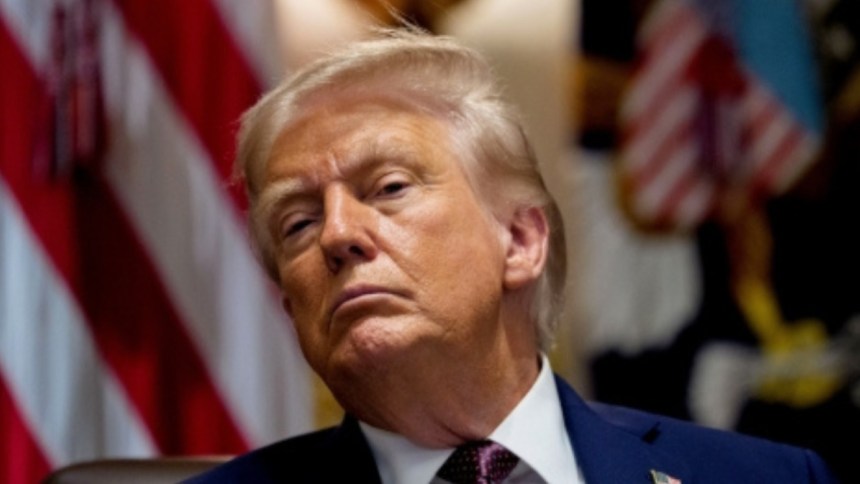
“The bottom line is, Senate Republicans continually fall in line behind Donald Trump,” Senate Minority Leader Chuck Schumer, D-N.Y., said.
“What has happened tonight is a roadmap to another endless war, because this Senate, under Republican leadership, failed to assert this legitimate and needed authority,” Schumer said.
That sentiment wasn’t limited to Democrats. Paul, the GOP champion of the effort, said it was “a disservice” to the military to not call the engagement in Venezuela a war, noting the military buildup off Venezuela’s coast and the fact that the U.S. had already bombed the country’s capital.
“We’re playing games,” Paul said. “And people need to point out that, frankly, this is an elaborate ruse that’s being perpetrated on the American people.”
Kevin Frey and Jack Fitzpatrick contributed to this report.

Mychael Schnell is a reporter for MS NOW.