
This is the March 17, 2026, edition of “The Tea, Spilled by Morning Joe” newsletter. Subscribe here to get it delivered straight to your inbox Monday through Friday.
QUOTE OF THE DAY
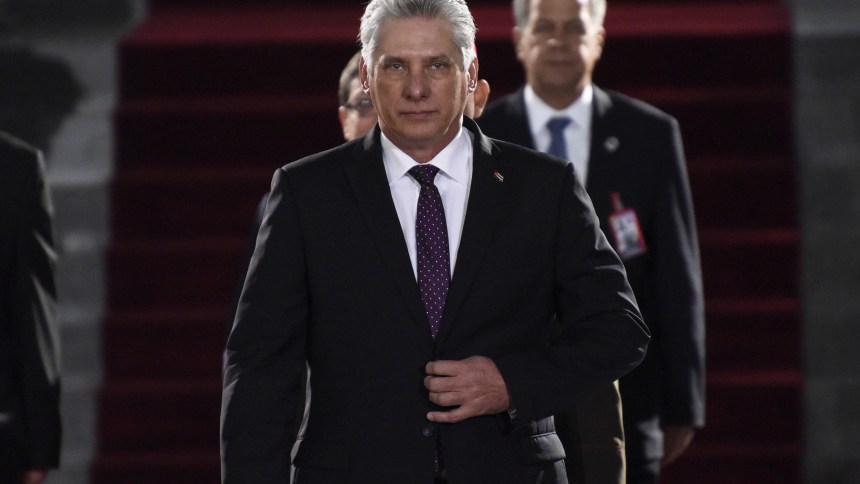
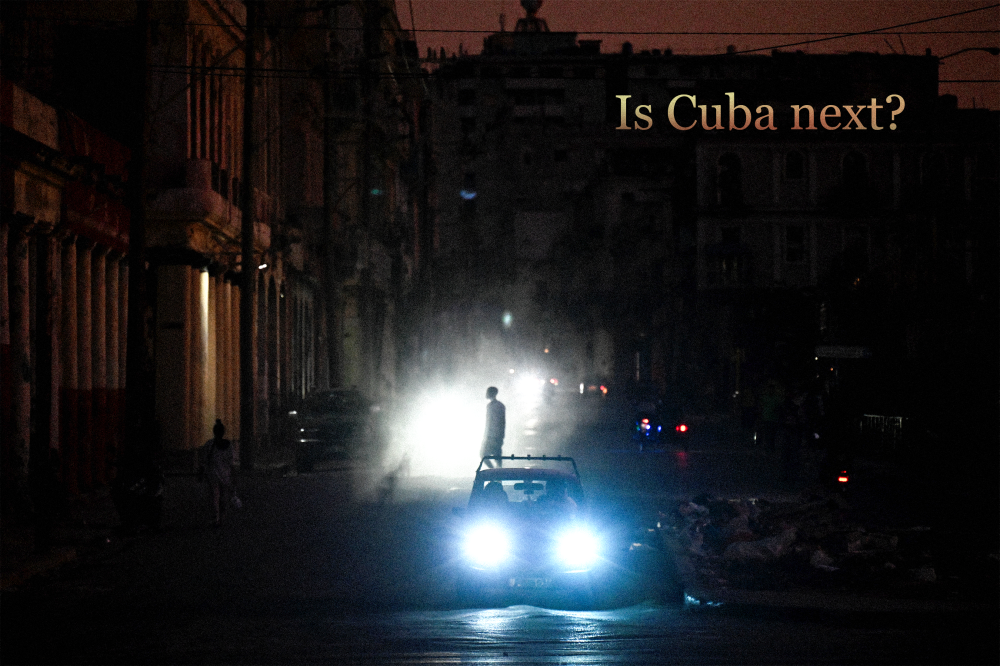
“I can do anything I want with it.”— President Donald Trump, on potentially “taking” Cuba
JOE’S NOTE
America’s experience in Iraq should have humbled anyone trying to predict the outcome of our current war with Iran.
Most Americans and U.S. senators supported the 2003 invasion. Two months in, America was triumphant, President George W. Bush was riding high in the polls, and many policymakers considered our military mission a spectacular success.
And then Iraq devolved into chaos.
In 2007, U.S. troops mounted a surge that Democrats blasted, accusing Gen. David Petraeus of “betraying” America for suggesting the chaos could be curbed.
Two years later, hardened reporters said Baghdad had stabilized to such a degree that the war-torn city was unrecognizable from a few years earlier.
The U.S. departure in 2011 led to the emergence of the Islamic State group’s reign of terror. President Barack Obama was eventually forced to send troops back into Iraq to destroy the terrorist organization.
Twenty-three years later, the long-term impact of that disastrous war remains open to debate — and will be for years to come.
Neatly summarizing the first few weeks of the Iran war is no easier. But let me share two perspectives on how this cataclysmic war is progressing that seem to be in conflict, but could help explain just how complex the current state of affairs is in Iran.
First, from Muhanad Seloom in Al Jazeera. Seloom believes the U.S. military operation has been a historic success:
When you look at what has actually happened to Iran’s principal instruments of power – its ballistic missile arsenal, its nuclear infrastructure, its air defences, its navy and its proxy command architecture – the picture is not one of U.S. failure. It is one of systematic, phased degradation of a threat that previous administrations allowed to grow for four decades.
I have no interest in cheerleading for war… But I have spent my academic career studying how states authorize the use of force through intelligence institutions, and what I see in the current campaign is a recognizable military operation proceeding through identifiable phases against an adversary whose capacity to project power is collapsing in real time.
Next, the insights of retired U.S. Army Lt. Gen. Mark Hertling, who warns that the U.S. military can win every battle and still lose the war:
It’s been said that good tactics with a bad strategy is the slowest way to lose a war, and bad tactics with a good strategy is the slowest way to win one. To put it another way, if your ends, ways, and means are misaligned, you can win all the battles and lose the war.
In his book On Strategy, U.S. Army Col. Harry Summers Jr. recounts a statement he made to North Vietnamese Col. Tu in 1975. “You know,” Summers said, “you never defeated us on the battlefield.” Tu replied, “That may be so, but it is also irrelevant.”
If you have time, read both columns and let me know what you think. I’d love to hear your thoughts.
Happy St. Patrick’s Day ☘️
Joe
CHART OF THE DAY
ON THIS DATE
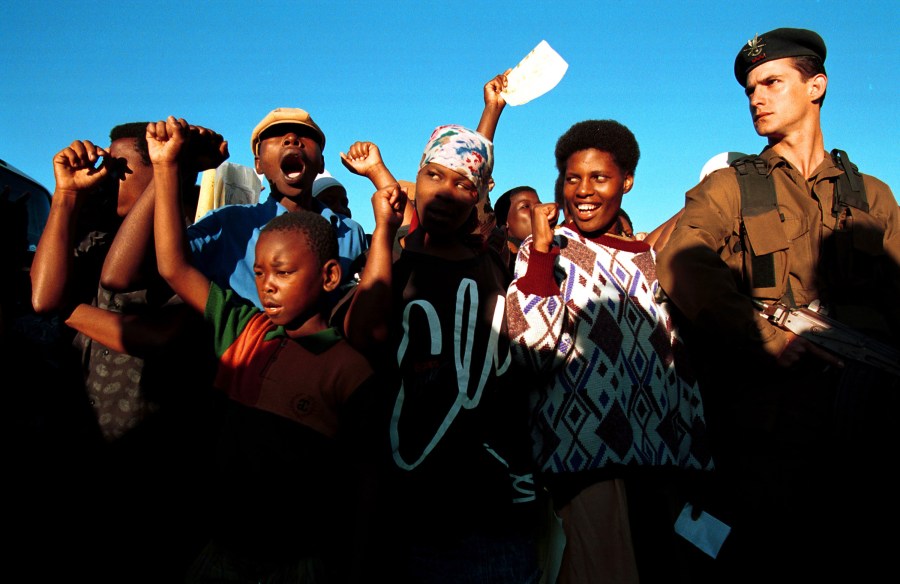
In 1992, white South Africans voted 68.7% to 31.3% to end over 40 years of apartheid in a national referendum. Voters of all races would be allowed to vote two years later in the election that made Nelson Mandela president.
A CONVERSATION WITH NORM ORNSTEIN
As Senate Republicans push forward with debate on the SAVE America Act, the fight over voting rights is once again front and center in Washington. Norm Ornstein, a longtime scholar of Congress at the American Enterprise Institute, joins “Morning Joe” to unpack what’s actually in the bill — and why it matters.
Katty Kay: If Republicans say this bill is simply about voter ID — something many Americans support — why has it sparked so much opposition?
NO: This isn’t about voter ID. It’s about voter suppression. The bill would require every registered voter to reregister in person using documents like a passport or certified birth certificate, which many people don’t have and can be costly to obtain. That amounts to a modern-day poll tax.
JL: Some Republicans argue this is needed to combat voter fraud, even after winning the last election. What’s your response?
NO: The actual level of voter fraud is vanishingly small — about 0.07% of votes cast. So what’s being presented as a popular voter ID effort is really a Trojan horse for something else entirely.
JL: And some Republicans have been unusually candid about their goals here.
NO: Sen. Mike Lee has said outright that the goal is to help Republicans win more elections — which makes clear this isn’t about what they claim it is.
John Heilemann: Rev, what does this actually mean in practice? Who bears the brunt of policies like this?
Al Sharpton: It’s a textbook example of how to make it harder for people of color to vote in large numbers — and to use that to maintain political power.
MB: What about people who don’t have easy access to documents — say older Americans or those born decades ago?
NO: Many don’t have passports and may not know where their birth certificates are. Replacing those documents can be complicated and expensive, and a lot of people could end up effectively shut out of voting.
KK: And beyond the burden of documentation, there are also concerns about how voter information would be used. What does the bill do on that front?
NO: The bill would also require states to share sensitive voter data with the federal government, which could then be used to purge voter rolls using systems that may be inaccurate or biased.
JL: Bottom line: This bill likely won’t pass. So what happens next?
NO: It’s not going to pass this time. But don’t put it past them to try to get this through by any means necessary.
GAS PRICES CONTINUE TO SPIKE
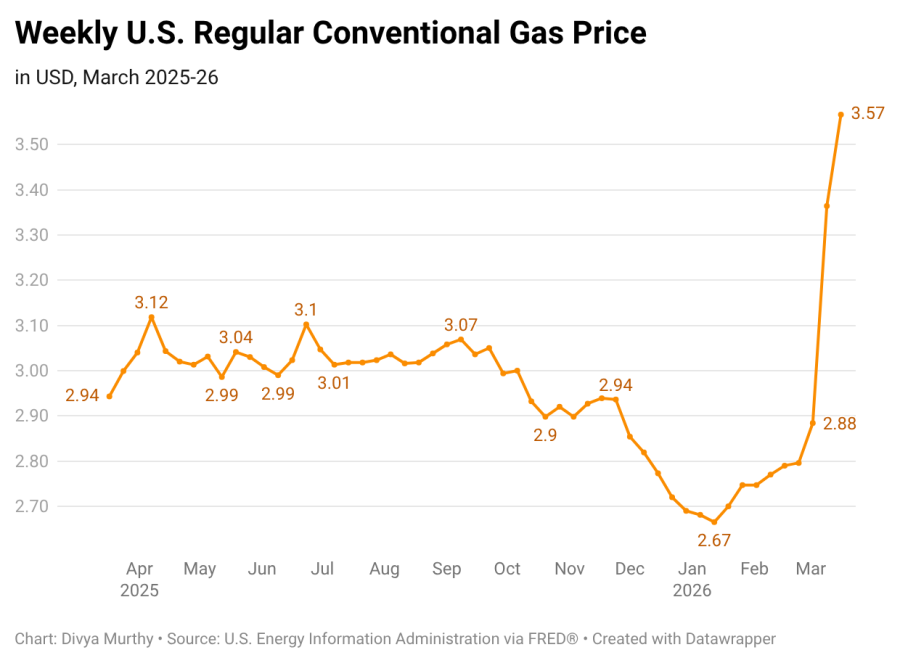
Gasoline prices rose again Tuesday, reaching almost $3.79 a gallon nationwide, per the AAA.
That single-day jump of 7 cents leaves costs up 27% since the war with Iran began.
As the conflict keeps disrupting oil flows through the Strait of Hormuz, the Trump administration is pressing European allies to help reopen the passage, warning that it would be “very bad for the future of NATO” if they refused.
So far, Europe is staying away.“It’s not our war,” Germany’s defense minister, Boris Pistorius, said, summing up the attitude of most other world leaders.
EXTRA HOT TEA
$550 million
— The minimum compensation Warner Bros. Discovery CEO David Zaslav will receive from the WBD-Paramount Skydance merger
ONE MORE SHOT

Catherine, Princess of Wales, attends the 2026 Irish Guards’ St. Patrick’s Day Parade earlier today at Mons Barracks in Aldershot, England.
CATCH UP ON MORNING JOE