




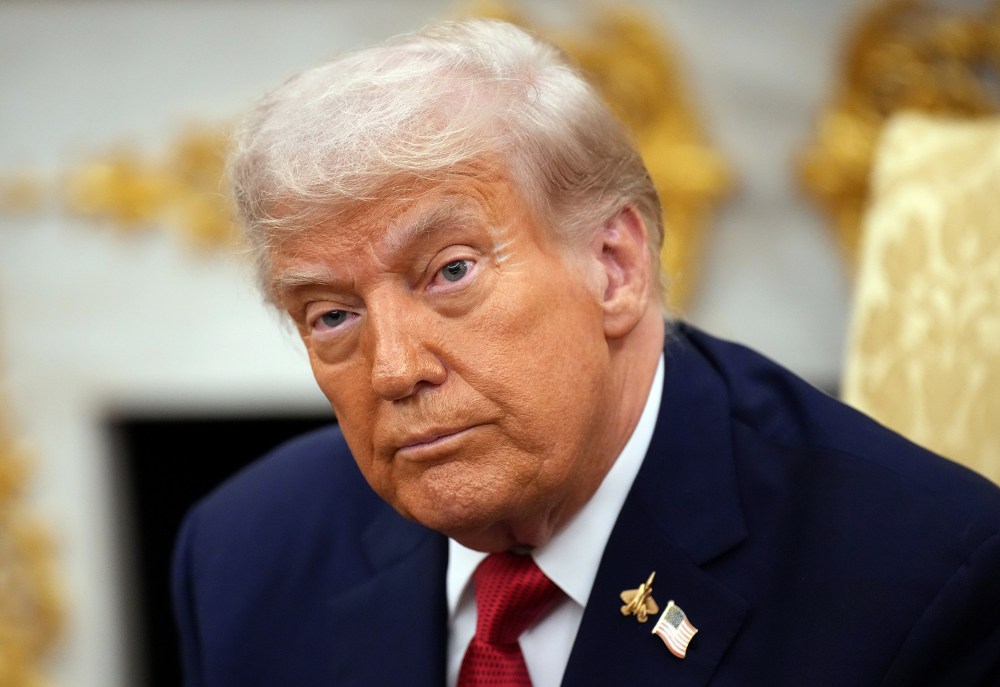
The House of Representatives is on the verge of delivering its strongest rebuke of President Donald Trump during his second term, and the president’s public position is that he hopes Republicans will vote with Democrats.
The vote is to compel the release of all unclassified files related to the government’s investigation into Jeffrey Epstein — something that Trump could do unilaterally but hasn’t — and the main drama of the vote on Tuesday is whether it will pass unanimously or just overwhelmingly.
After recognizing that Republicans were about to break with him on the vote, Trump tried to take the air out of that narrative by coming out in support of the bill over the weekend. Now, Republicans are planning to pass the legislation and hope the story fades away quickly.
“We just got to get this behind us,” Rep. Byron Donalds, R-Fla., told reporters on Monday. “It’s become such a huge distraction.”
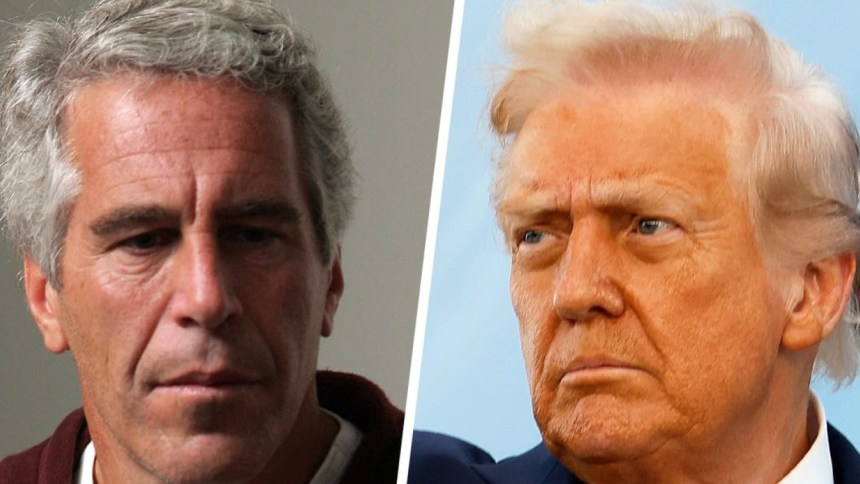
Rep. Thomas Massie, R-Ky., who spearheaded the discharge petition to force a vote on the bill, said he believes the bill will reach a veto-proof majority — two-thirds of those present and voting. That may be an easy lift now that Trump has reversed course and said “House Republicans should vote to release” the files. (The House is considering the bill under suspension of the rules, meaning the legislation will need a two-thirds majority to pass anyway.)
No one doubts that it will clear that threshold. With his support, Trump effectively guaranteed it will.
“Everybody’s gonna vote for it,” said Rep. Troy Nehls, R-Texas, who declared on social media on Friday that he would be “voting NO on the Epstein hoax.”
After so publicly opposing the legislation, you might think Nehls would struggle now to support the bill. But on Monday, after Trump endorsed the bill, Nehls reversed himself and said he, too, would vote to release the files.
“My vote won’t matter,” Nehls said.
Pressed on whether he was supporting the measure because of Trump, Nehls said he was voting yes “because we’re gonna release the files, and we’re gonna prove all you sickos wrong.”
“Donald Trump made a decision: He said, ‘You know what? Let’s just release the files,’” Nehls said.
But if Trump truly wanted to release the files, he could order his administration to do just that. Instead, he’s engaged in some presidential doublespeak in which he publicly insists he supports the bill but has privately opposed the release.
Just last week, Trump and his team pressured two Republican signers of the House discharge petition — Reps. Lauren Boebert of Colorado Nancy Mace of South Carolina — in hopes of getting them to remove their names and deny the resolution the support it needs to force a vote. Boebert was even invited into the White House Situation Room for a meeting with top Trump administration officials.
Both chose to keep their names on the petition.
The reason for Trump’s about-face was no mystery to House Republicans on Monday.
When MS NOW asked Rep. Mike Simpson, R-Idaho, why he thought Trump changed his tune, the veteran lawmaker was clear: “Because it was going to pass.”
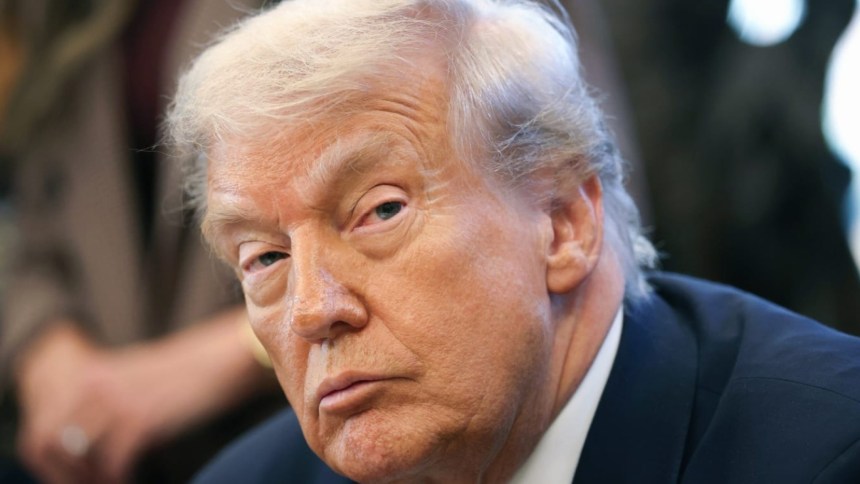
That much is clear at this point, but the specifics of the vote could be interesting.
The seemingly overwhelming support for the bill will just highlight any potential dissenters even more. It will take the sting out of vulnerable Republicans breaking with the president, yes, but it will also create an opportunity for Trump’s most loyal Republicans to potentially signal a unique Trump devotion — something some House Republicans may not be able to pass up, no matter what Trump says.
One lingering question is who may simply abstain from the vote — most notably Speaker Mike Johnson, R-La.
Johnson has strongly opposed the discharge petition effort, arguing that it’s unnecessary because the House Oversight Committee is already investigating the Epstein matter.
For nearly two months during the shutdown, Johnson kept the House out of session, with Democrats saying that the speaker was just trying to delay swearing in Rep. Adelita Grijalva, D-Ariz., who was set to become the last vote needed on the discharge petition to trigger a vote.
Once the petition hit the 218-signature threshold, however, Johnson quickly scheduled a vote.
Asked on Monday night how he would vote, Johnson simply told reporters: “You’ll know tomorrow.”
One House Republican, who requested anonymity to discuss private deliberations, told MS NOW the speaker “continues to have some grave reservations” about the resolution, adding that “he believes that there are major problems with a vote like this, that it could have been crafted in a way that did a better job of protecting people, but he understands that an overwhelming number of members will be inclined to vote yes.”
Another pending question: What will happen in the Senate?
Senate Majority Leader John Thune, R-S.D., has not said whether he will put the measure up for a vote. Asked in September, he told reporters he couldn’t comment “at this point.”
But one unintentional consequence of Trump coming out in support of the bill is that it makes it harder for Thune to stonewall, particularly if the bill gets an overwhelming vote on Tuesday.
Thune is already facing pressure to give the legislation some floor time. Sen. Jacky Rosen, D-Nev., penned a letter last week urging the majority leader to give the bill a vote. And House Minority Leader Hakeem Jeffries, D-N.Y., told reporters on Monday that it will be “important for Senate Republicans to follow the lead of what is going to be a strongly bipartisan vote in the House.”
Some House Republicans are even pressuring Thune.
Rep. Tim Burchett, R-Tenn., a vocal supporter of releasing the files, said his message to Thune was that he “better get it on.”
“It’s time to get it out there,” Burchett said.

Kevin Frey is a congressional reporter for MS NOW.

Mychael Schnell is a reporter for MS NOW.