




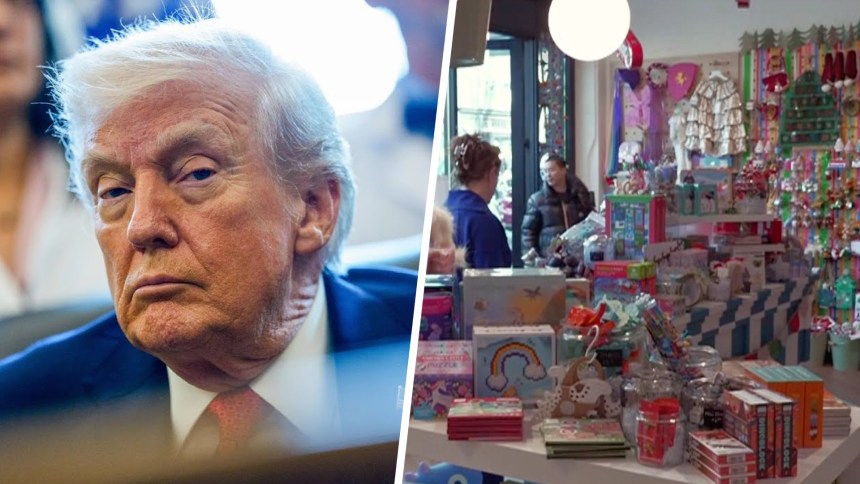
ALEXANDRIA, Va. — The storefront of the Pippin Toy Co. glows with holiday decorations on a postcard-perfect street in Old Town Alexandria. Inside, shelves are stocked with dolls, games and stuffed animals — the shop’s supply more plentiful than the owner would like.
This year, many would-be customers are just looking.
“Everything just seems a lot more expensive,” said Vivi Reed, a shopper browsing the aisles. “I’ve been struggling to get gifts within budget for everyone.”
Pippin Toy Co. opened earlier this year. This was supposed to be its first big holiday season. Instead, it has become a lesson in how President Donald Trump’s tariffs have rippled through the economy, hitting small businesses and their customers in ways altogether more tangible than a spreadsheet on international trade deficits.
Holiday gifts this season cost roughly 26% more than last year, according to a study by Groundwork Collaborative, a nonprofit consumer advocacy group. The reason is straightforward: Most popular holiday items — toys, electronics, kitchen appliances, artificial Christmas trees, clothing — are imported, and tariffs have driven up their prices faster than overall inflation.
The numbers tell part of the story. Home and kitchen gifts are up 38%. Electronics are up 34%. Clothing, shoes and accessories: 20%. Toys and games: 17%.
But behind those figures are small calculations of loss — the stuffed animal that Pippin Toy Co. owner Amy Rutherford decided not to stock because she couldn’t justify the cost; the customers who left empty-handed.
“If it’s just too expensive, and nobody’s going to buy it, what does that say about us as a company?” Rutherford asked. “I have a team to feed. I have rent to pay. People rely on us.”
The White House has defended the tariff policy, which took effect in May, as a necessary corrective to decades of unfair trade practices. Spokesperson Kush Desai said in a statement that the tariffs have “secured trillions in investments to make and hire in America,” and promised they would help re-create “the historic economy and prosperity” of Trump’s first term.
But polling suggests many voters are feeling the immediate sting more acutely than any long-term promise.
A new survey from Data for Progress released alongside Groundwork Collaborative’s analysis says shoppers are feeling the stress of the price hikes. More than two-thirds say they are stressed about affording holiday expenses, and more than 40% of families report buying fewer gifts this year.
“Americans have had a really tough time this year when it comes to inflation and prices,” said Groundwork Collaborative’s Lindsay Owens. “But when it comes to holiday prices, for the most popular gifts that Americans are buying for their kids, their spouses, their grandparents, the tariffs have packed a sucker punch.”
Outside Pippin Toy Co., Vivi Reed said she was bracing for what comes next.
“I think I am nervous about the future. I don’t think it’ll be beneficial for — at least not for normal people like us.”

Arielle Hixson is an Emmy-nominated reporter for MS NOW.