




Leo Feler watched in horror as a group of masked federal immigration agents tried to break the lock on the gate surrounding his Chicago home, then jumped over the spiked fence to chase three Latinos doing construction work on his home. Two of the workers, bloodied in their encounter with the agents, ran into Feler’s home: one through the front door, another through a window after climbing onto a second-story balcony. A third worker ran into the garage.
But Feler wasn’t home when it happened; he saw it all play out on the security cameras placed around his property.
Shouting over the security camera to the immigration agents, Feler told them they had no permission to be on his property and demanded that they produce a warrant. Feler says they never did. In the end, the two workers who ran into his home went to the hospital for their injuries while the third man was arrested in the garage and recently ordered released by a federal judge. Feler says the agents caused $25,000 in damages to his property, including to construction materials.
“If you watch the videos of this, it looks like they’re going after Osama bin Laden,” Feler told MS NOW. “It does not look like they’re going after a construction worker who was eating his lunch.”
A Department of Homeland Security spokesperson, who refused to be named on the record, said the agency complies with the Fourth Amendment, but that there are “certain exceptions to the warrant requirement that apply based on probable cause,” like “hot pursuit, where officers are actively pursuing a fleeing suspect.”
More than three weeks later, Feler, an economist in Chicago, is looking for a legal avenue, saying the federal immigration agents violated his Fourth Amendment rights when they trespassed on his property without a warrant. But U.S. citizens, including those who’ve been arrested and detained by federal immigration agents in the Trump administration’s dragnets across the country — or suffered collateral damage in the process, as Feler claims happened to him — have no effective, direct legal path to sue the government or individual federal agents.
“If this was anyone else, I would be able to sue them for their actions,” he said. “But because they are government officials, I can’t sue them in their personal capacities.”
“If this was anyone else, I would be able to sue them for their actions,” he said. “But because they are government officials, I can’t sue them in their personal capacities.”
leo feler, a chicago economist who says federal immigration agents violated his constitutional rights
But tucked into the bill signed by President Donald Trump last week that ended the shutdown is a provision that provides a fast-tracked legal pathway to sue the federal government for at least $500,000 in damages if federal law enforcement fails to tell you that your phone records are being searched.
But only if you’re a U.S. senator.
“Equal protection under the law means this applies to all of us, not just those of us who are senators and have that privilege,” Feler said. “Who bears responsibility for this?”
Under current civil rights code, American citizens can sue local and state officials for constitutional rights violations but suing an individual federal officer is nearly impossible, providing no direct line of accountability like the statute just established for senators. And suing the federal government is a long process, often ending with dismissal in court due to the many immunities afforded under the law to federal officials.
Eight Republican senators could immediately benefit from the new law if they choose to sue the government for seizing their phone records during the Justice Department’s investigation into the Jan. 6, 2021, riot and attempts to overturn the 2020 election. The information seized included call history and recipients of lawmakers’ calls — but not the content.
In October, Senate Republicans revealed investigators had obtained the phone record data of those eight senators and one House member. Despite the DOJ seizing the records through a subpoena, the senators can now sue for at least $500,000 — retroactively.
“It is frankly perverse,” according to Alexander Reinert, a professor at the Benjamin N. Cardozo School of Law in New York City, adding that senators “retroactively turned what was lawful conduct into unlawful conduct” in order to “line their own pockets.”
MS NOW asked all eight senators who stand to benefit from the new provision if they support giving American citizens the same right to sue. Only three of the eight responded; none answered the question.
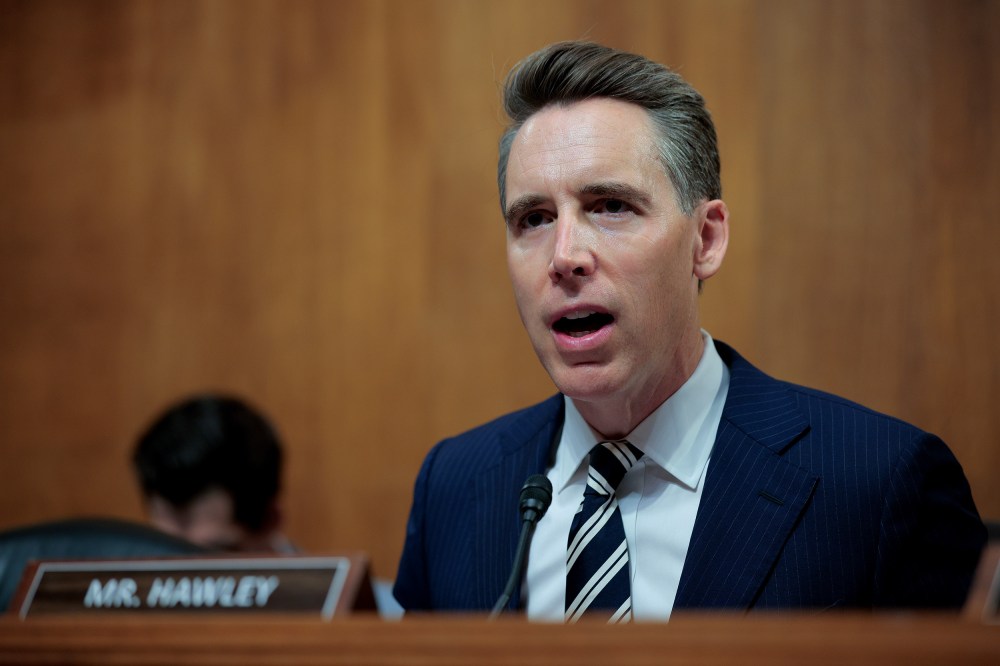
A spokesperson for Republican Sen. Dan Sullivan of Alaska said he “does not plan on suing and is supportive of the House bill to repeal the provision.” Republican Sen. Josh Hawley of Missouri said in a statement that “the Senate provision is a bad idea.”

But at least two senators — Sen Tommy Tuberville, R-Ala., and Sen. Lindsey Graham, R-S.C., — have publicly voiced support for the provision, with Graham telling reporters that he plans to sue the government for at least more than $1 million, adding that he wants to “make it so painful, no one ever does this again.”
The House on Wednesday night unanimously passed a repeal of the senators-only right to sue. But Senate Majority Leader John Thune, R-S.D., has defended the provision, casting some doubt that the Senate will ever hold a vote on the issue.
George Retes Jr., an Army veteran who was arrested during a raid in July and detained for days by immigration agents, called the new legal power for senators “a giant slap in the face to every single person.”
When driving to his security job at a cannabis farm in Camarillo, California, Retes Jr. realized it was being raided by federal immigration agents. Protestors and agents were blocking his way to work and rather than let him through in his car, agents moved to arrest him. Retes Jr. says he repeatedly told the federal agents he is an American citizen, but as tear-gas deployed by the agents filled his car, an officer smashed his window, pepper-sprayed him and then dragged him out of his vehicle.
Retes Jr. recounts a harrowing and violent encounter, saying he “was basically like a ragdoll” — not resisting, but pleading with the agents that he couldn’t breathe. Now, Retes Jr. wants his day in court.
The father of two can’t square how Republican senators have made it easier for themselves to directly sue the government, but not for average citizens like him.
“What’s the reason behind not including every single person and excluding everyone else besides yourselves?” Retes Jr. said.
DHS claimed in a public statement that Retes “became violent” and “blocked their route.” But Retes Jr. was never charged after three nights in detention. DHS Secretary Kristi Noem falsely claimed last month that no U.S. citizens have been arrested or detained.
After publication of this story, the unnamed DHS spokesperson said, “the U.S. Attorney’s Office is reviewing [Retes’s] case, along with dozens of others, for potential federal charges related to the execution of the federal search warrant in Camarillo.”
For American citizens, the road to filing a lawsuit against the government — and getting compensation — is long, circuitous and often, results in a dead end. It starts with a Standard Form 95, where claimants explain what happened to them at the hands of the federal government.
Legal experts say claimants almost never receive a response to the form. If the government doesn’t respond after six months, a person can sue under the Federal Tort Claims Act — but lawyers say the maze citizens have to go through in the process makes it a near-impossible win.
The new law allows senators to circumvent this process entirely, taking them directly to the step where they can sue the federal government for at least $500,000 in compensation.
President Trump himself has used the Act twice to seek relief for himself and is now seeking $230 million in damages from the Justice Department for federal investigations into his conduct.
And while there are questions about whether the highest court in the U.S. could take up the issue, Scott Michelman, legal director of the ACLU of the District of Columbia, says that will likely never happen.
“The Supreme Court has said it will almost never permit anyone to sue for compensation for a federal official’s constitutional violations unless Congress passes a law explicitly giving them a ticket into court,” he said. “So 100 of the most powerful people can have a day in court that ordinary Americans are being denied.”
Anya Bidwell, a senior attorney at the Institute for Justice, a public interest law firm, warned that if there is no way for American citizens to hold federal agents accountable for abuses of power, then the “whole system breaks down.”
“Agents are emboldened to be as aggressive as possible,” said Bidwell, who is representing Retes Jr. “When we see old people being shoved to the ground, children yelled at and handcuffed, women dragged out of their cars, veterans put in chokeholds, that’s all the result of federal agents knowing that it is extremely difficult to sue them, even when they do this to U.S. citizens.”
Additionally, the administration has shown zero interest in curbing aggressive tactics by ICE agents. Stephen Miller, the architect of Trump’s anti-immigration and mass deportation agenda, recently told federal immigration agents they are shielded from prosecution.
“To all ICE officers, you have federal immunity in the conduct of your duties,” Miller said on Fox News Channel late last month. “And anybody who lays a hand on you or tries to stop you or tries to obstruct you is committing a felony.”
If federal agents break the law, the DOJ would oversee prosecuting them — something the Trump administration has made clear it is uninterested in doing.
In recent claims filed against DHS, Immigrations and Customs Enforcement and Customs and Border Protection, some citizens, such as Cary Lopez Alvarado, are seeking as much as $1 million in compensation.
Alvarado was nine months pregnant when immigration agents put her in shackles that wrapped around her belly, arresting and detaining her in a Los Angeles sweep that resulted in her boyfriend’s deportation. The encounter, she says, sent her into labor. She was never charged.
DHS claims that Alvarado “obstructed” their arrests of undocumented immigrants and said other “rioters began throwing wrenches and batteries at agents.” But Alvarado was never charged. DHS did not respond to questions about whether there are any investigations into agents’ use of force.
The DHS spokesperson said rocks, bottles, and fireworks have been thrown at federal agents, in addition to slashed tires and rammed vehicles. “Despite these real dangers, our law enforcement shows incredible restraint in exhausting all options before force is escalated,” said the unnamed spokesperson, who accused the media with being “more concerned about baseless lawsuits than the real dangers our officers are facing including a 1000% increase in assaults.”
Five months later, Alvarado’s voice still shakes as she recounts trying to “protect my baby” as agents pushed her up against a car. Now, Lopez says she is afraid to leave the house, fearful that she could be detained again by agents based on the color of her skin.
In her claim against the federal government, she alleges “unconstitutional conduct,” racial profiling” and “unlawful arrest.” At the end of the minimum six-month waiting period for her complaint, she plans to sue.
“We want answers, and we want to put an end to all of this violence,” said Alvarado. “This is affecting everyone at this moment, and none of us feel safe, and that’s not what the U.S. stands for.”
But the bigger issue than whether citizens can sue the federal government versus an individual officer, said Michelman of the ACLU, is whether there is actual legal relief.
“Granting compensation to people whose rights have been violated is essential to the rule of law,” he said. “That where there is a right, there must be a remedy, otherwise the right is not meaningful.”

Laura Barrón-López covers the White House for MS NOW.