




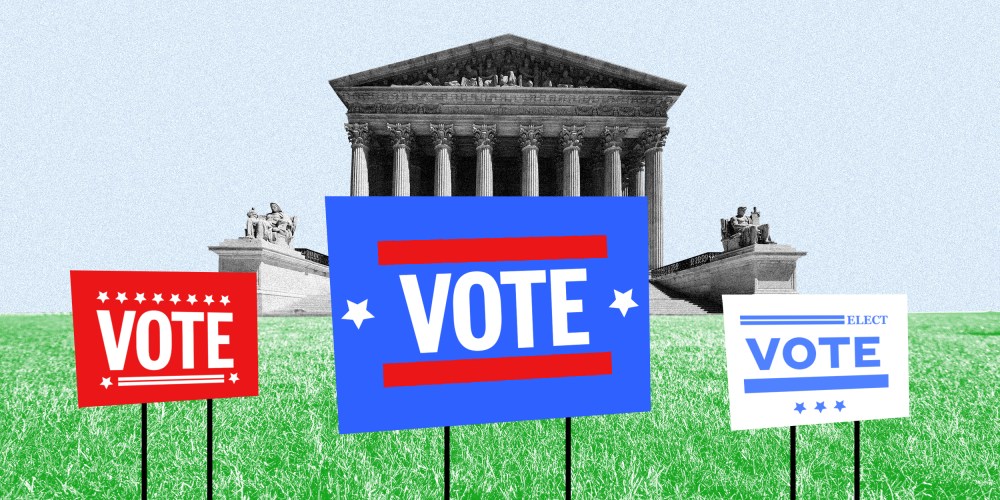
Alexander Hamilton referred to the judiciary as our government’s “least dangerous branch,” but after the 2020 election especially, its potency should not be underestimated. Courts decide some of the most important issues in society, like voting rights, marriage equality and, in cases of capital punishment, even matters of life and death. And while a great deal of recent focus has been on the Supreme Court, advocates for change should focus on the lower federal courts and state courts.
State courts may become the new venue of choice for advocates of change.
For many people, voting never felt as important as it has this election. But as the polls draw to a close, we’re coming away with the fact that not only more people want to vote, but also that many people have shifted their perceptions of what, and whom, they are voting for. And that means paying more attention to the down-ballot vote, to the lower court and state supreme court judges responsible for so many of our laws and liberties.
In 37 states, supreme court justices are elected by voters. But when you ask voters whom they are supporting in state supreme court races, all too often the response is a blank stare. State supreme court candidates are rarely household names. In states that permit straight-ticket voting, the nonpartisan part of the ballot, including judges, may not even be included in that selection.
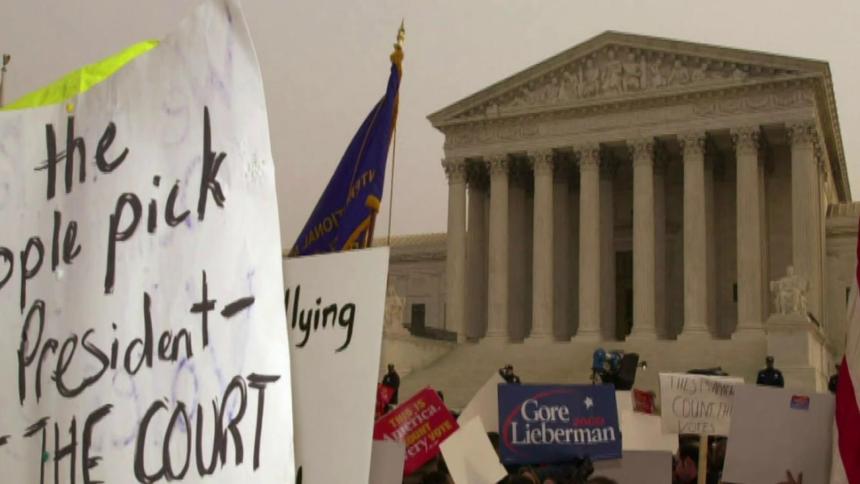
There’s another hurdle: Learning about judicial candidates’ backgrounds, experiences and worldviews takes considerable work. As a result, we see a sizable drop-off in voting in these races compared to the number of votes cast in the presidential race, as voters often choose to leave these slots blank. Or worse, they guess. I’ve had friends tell me that when in doubt, they vote for the woman. In Michigan, it has been reported that having an Irish surname helps judges get elected. Despite my own Irish American heritage, I know that a name alone is a foolish reason to vote for a judge.
State courts may become the new venue of choice for advocates of change. President Donald Trump’s appointment of more than 200 judges to the federal bench, selected with input from the conservative Federalist Society, have made federal courts a less hospitable place to advance progressive causes. As a result, state courts are becoming even more attractive choices for impact litigation. The selection of judges for these courts has become more important than ever.
State supreme courts decide 10,000 cases annually, compared to the 70 to 80 cases the U.S. Supreme Court decides every year.
Recently, some have suggested that the next administration should “pack” the Supreme Court by expanding its current composition of nine justices. The proposal to expand the Supreme Court has some merit. The current number of justices is not etched in stone or even in the Constitution — it was set by the Judiciary Act of 1869. Before that, the court had anywhere from five to 10 justices. Another act of Congress could expand the membership. Expanding to 13 justices makes some sense, reflecting the current total of 13 circuits to which justices are assigned additional procedural duties as circuit justices.
But another place to look to expand the judiciary is in the federal district courts and circuit courts of appeal. Litigants are far more likely to have their cases decided in these lower courts than in the Supreme Court, which accepts only a limited number of cases to decide novel issues of federal law, address important constitutional questions or resolve circuit splits. In 2018, circuit courts of appeal, the intermediate appellate level, handled about 50,000 cases. District courts, the trial courts, handled about 350,000 cases. The Supreme Court, in contrast, handled only 76 in its October 2018 term.


The Judicial Conference of the United States, the policymaking body of the federal judiciary, is advocating for 78 more seats at the circuit and district court levels to address the expanding caseloads across the country. More judges, it argues, are needed to reduce delays in deciding cases. The next president would have the opportunity to fill these seats with judges who reflect his worldview.
The Judicial Conference of the United States is advocating for 78 more seats at the circuit and district court levels to address the expanding caseloads across the country.
In addition to federal courts, another potential focus for change is in state courts, which decide vastly more cases than federal courts. According to a Brennan Center report, state courts decide 95 percent of all cases in the United States. State supreme courts decide 10,000 cases annually, compared to the 70 to 80 cases the U.S. Supreme Court decides every year. And these cases are of great significance. In recent years, state supreme courts have decided cases involving reproductive rights, medical malpractice and gerrymandering.
In the absence of information about judicial candidates, special interests have filled the void. In the 2017-18 campaign cycle, special interest groups outspent individual state supreme court candidates and, in some states, their political parties, accounting for 27 percent of spending.
Lower-level state courts make important decisions, as well. Trial courts and intermediate courts of appeal handle more cases than state supreme courts, which often take cases only as a matter of discretion instead of as a matter of right. As in federal court, far more litigants in state court will have the final decisions in their cases decided at the trial or intermediate appellate level than at a supreme court. And yet, voters are likely to know even less about the candidates for these lower court judgeships.
Voters and advocacy groups would be well-served to focus on state judicial races, identifying and supporting candidates whose experiences would inform their decisions in cases that can have profound impacts on their lives. The time to begin that work is now, so that by the next election, a slate of well-qualified candidates is positioned for election.

Barbara McQuade is a former Michigan U.S. attorney and legal analyst.